Categorization skills Normal Reading Worksheets for Ages 4-7
3 filtered results
-
From - To
Enhance your child's reading skills with our Categorization Skills Normal Reading Worksheets for ages 4-7! These engaging worksheets are meticulously designed to help young learners develop crucial categorization abilities, essential for reading comprehension and vocabulary building. Our fun and educational activities encourage kids to sort and classify objects, improving their ability to recognize patterns and make connections between words and concepts. Perfect for early grade students, these printable worksheets provide a solid foundation for academic success. Explore our collection today and watch your child's reading confidence and categorization skills flourish!
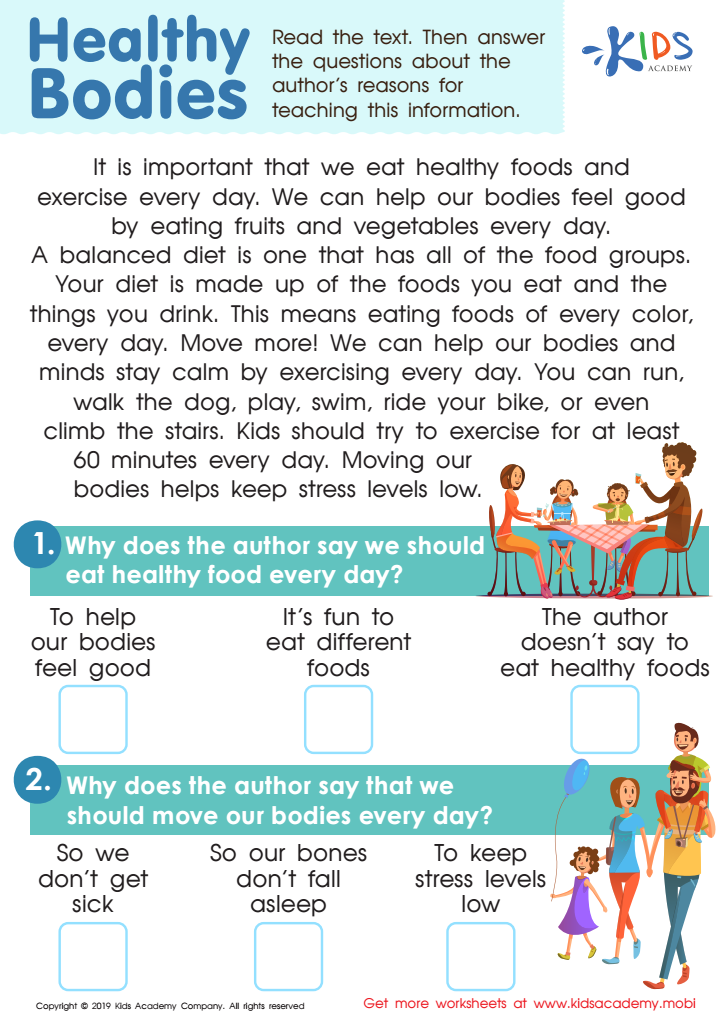
Healthy Bodies Worksheet
 Assign to My Students
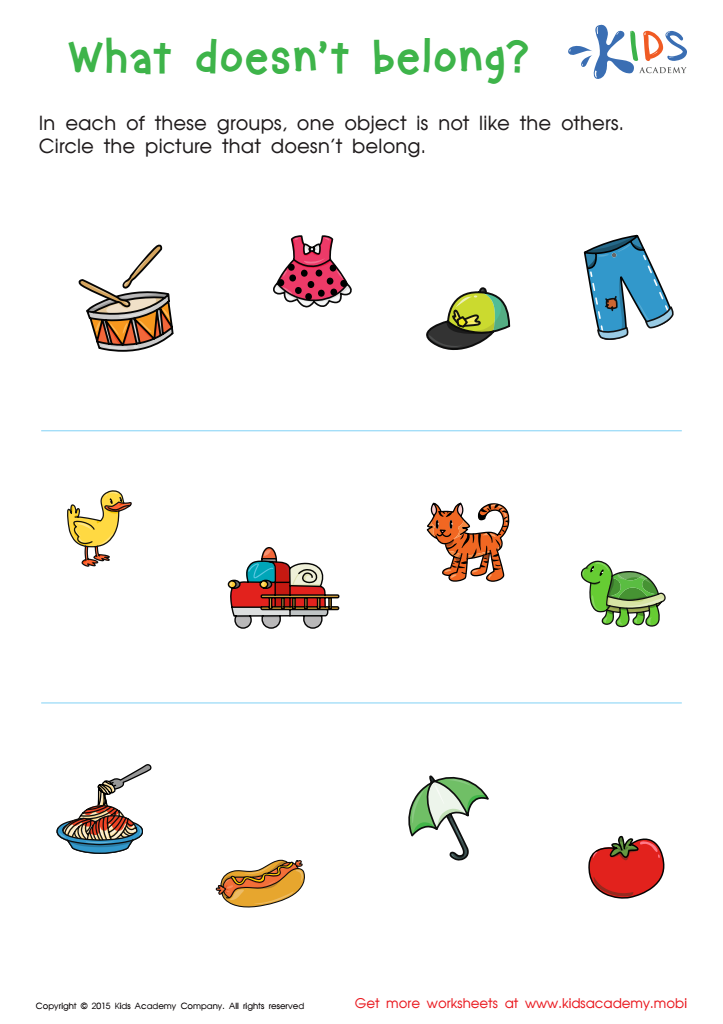
First Words: What Doesn't Belong Worksheet
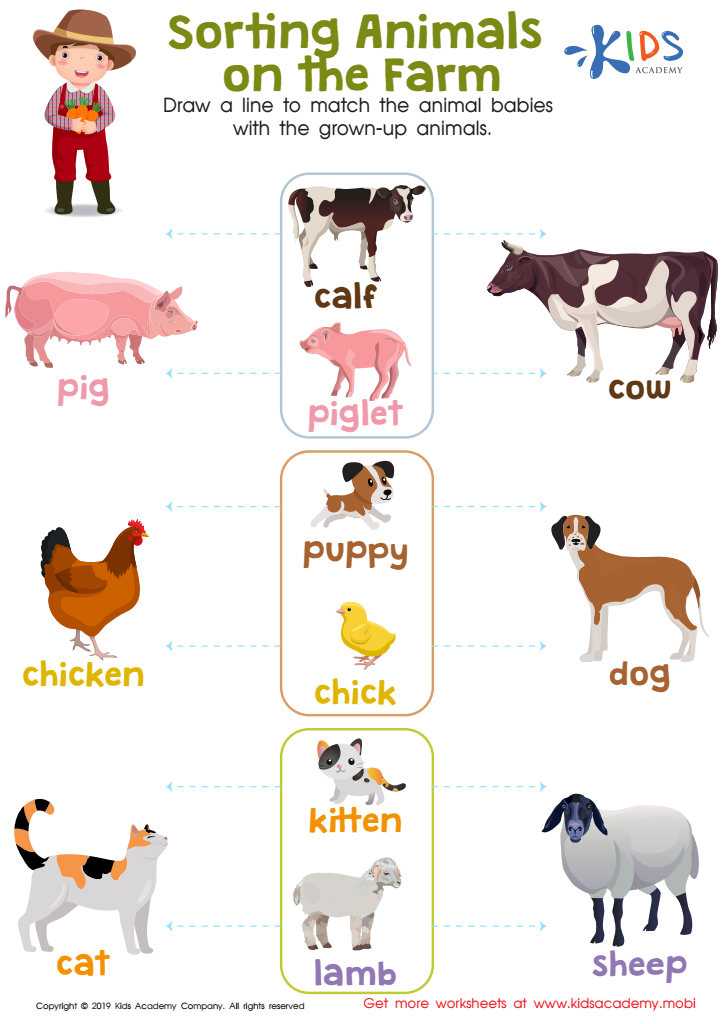
Sorting Animals on the Farm Worksheet






Categorization skills are vital for children aged 4-7, playing a fundamental role in normal reading development and overall cognitive growth. These skills enable children to organize information into groups, fostering better memory retention and understanding of concepts. Categorization lays the groundwork for vocabulary expansion as it helps children recognize patterns, similarities, and differences between objects, words, and ideas. This ability is crucial for reading because it promotes phonemic awareness, allowing children to group letters and sounds efficiently to form words.
When parents and teachers nurture these skills, they help children build a solid literacy foundation. Effective categorization enables children to make connections between new words and their existing knowledge base, speeding up the learning process. For example, understanding the category of "animals" helps children quickly assimilate related words like "cat," "dog," or "elephant."
Moreover, categorization boosts comprehension. By organizing words and concepts into mental schemas, children can more easily infer meaning and context when reading, resulting in improved reading fluency and confidence. Early mastery of these skills can lead to lifelong academic success. Therefore, it is crucial for parents and teachers to engage young learners in activities that promote categorization, such as sorting games, storytelling, and interactive reading sessions, laying a strong foundation for their future reading and cognitive development.








