Enhancing vocabulary Normal Reading Worksheets for Ages 4-7
4 filtered results
-
From - To
Enhance your child's vocabulary with our carefully crafted Normal Reading Worksheets designed for ages 4-7! These engaging worksheets focus on building foundational reading skills while expanding vocabulary in a fun and interactive way. Each activity encourages children to explore new words through games, matching, and context-based exercises that captivate young learners. Ideal for parents and educators, our resources aim to foster a love for reading and language. Easy to download and print, these worksheets are perfect for at-home learning or classroom use. Start your child’s vocabulary journey today and watch their confidence in reading and communication soar!
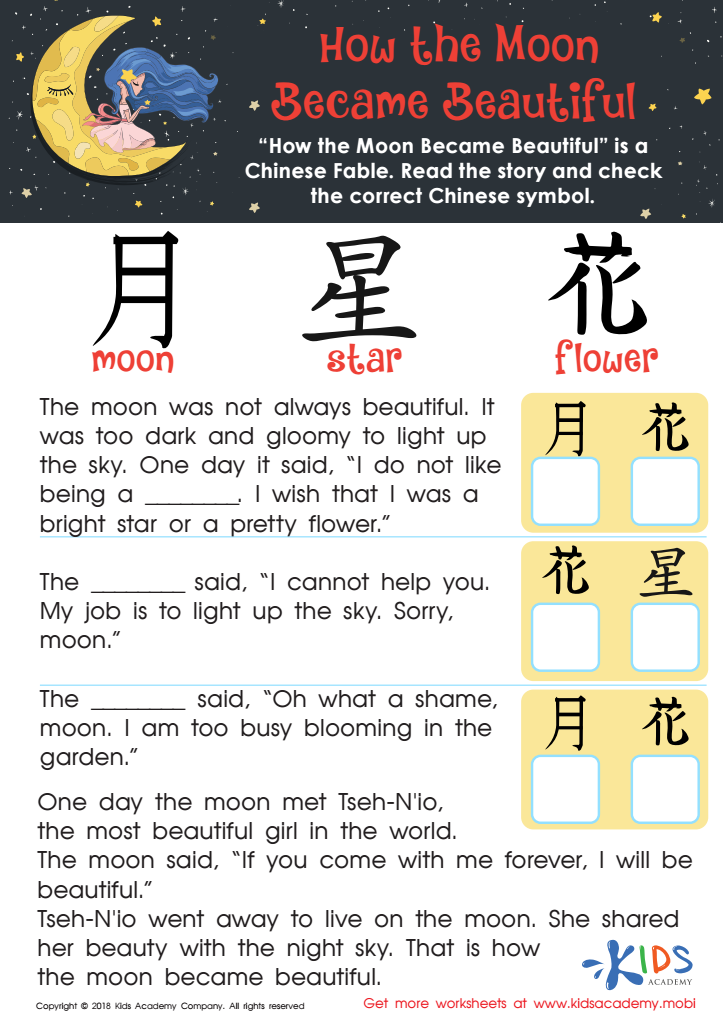
How the Moon Became Beautiful Worksheet
 Assign to My Students
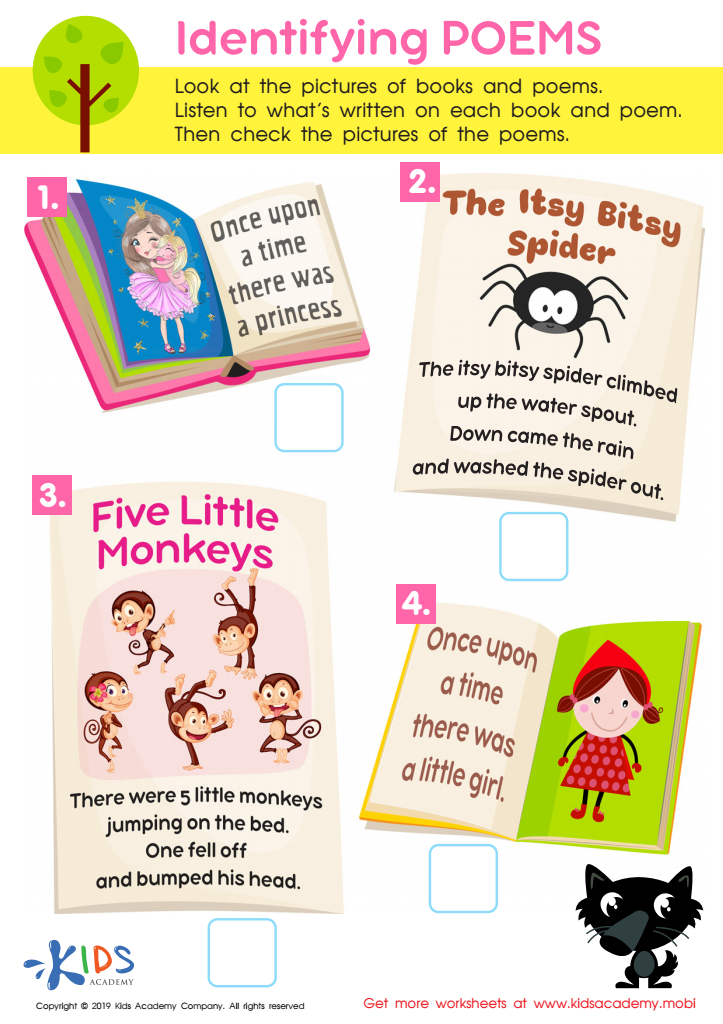
Identifying Poems Worksheet
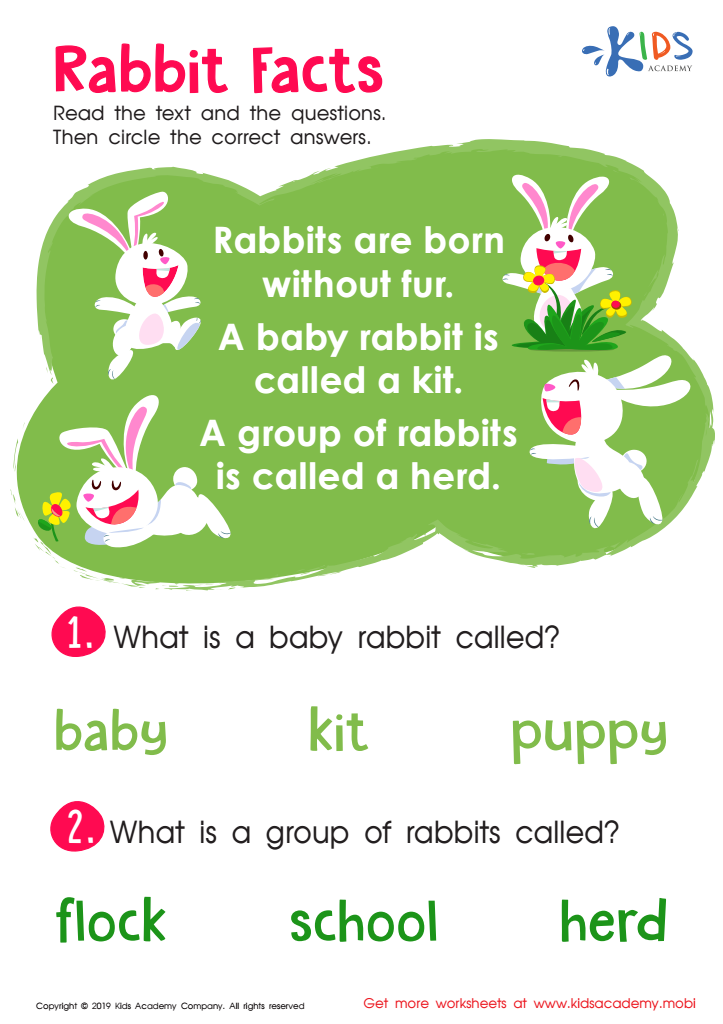
Rabbit Facts Worksheet
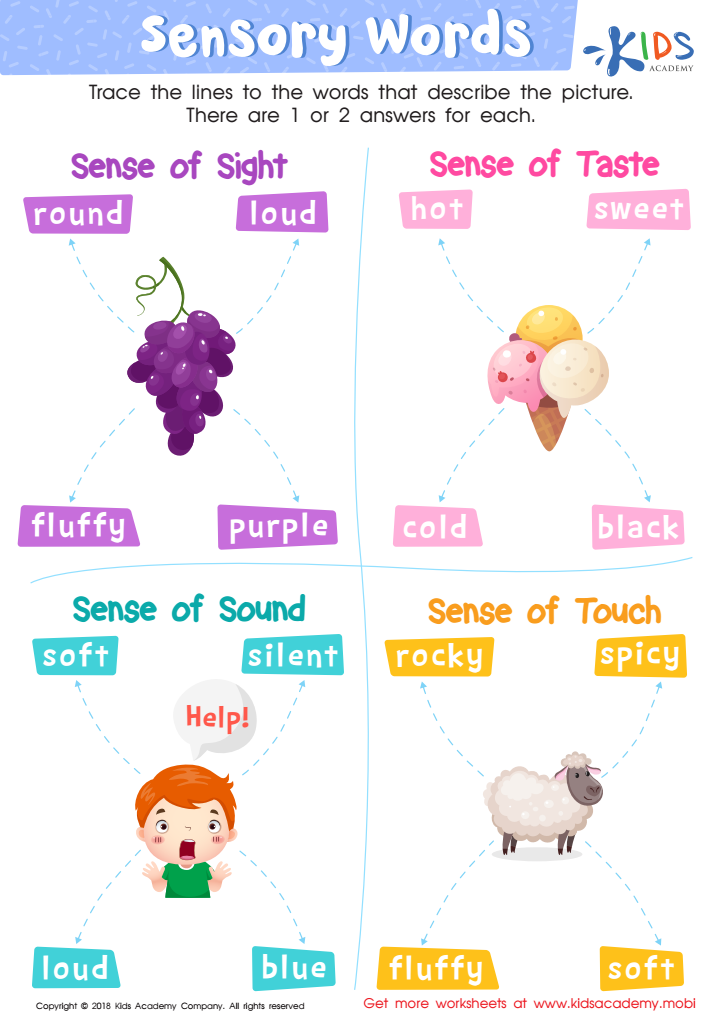
Sensory Words Worksheet






.jpg)
Enhancing vocabulary during the early reading stages for children aged 4-7 is crucial for their overall language development and academic success. This period is formative, as children are actively acquiring language skills that serve as the foundation for their future reading and communication abilities. A rich vocabulary allows young learners to articulate their thoughts, ask questions, and express emotions, fostering their confidence and social interactions.
Parents and teachers play a pivotal role in nurturing vocabulary growth. By introducing diverse words through reading, conversation, and play, they create a language-rich environment that encourages curiosity and comprehension. When children encounter new words in context—whether in stories, songs, or everyday interactions—they are more likely to understand and retain them.
Moreover, a strong vocabulary correlates with higher literacy skills, enabling students to understand and engage with more complex texts as they progress in school. Enhanced vocabulary not only supports reading comprehension but also enhances critical thinking and problem-solving abilities.
Investing time and resources into vocabulary development ensures that children not only succeed academically but also appreciate the nuances of language. This lifelong skill is essential for effective communication and personal expression, making it a priority for both parents and educators.








