Identifying story elements Normal Reading Worksheets for Ages 4-7
3 filtered results
-
From - To
"Identifying Story Elements Normal Reading Worksheets for Ages 4-7" focus on developing young readers' understanding of crucial story components. Tailored for children aged 4 to 7, these engaging worksheets help students identify characters, settings, and key plot points within stories. Featuring colorful illustrations and age-appropriate texts, these resources make learning fun and interactive. By breaking down stories into understandable parts, these worksheets enhance reading comprehension and critical thinking skills. Perfect for teachers and parents looking to support early literacy, these printables lay a solid foundation for future reading success. Explore now for a structured, enjoyable approach to mastering story elements.
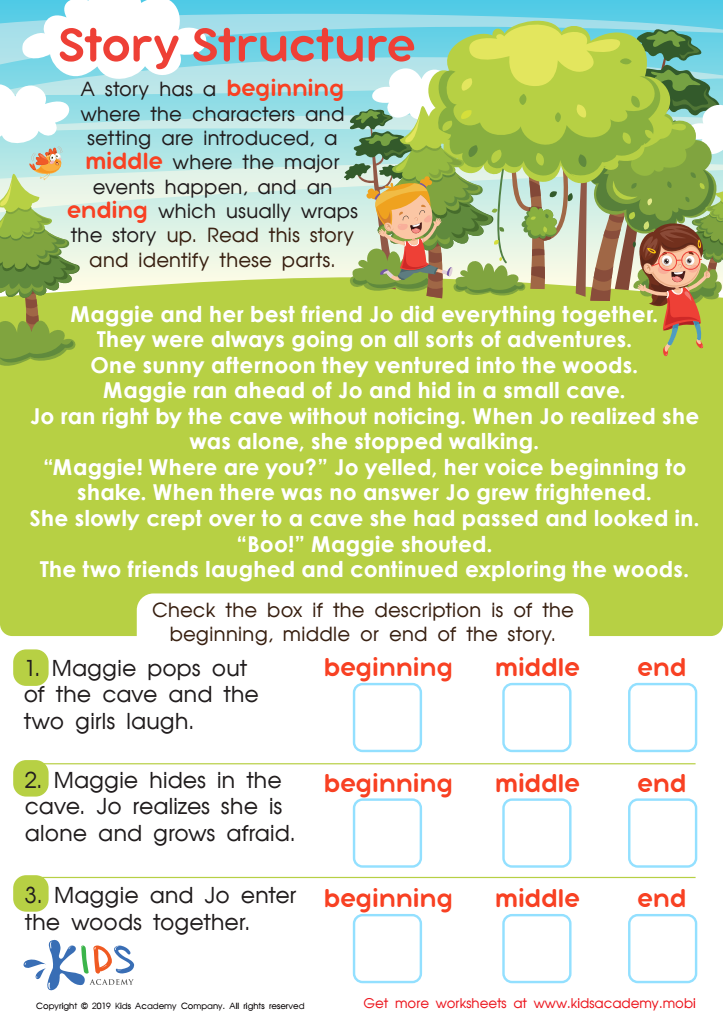
Story Structure Worksheet
 Assign to My Students
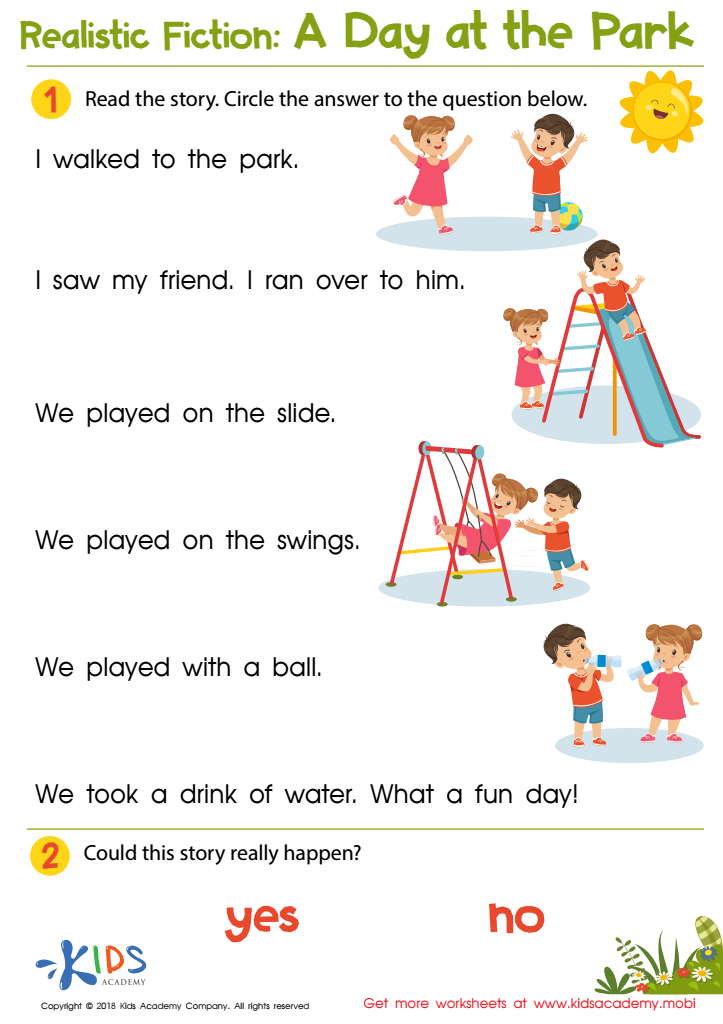
A Day at the Park Worksheet
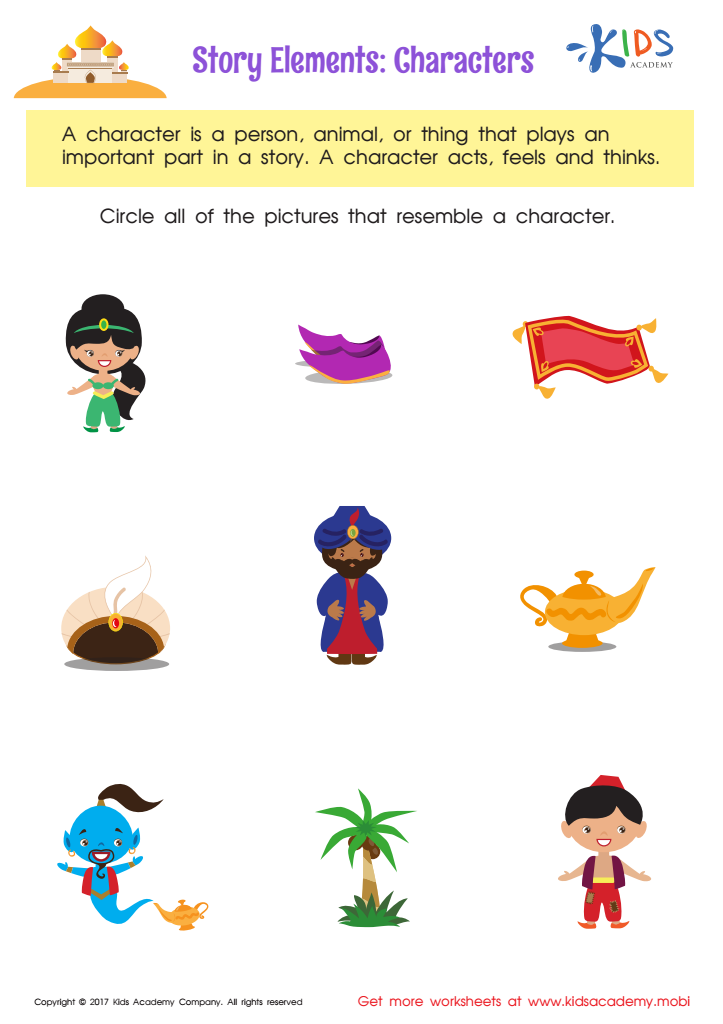
Story Elements Printable



.jpg)

.jpg)
.jpg)
Identifying story elements is essential for children aged 4-7 as it lays the foundation for critical comprehension and literacy skills. By understanding characters, setting, plot, conflict, and resolution, young learners can better grasp the essence of any story. This comprehension aids in their ability to retell and summarize stories, which are key skills in early literacy development.
For parents and teachers, focusing on story elements can help children understand the structure and flow of narratives, making reading more enjoyable and engaging. This early familiarity encourages a lifelong love for reading. By breaking down stories into simpler parts, adults help kids develop cognitive skills such as memory, sequencing, and logical thinking.
Additionally, identifying story elements promotes emotional growth. Through characters and conflicts, children can learn empathy and problem-solving skills. When they relate to a character’s feelings or challenges, it builds their emotional literacy.
Understanding story elements also aids in language development. By discussing the characters, plot, and settings, children enhance their vocabulary and expressive abilities. Parents and teachers who emphasize these aspects during reading time provide a more enriching experience that goes beyond mere word recognition, facilitating a deeper and more comprehensive mastery of reading and storytelling skills.








