Rhyming skills development Normal Reading Worksheets for Ages 4-7
3 filtered results
-
From - To
Enhance your child’s reading proficiency with our Rhyming Skills Development worksheets, specially designed for ages 4-7. These engaging, printable resources foster early literacy by introducing kids to the rhythmic patterns of language. Through fun activities, learners will explore rhyming words, improving their pronunciation and comprehension skills. Our worksheets promote critical thinking and creativity while making learning enjoyable. Ideal for classroom use or at-home practice, these resources support phonemic awareness, a key foundation for successful reading. Encourage a love for language and bolster your child's confidence with our comprehensive rhyming activities—unlock your little one’s potential today!

Rhyming Words Rhyming Worksheet
 Assign to My Students
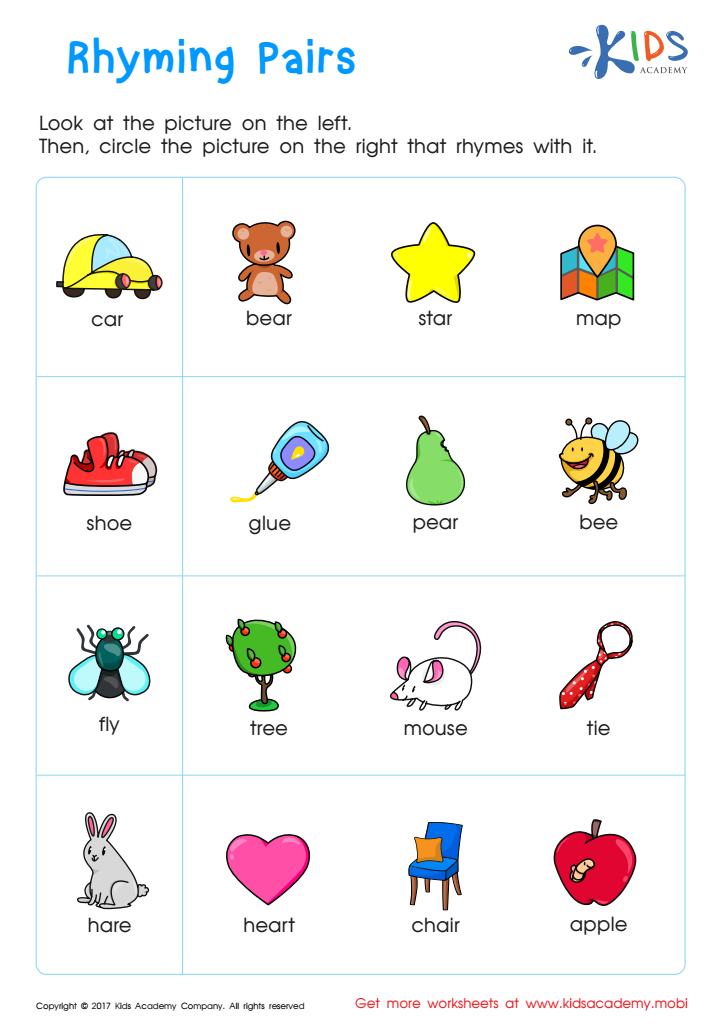

First Words: Picture Rhymes Worksheet







Rhyming skills development is vital for young learners aged 4-7 as it lays the foundational framework for reading and language skills. Understanding and recognizing rhymes not only enhances phonemic awareness but also boosts vocabulary, listening skills, and comprehension. Children who can hear, identify, and generate rhymes are better prepared to decode words, as they become familiar with sounds and patterns in language.
Moreover, rhyming activities, such as singing nursery rhymes or playing rhyming games, encourage playful engagement with language, sparking a love for reading from an early age. This playful engagement creates a positive association with literacy, making children more likely to pursue reading in the future.
In addition, rhyming helps children develop critical thinking and memory skills as they memorize and recite rhymes. It also fosters social interactions, as children share and discuss rhymes with peers and adults, contributing to their overall linguistic competence.
In summary, parents and teachers should prioritize rhyming skills development to nurture essential literacy skills that will serve children throughout their educational journey and beyond. Fostering a strong foundation in phonemic awareness via rhyming is a crucial step toward lifelong reading success.








