
Cognitive Development Normal Reading Comprehension Worksheets for Ages 4-7
5 filtered results
Difficulty Level
Grade
Age
-
From - To
Subject
Activity
Standards
Explore our engaging reading comprehension worksheets designed for children aged 4-7 to support cognitive development. These age-appropriate activities help young learners enhance their reading skills while fostering critical thinking and comprehension abilities. Each worksheet is crafted to spark curiosity, encourage active learning, and promote vocabulary expansion. With a variety of themes and formats, kids will enjoy fun stories and questions that challenge them to think critically about the material. Ideal for classroom use or at-home learning, our resources ensure that children build a solid foundation in reading comprehension, setting them up for future academic success. Unlock your child’s potential today!
Favorites
With answer key
Interactive
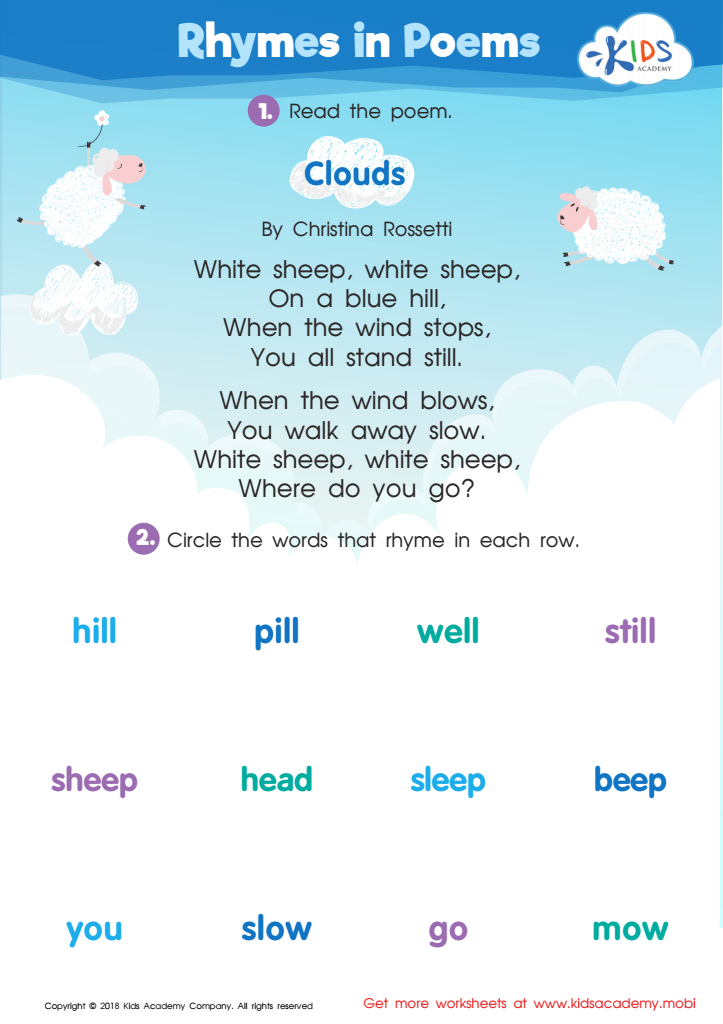
Rhymes in Poems Worksheet
Poems are lovely works of literature; some with rhymes, and some without. This poem for kids is full of rhymes and tells the tale of a sheep. Read it aloud to your kids, then help them circle the rhyming words.
 Assign to My Students
Rhymes in Poems Worksheet
Worksheet
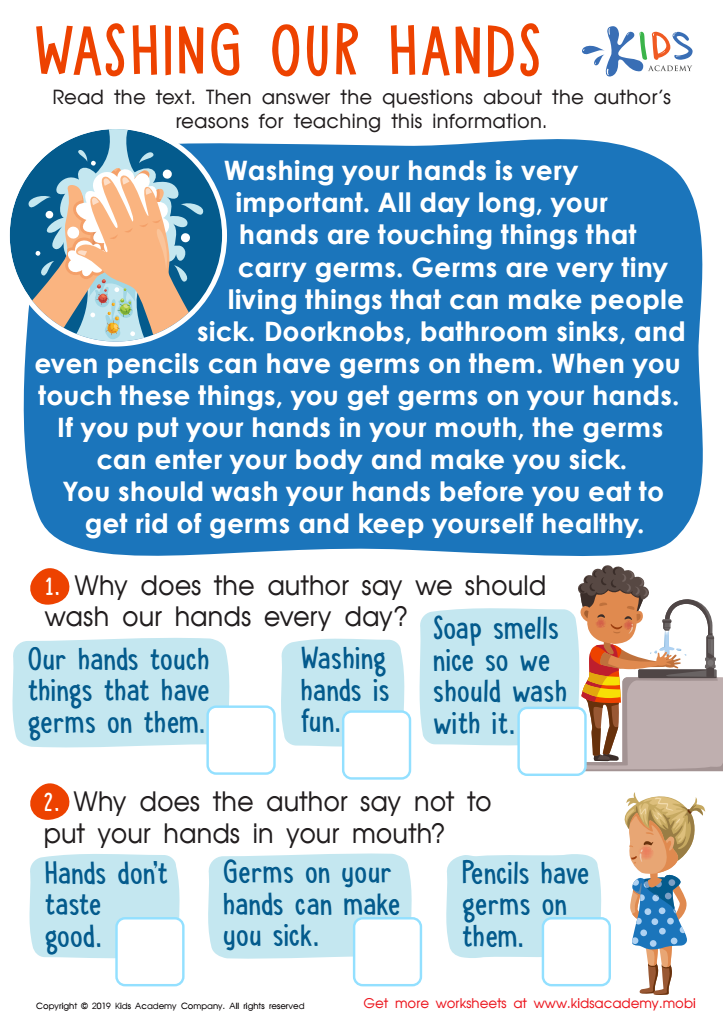
Washing Our Hands Worksheet
Reading allows us to gain knowledge. Informational texts provide essential facts which we need to be able to interpret and use. This PDF worksheet helps kids understand the importance of handwashing. It informs them of the germs they may come into contact with, before asking them to answer related comprehension questions.
Washing Our Hands Worksheet
Worksheet
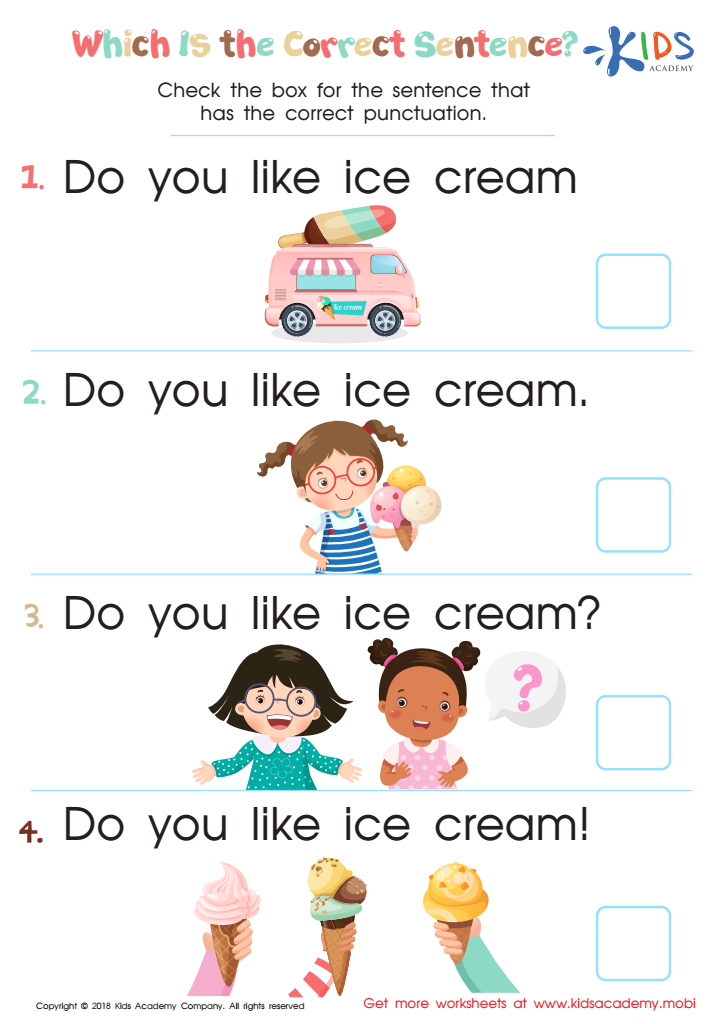
Which is the Correct Sentence? Worksheet
Punctuation is crucial in sentence formation. If your kid still doesn't grasp it, bigger hurdles await when writing sentences. Get them to read simple sentences, then ask if they know the right punctuation. Assist them in selecting the sentence that has the accurate punctuation.
Which is the Correct Sentence? Worksheet
Worksheet
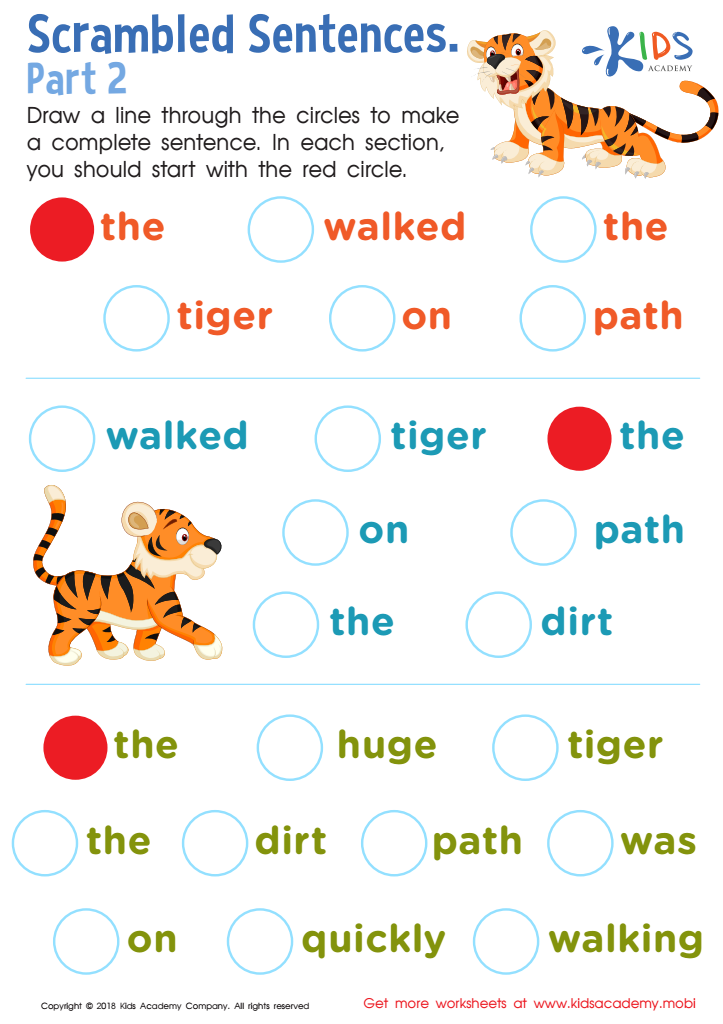
Scrambled Sentences Part 2 Worksheet
This printable worksheet helps kids construct simple, correct sentences. Introduce them to making sentences if they're new to it. Have them draw a line through the circles to form a sentence, starting with the red circle. After completing this exercise, they'll be able to craft short sentences with confidence.
Scrambled Sentences Part 2 Worksheet
Worksheet
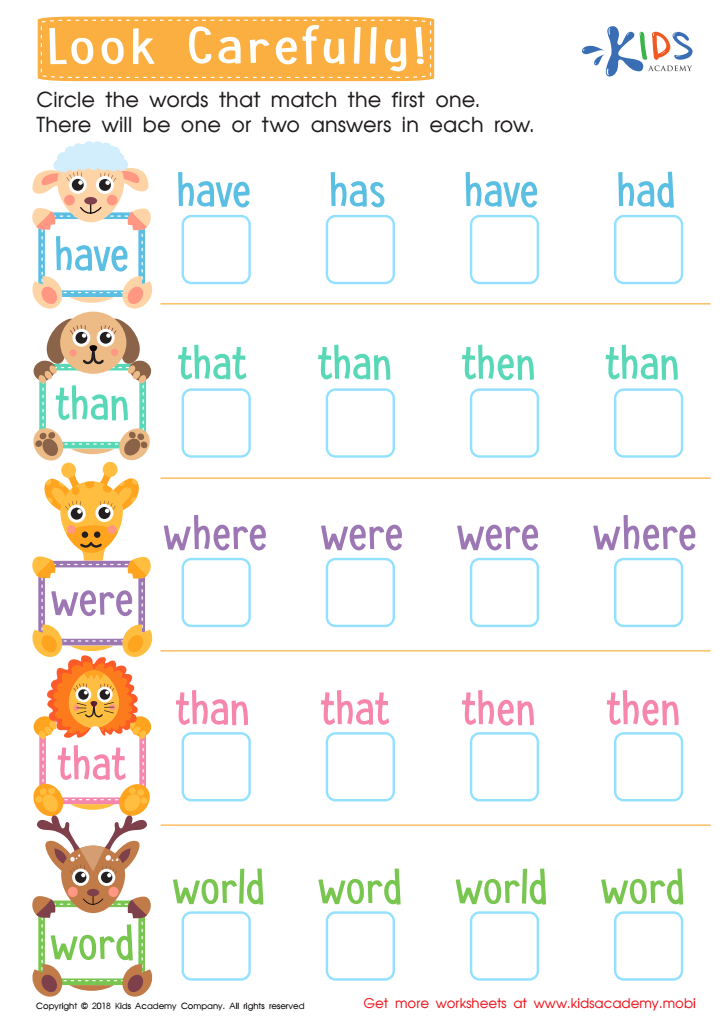
Look Carefully Worksheet
It's crucial to teach kids to identify sight words and become fluent readers. This free worksheet helps make it simpler for kids to learn the similarities and differences between similar words. They'll get practice by looking at the box word and selecting the one that matches from the row.
Look Carefully Worksheet
Worksheet
Join Kids Academy for Free
Who is primarily going to use this learning content?








Cognitive development is crucial for children's overall growth, particularly in the realms of language skills and reading comprehension, especially between the ages of 4-7. During these formative years, children's brains undergo significant changes, enabling them to process information more effectively. As they learn to decode words, understand sentence structure, and grasp meaning, their emerging reading skills are foundational for academic success.
Parents and teachers should care about normal reading comprehension milestones during this period because early proficiency can lead to increased confidence and a love for reading, influencing lifelong learning habits. these early years shape cognitive abilities like critical thinking, problem-solving, and the ability to make connections—not only in language but across all subjects. Furthermore, reading comprehension equips children with the skills needed to understand instructions, engage in discussions, and explore new concepts, preparing them for more complex literacy tasks in later grades.
Additionally, being attentive to reading comprehension helps identify potential learning difficulties early on, allowing for timely intervention and support. This proactive approach fosters an inclusive educational environment where all children can thrive, ultimately enhancing their emotional and cognitive development during a pivotal time in their lives. Investing in these early skills pays dividends in a child’s future academic journey.








