Vocabulary improvement Normal Reading Comprehension Worksheets for Ages 4-7
3 filtered results
-
From - To
Boost your child's language skills with our engaging Vocabulary Improvement Normal Reading Comprehension Worksheets for ages 4-7. Designed to enhance young learners' vocabulary, these worksheets offer fun and interactive reading passages tailored to their age group. Each worksheet includes exercises focused on word meanings, sentence usage, and contextual understanding. Perfect for early learners developing foundational reading skills, our worksheets help children expand their vocabulary while building critical thinking and comprehension abilities. Foster a love for reading and support your child's educational journey with our expertly crafted, easy-to-print resources from Kids Academy.
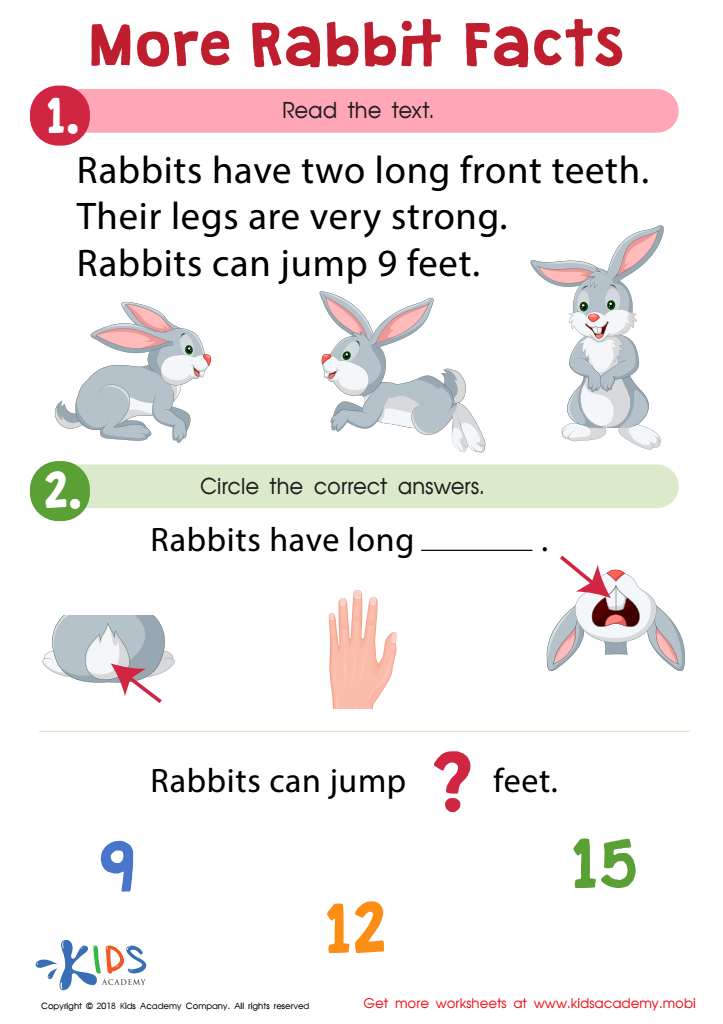
More Rabbit Facts Worksheet
 Assign to My Students
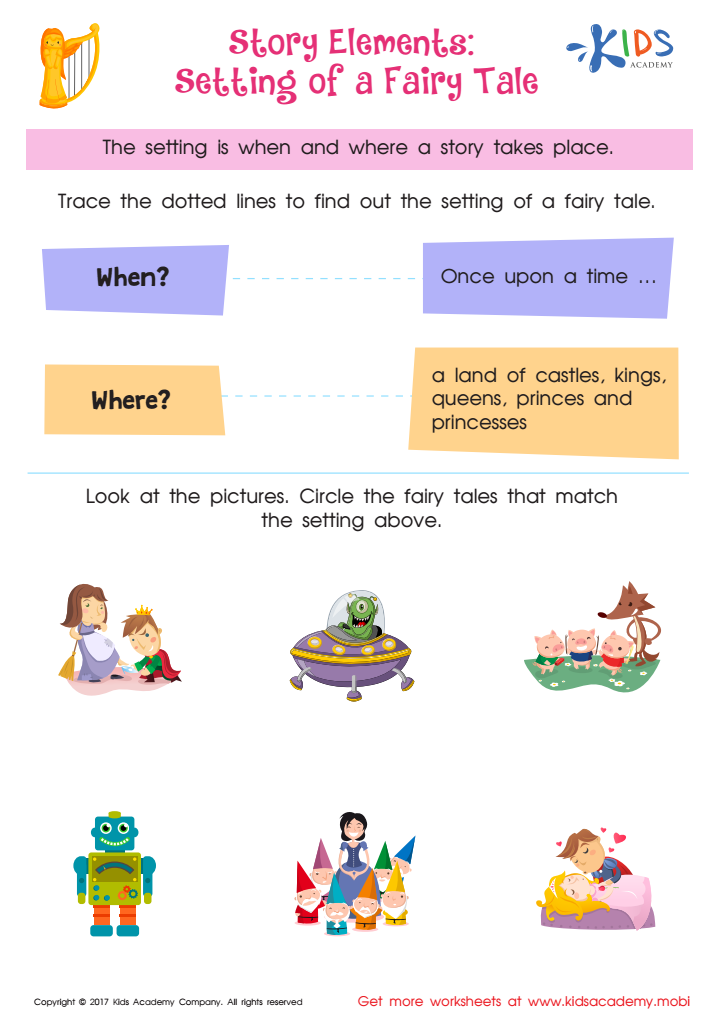
Story Elements: Setting of a Fairy Tale Printable
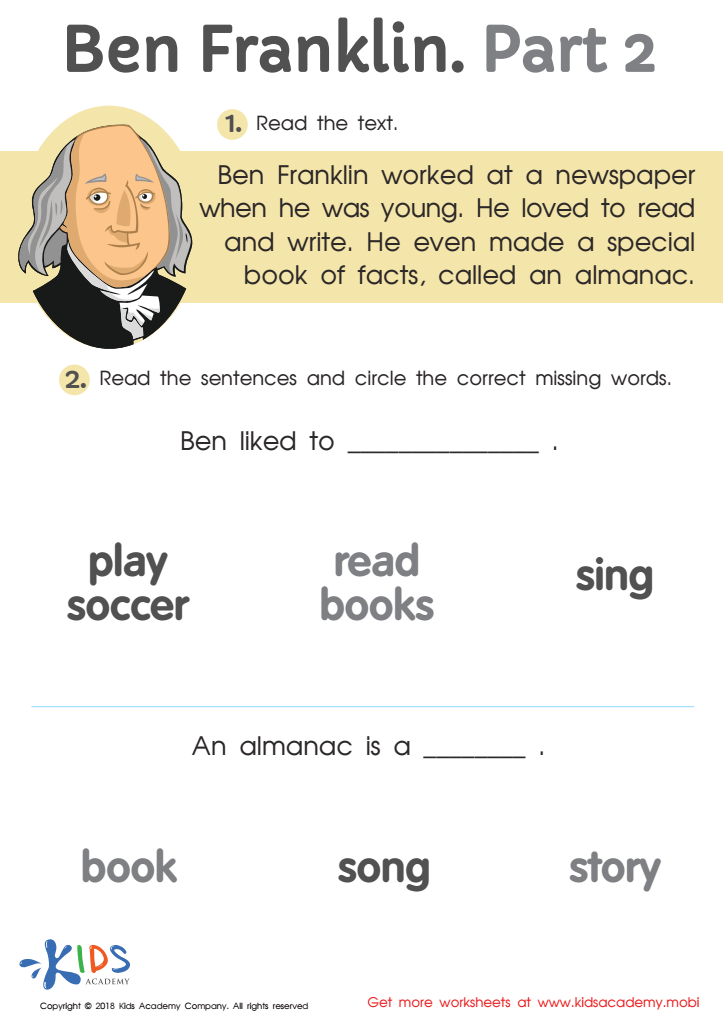
Ben Franklin Part 2 Worksheet








Vocabulary improvement and reading comprehension are foundational elements for young children, particularly ages 4-7, to ensure their academic success and overall communication skills. During these formative years, children's brains are incredibly receptive to learning new words and concepts. By nurturing vocabulary development, parents and teachers can enhance a child's ability to understand and engage with the world around them. A rich vocabulary allows for more precise expression and fosters better listening and communication skills, which are essential for effective classroom participation.
Moreover, a robust vocabulary is directly linked to improved reading comprehension. Reading comprehension is not just about recognizing words but also about understanding the meaning behind sentences, stories, and informational texts. When children encounter new or complex words within a text, a strong vocabulary base helps them infer meanings, increasing their reading confidence and enjoyment.
Parents and teachers who prioritize vocabulary and reading comprehension drive cognitive growth, academic achievement, and lifelong learning skills. These foundational skills open doors to new knowledge, empower problem-solving abilities, and contribute to social-emotional development by allowing children to better interpret and express their own feelings and experiences. Therefore, investing time and effort into vocabulary and reading comprehension for young learners is a crucial step toward their future success.








