Identifying story elements Normal Reading Fiction Worksheets for Ages 4-7
3 filtered results
-
From - To
Discover our engaging "Identifying Story Elements" worksheets, specially designed for children ages 4-7! These interactive activities support young learners in understanding key components of fiction, such as characters, setting, plot, and conflict. By exploring familiar stories through fun exercises, kids enhance their reading comprehension and critical thinking skills. Each worksheet is tailored to provide a friendly and stimulating learning experience, making reading both enjoyable and educational. Perfect for home or classroom use, these resources foster a love for literature while empowering children to analyze stories effectively. Help your little ones unlock the magic of storytelling with our comprehensive worksheets today!
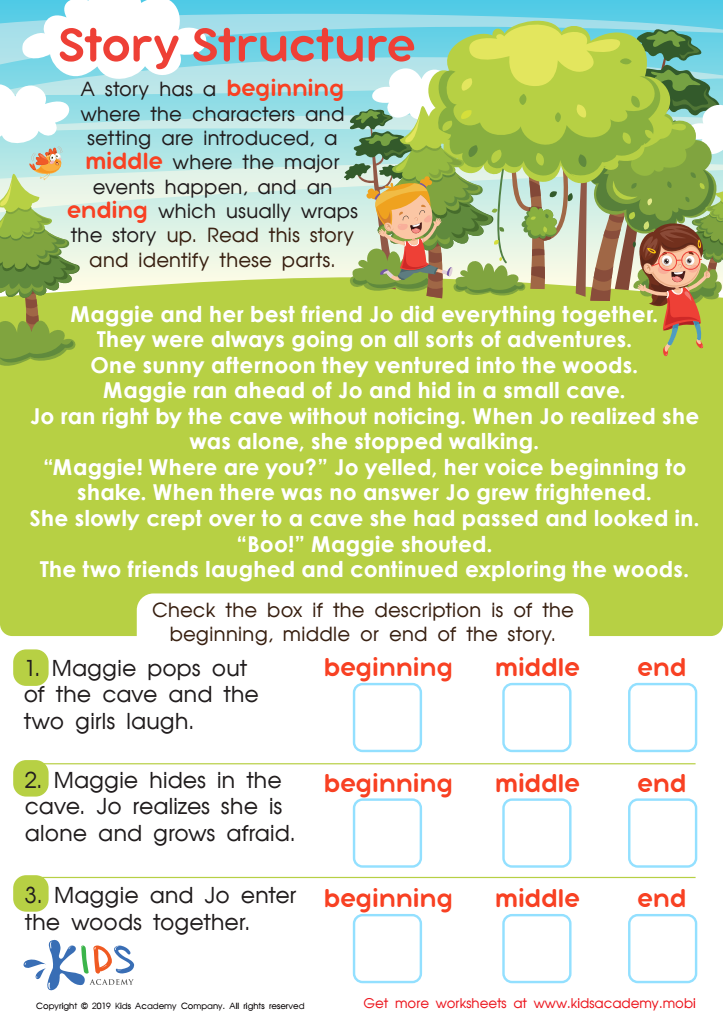
Story Structure Worksheet
 Assign to My Students
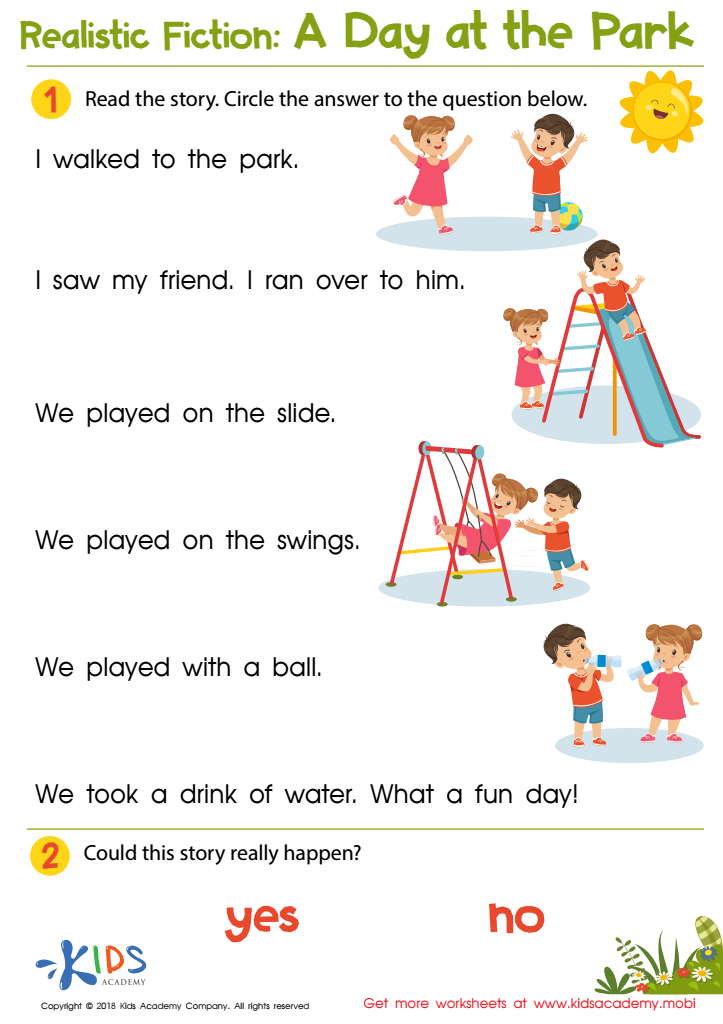
A Day at the Park Worksheet
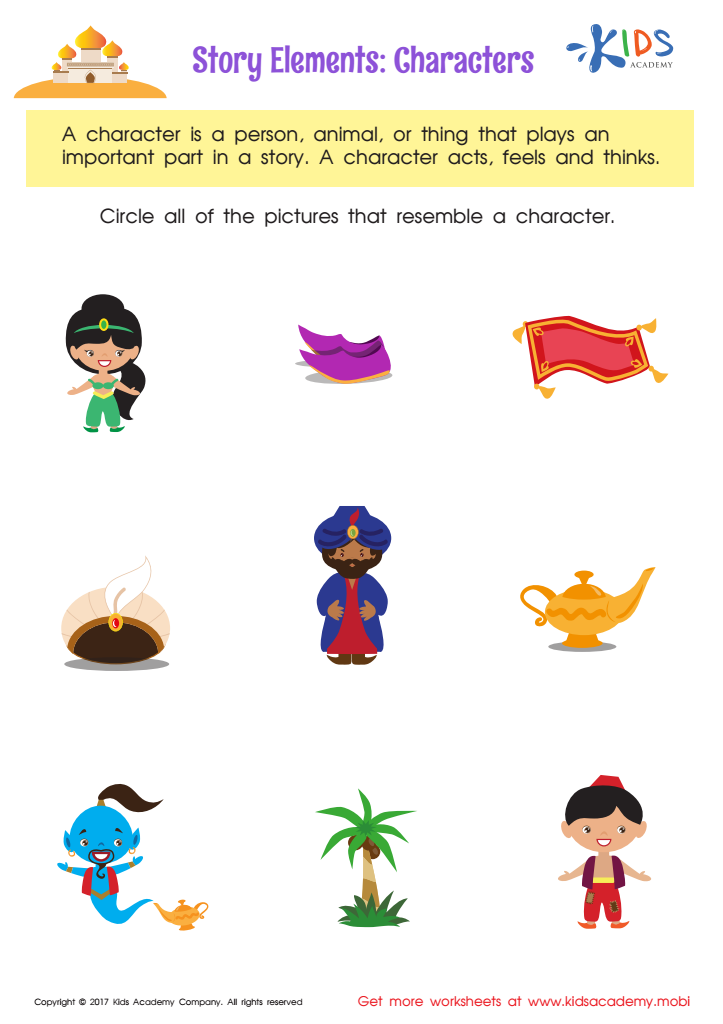
Story Elements Printable







Identifying story elements in fiction is crucial for young readers aged 4-7, as it lays the foundation for their literacy development. Parents and teachers must care about this process because understanding story elements—such as characters, setting, plot, conflict, and resolution—enhances children's comprehension and critical thinking abilities.
First, recognizing characters helps children relate to others and develop empathy, while the setting fosters awareness of different environments and contexts. Grasping the plot invites them to anticipate events and grasp cause-and-effect relationships, essential skills for improved understanding in both academic and real-life scenarios.
Furthermore, engaging with conflicts and resolutions cultivates problem-solving abilities and teaches children about overcoming challenges. These discussions encourage imaginative thinking and fuel creativity, vital traits in today’s dynamic world.
By fostering these skills early on, parents and teachers instill a love for reading and pave the way for lifelong literacy habits. Incorporating story elements into discussions not only makes reading enjoyable but also equips young learners with the tools necessary for academic success. Ultimately, the ability to identify and analyze story elements enriches children's experiences with literature, contributing to overall cognitive and emotional growth.







