Rhyming skills development Normal Rhyming Words Worksheets for Ages 4-7
3 filtered results
-
From - To
Our Rhyming Skills Development Normal Rhyming Words Worksheets for ages 4-7 are designed to engage young learners in the fun and essential activity of recognizing and creating rhyming words. These worksheets help kids build foundational reading skills and enhance their phonemic awareness, a crucial step in early literacy. Colorful and interactive, each worksheet offers captivating exercises that make learning enjoyable and effective. Ideal for classroom and home use, our worksheets provide the perfect opportunity for kids to expand their vocabulary, develop listening skills, and foster a love for language through playful practice.
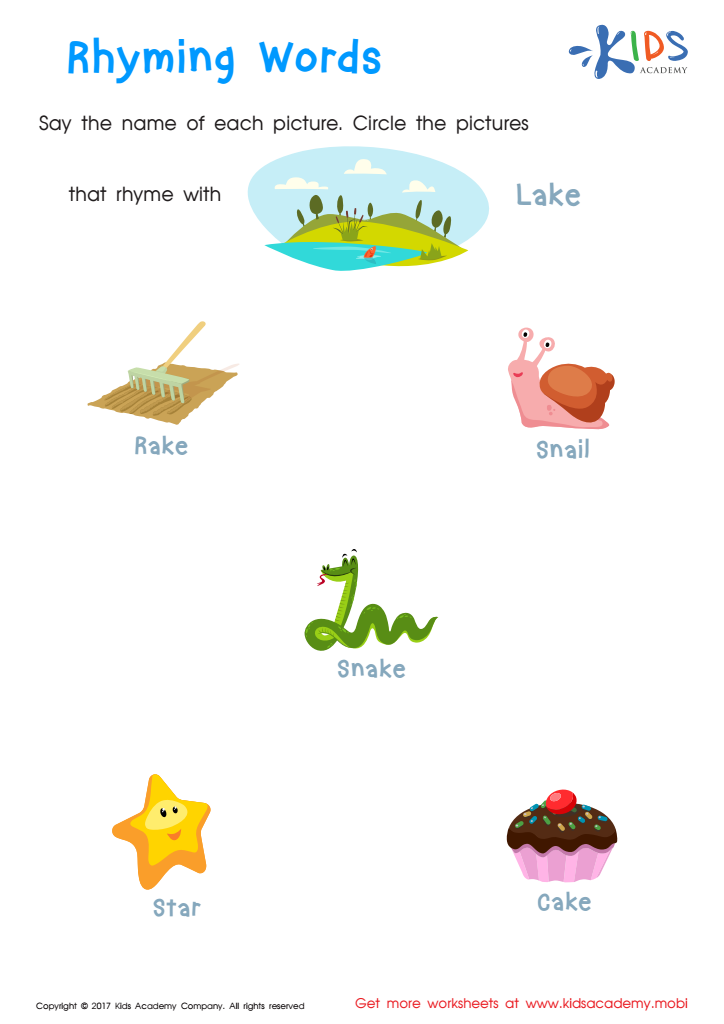
Rhyming Words Rhyming Worksheet
 Assign to My Students
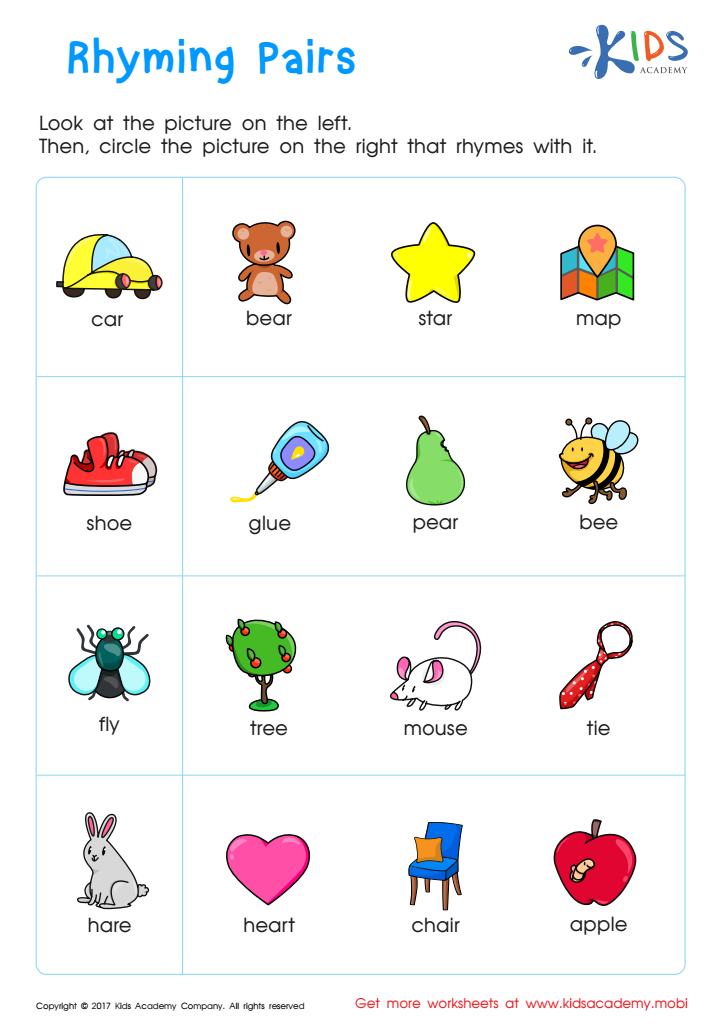
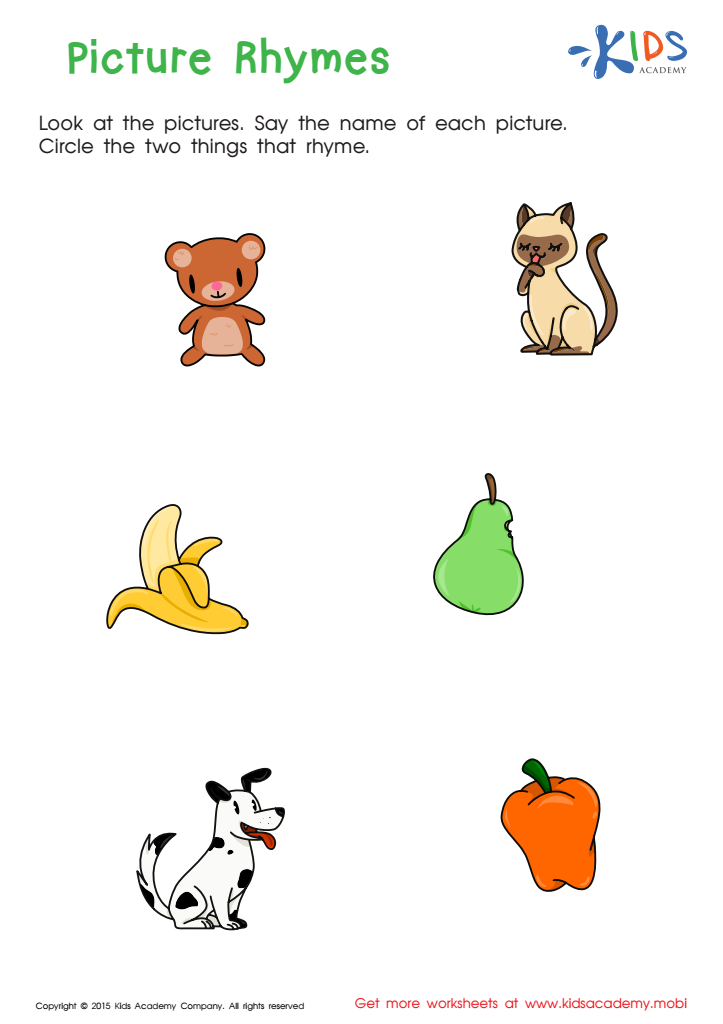
First Words: Picture Rhymes Worksheet








Developing rhyming skills in children aged 4-7 is crucial as it lays the foundation for their early literacy and language abilities. Rhyming helps children recognize patterns and sounds in words, which is essential for phonemic awareness—the ability to hear and manipulate the individual sounds in spoken words. Phonemic awareness is strongly linked to reading and spelling success.
When children practice rhyming, they become more adept at decoding words, which facilitates smoother reading progression. Moreover, recognizing rhymes aids in memory recall, boosting their vocabulary and comprehension skills. Rhyming also helps children understand word families, which makes it easier to learn new words and enhances their ability to predict spelling through sound patterns.
Rhyming activities are not only educational but also fun and engaging, promoting a positive attitude towards learning. Simple rhyming games, songs, and nursery rhymes can make learning enjoyable while reinforcing these essential skills.
Additionally, rhyming aids in speech development as children learn to form and pronounce different phonetic sounds. This can improve their overall communication abilities, increasing their confidence and social interaction.
Thus, both parents and teachers should prioritize rhyming skills development to ensure a strong linguistic foundation, instilling a love for reading and facilitating broader academic success for young learners.








