Animal Classification Normal Animals Worksheets for Ages 4-7
5 filtered results
-
From - To
Discover our engaging "Animal Classification Normal Animals Worksheets" designed for children ages 4-7! These worksheets are perfect for introducing young learners to the fascinating world of animals and their classifications. Featuring vibrant illustrations and simple exercises, children will explore different animal groups such as mammals, birds, reptiles, and more. Each worksheet is crafted to enhance observation skills, critical thinking, and understanding of animal habitats and characteristics. Perfect for homeschooling or classroom settings, these activities promote interactive learning while making science fun and enjoyable. Equip your child with foundational knowledge in animal classification today! Visit our website for more exciting resources!
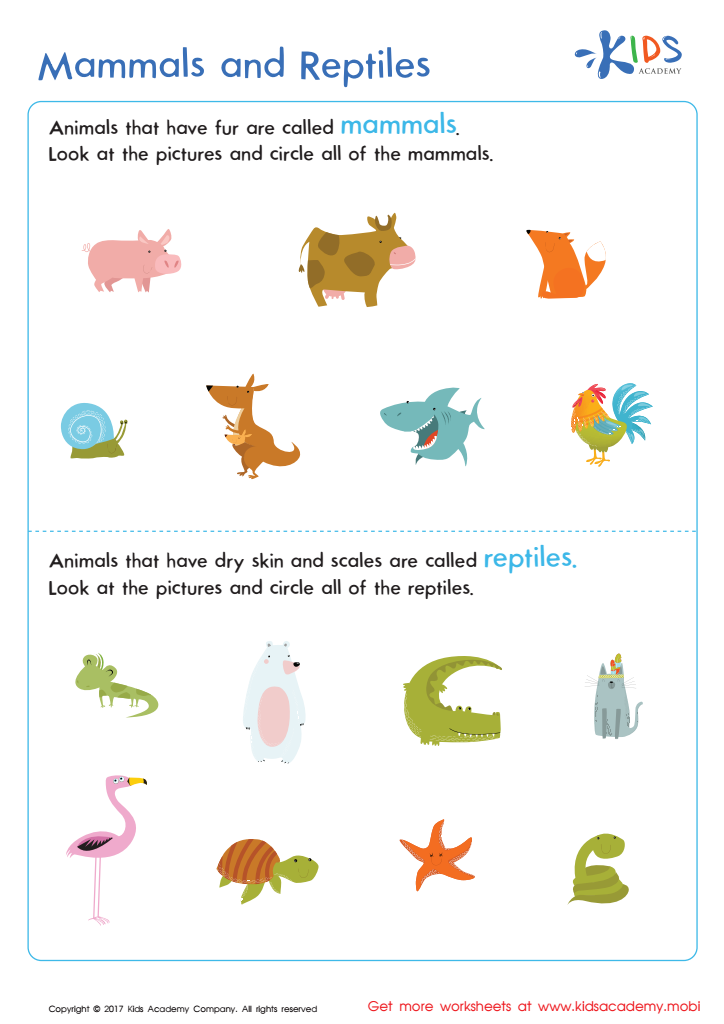
Mammals and Reptiles Worksheet
 Assign to My Students
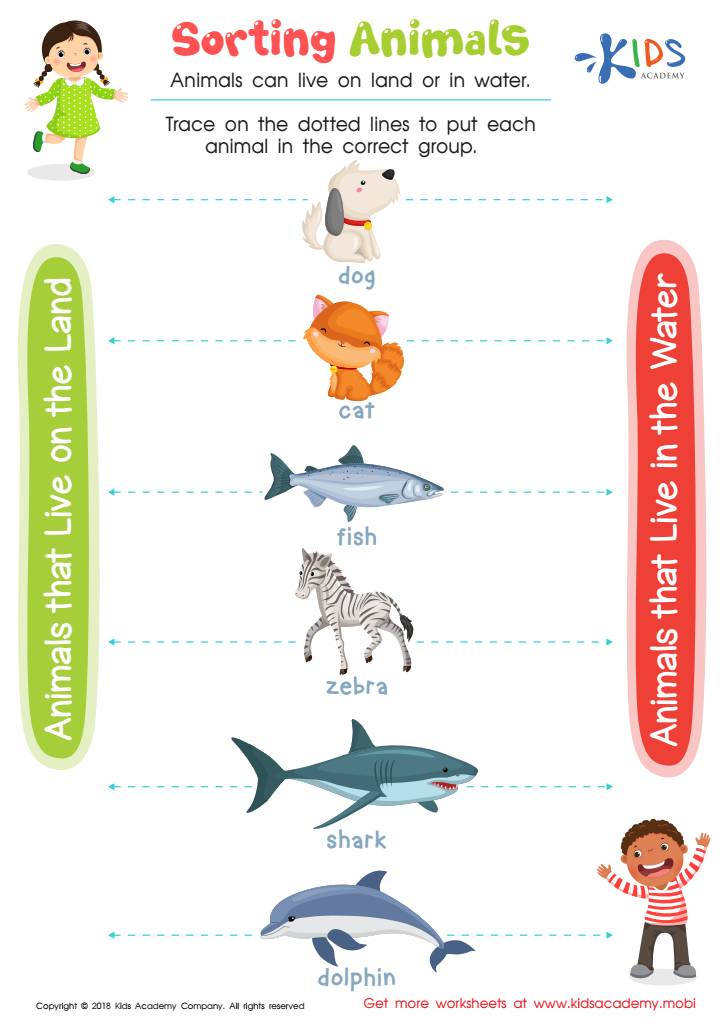
Sorting Animals Worksheet
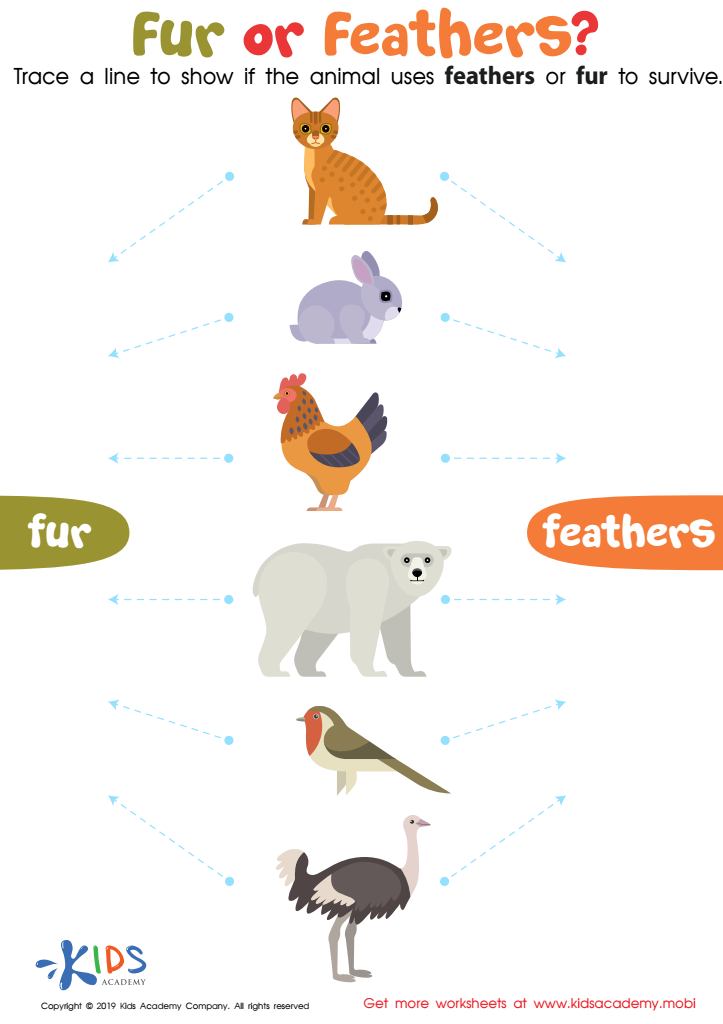
Fur or Feathers? Worksheet
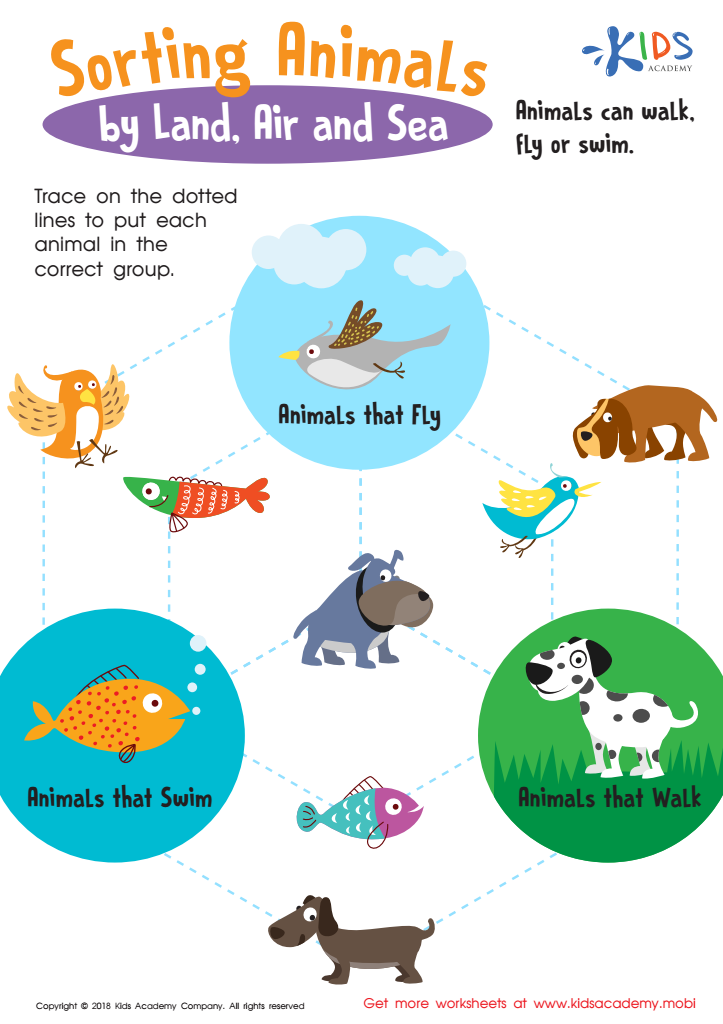
Sorting Animals by Land, Air and Sea Worksheet
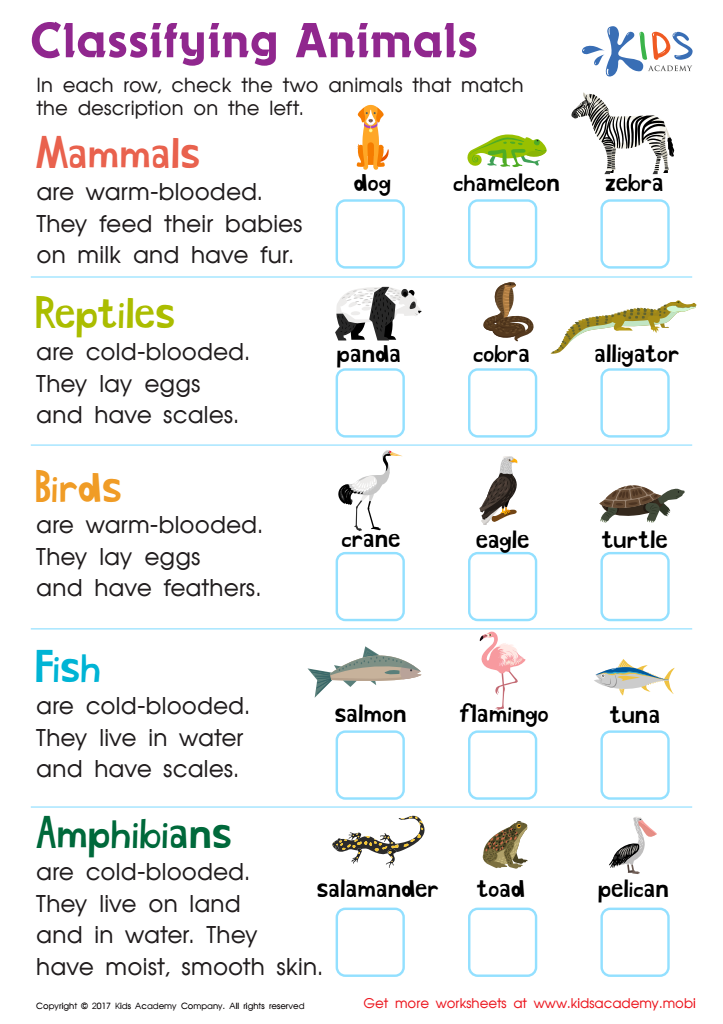
Classifying Animals Worksheet






Understanding animal classification is vital for children aged 4-7 as it lays the groundwork for their awareness of the natural world. Parents and teachers should care about this topic because it not only introduces young learners to the diversity of life but also fosters essential skills such as critical thinking and observation.
At this age, children are naturally curious and excited about animals. Through animal classification, they learn to categorize animals based on shared characteristics, which enhances their analytical skills. For instance, recognizing the difference between mammals, birds, reptiles, and amphibians introduces them to concepts like habitats, diets, and behaviors. This foundational knowledge promotes empathy and respect for living creatures.
Moreover, animal classification activities can be engaging and immersive. They can incorporate visuals, hands-on experiences, and storytelling that captivate young minds and promote teamwork. Learning in this way not only makes it fun but also enhances memory retention.
Finally, fostering an understanding of animal classification promotes environmental awareness among children, encouraging them to appreciate and protect biodiversity. By instilling this knowledge early on, parents and teachers play a significant role in shaping responsible and informed future stewards of our planet.








