Categorization skills Normal Animals Worksheets for Ages 4-7
3 filtered results
-
From - To
Enhance your child's learning with our "Categorization Skills Normal Animals Worksheets" tailor-made for ages 4-7. These engaging worksheets help young learners identify, sort, and categorize various animals, fostering critical thinking and problem-solving skills in a fun and interactive way. Each worksheet is designed with colorful illustrations and simple instructions to keep kids motivated while enriching their understanding of the animal kingdom. Perfect for home or classroom use, these resources empower children to develop their cognitive abilities while introducing them to fundamental science concepts. Discover the joy of learning through categorization and watch your kids thrive as young scientists!
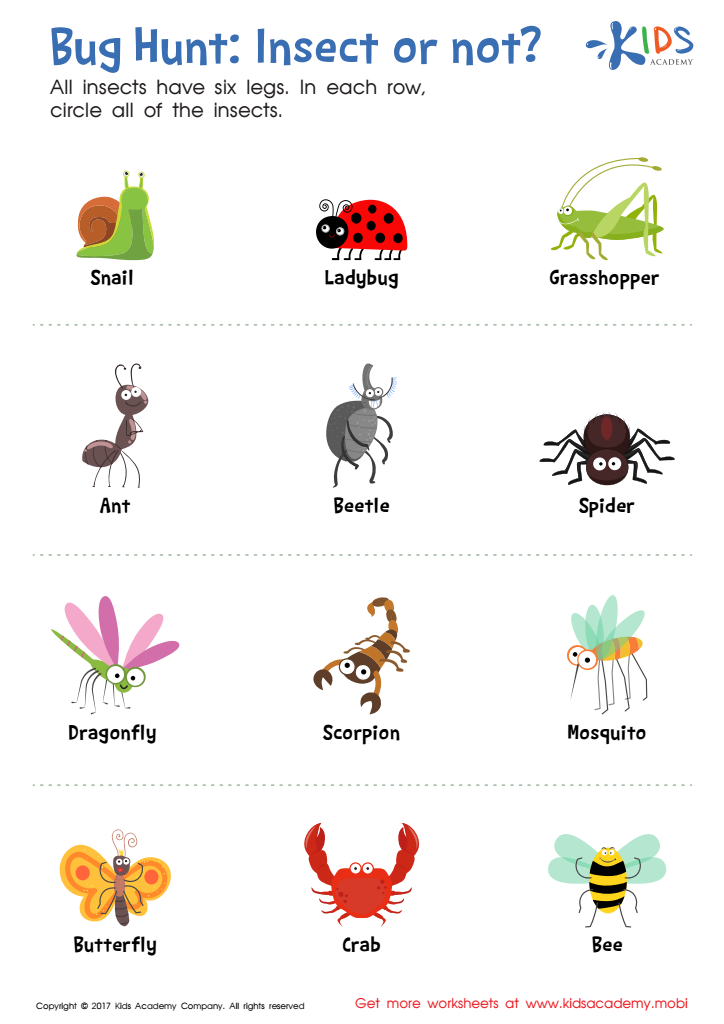
 Assign to My Students
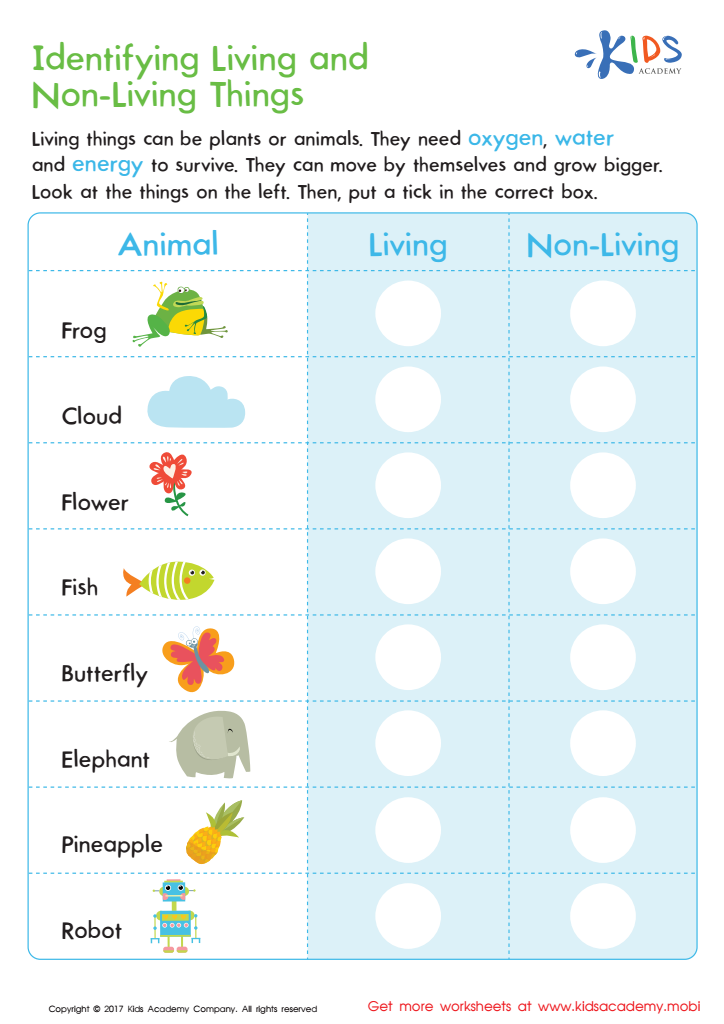
Identifying Living or Non–living Worksheet
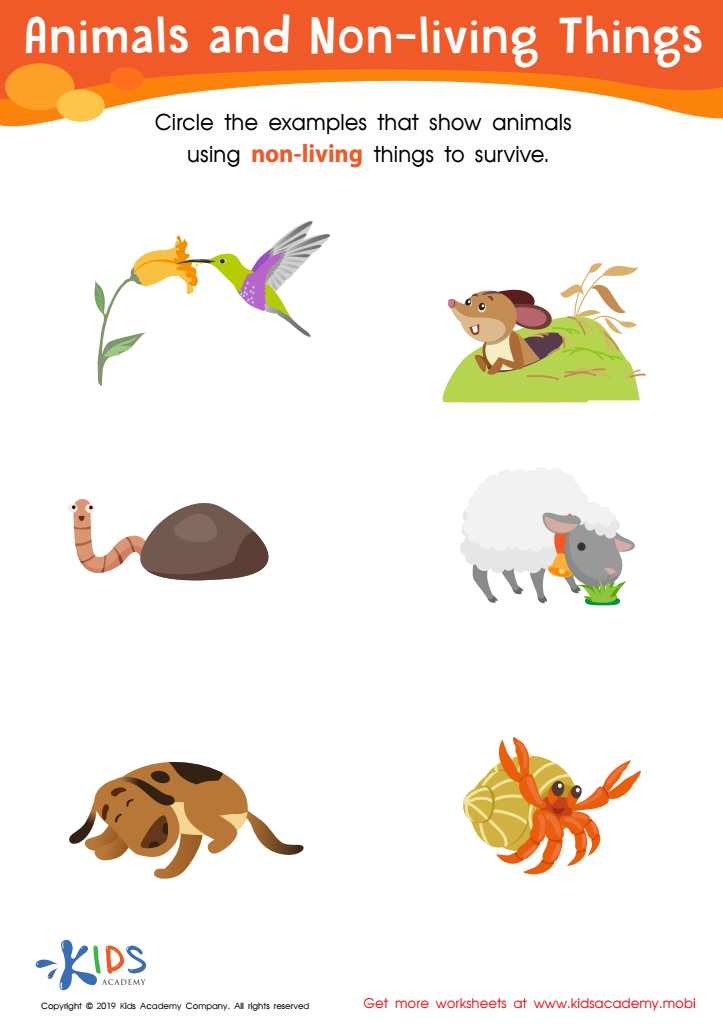
Animals and Non-Living Things Worksheet


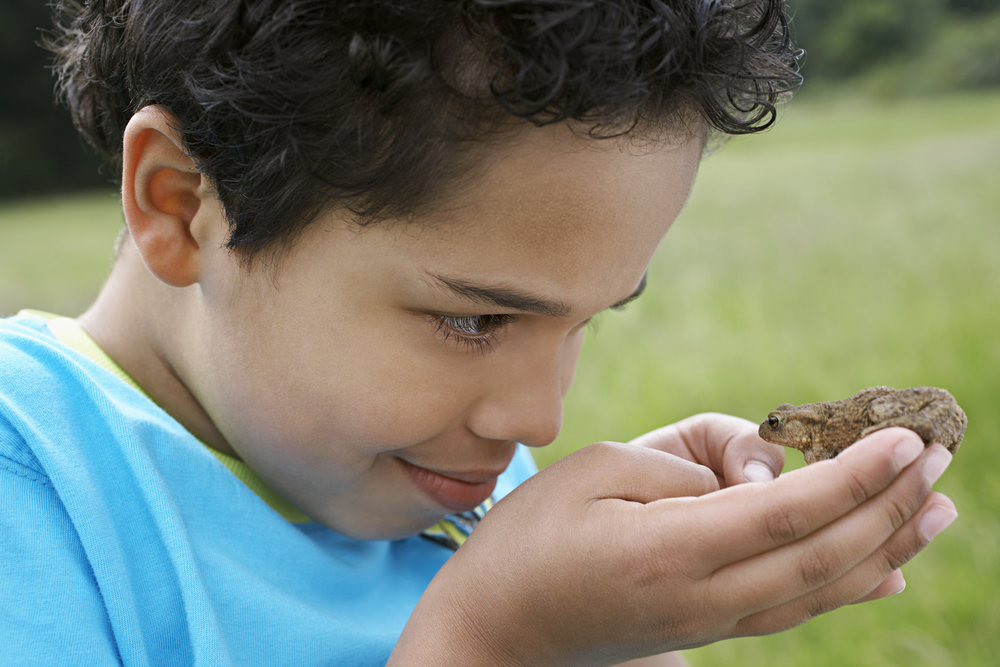



Categorization skills are crucial for children aged 4 to 7, particularly regarding normal animals, as they lay the foundation for critical thinking, problem-solving, and language development. By teaching children to group animals based on similarities—such as habitat, diet, or physical characteristics—they enhance their cognitive processing abilities. This practice fosters not only an understanding of the natural world but also how to analyze and organize information effectively.
Moreover, categorization is closely linked to literacy. When children learn to identify and categorize animals, they also expand their vocabulary by learning new words associated with different species and their traits. This vocabulary growth bolsters reading comprehension and supports overall academic achievement.
Additionally, categorization skills play a significant role in social-emotional development. As children learn to categorize animals in different groups, they develop empathy and awareness of diversity within ecosystems, which can translate to understanding human social dynamics.
Encouraging categorization through fun activities—such as games, puzzles, or nature walks—can engage children and make learning enjoyable. Parents and teachers can thus incentivize curiosity about animals while reinforcing important cognitive and social skills, ultimately preparing children for future learning and interpersonal interactions.








