Animal Classification Normal Science Worksheets for Ages 4-7
5 filtered results
-
From - To
Discover the fun and educational world of animal classification with our expertly designed science worksheets for ages 4-7! Perfect for young learners, these engaging activities will introduce children to the basics of animal groups, habitats, and characteristics. Through interactive exercises and colorful illustrations, kids will enhance their understanding of science while developing critical thinking skills. Whether at home or in the classroom, these printable worksheets from Kids Academy provide a fantastic, hands-on learning experience that will ignite curiosity and foster a love for nature and wildlife. Make science exciting with our Animal Classification Worksheets!
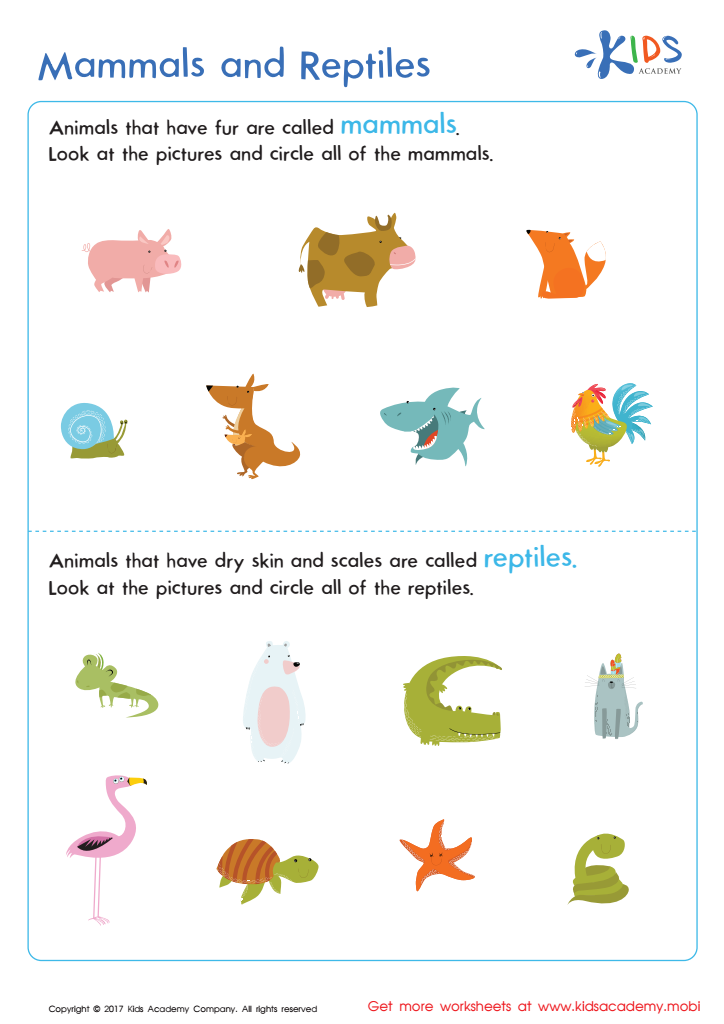
Mammals and Reptiles Worksheet
 Assign to My Students
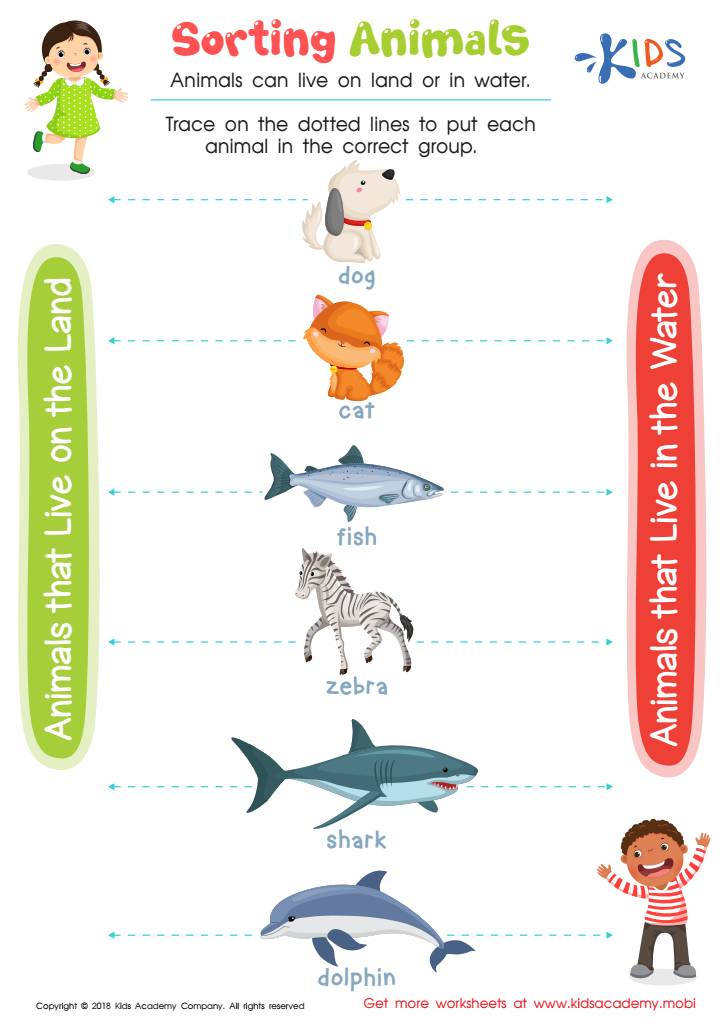
Sorting Animals Worksheet
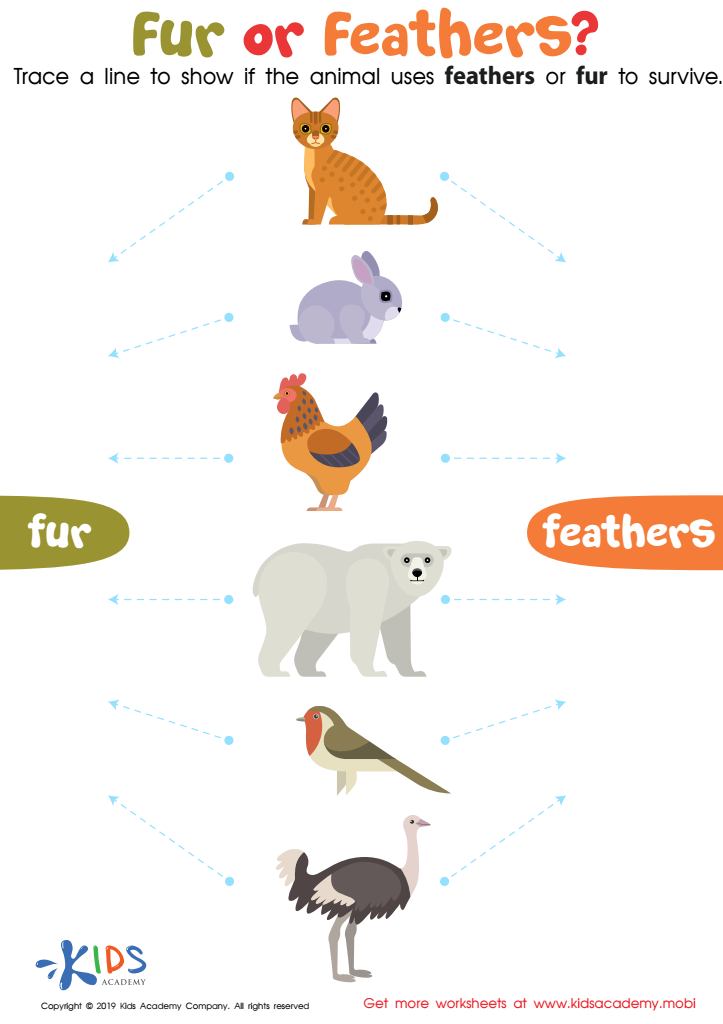
Fur or Feathers? Worksheet
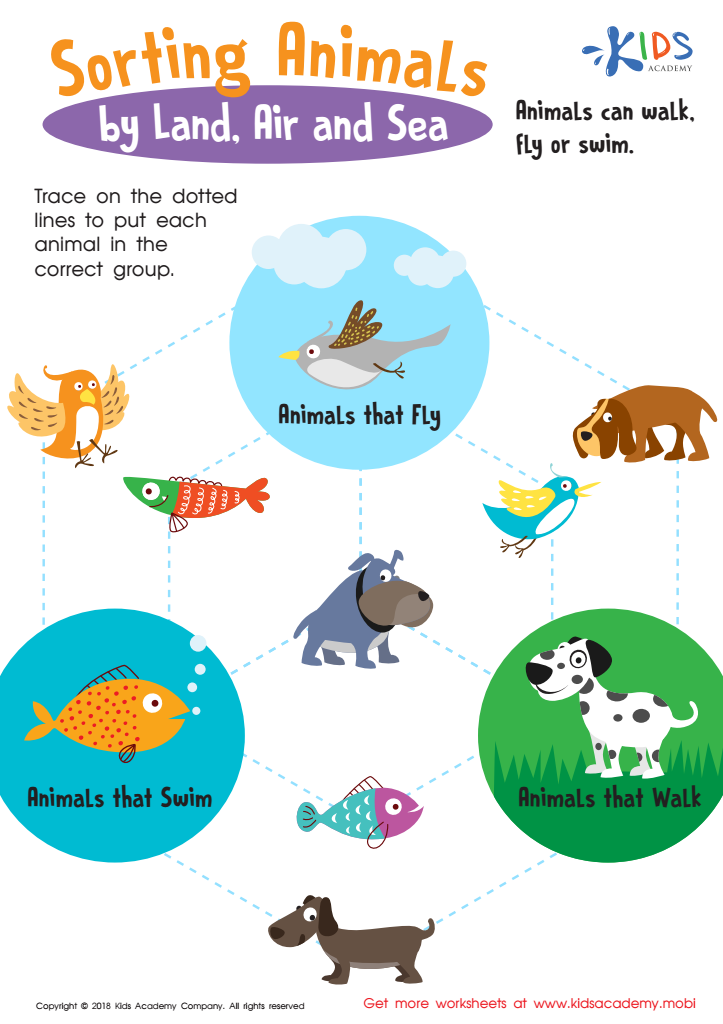
Sorting Animals by Land, Air and Sea Worksheet
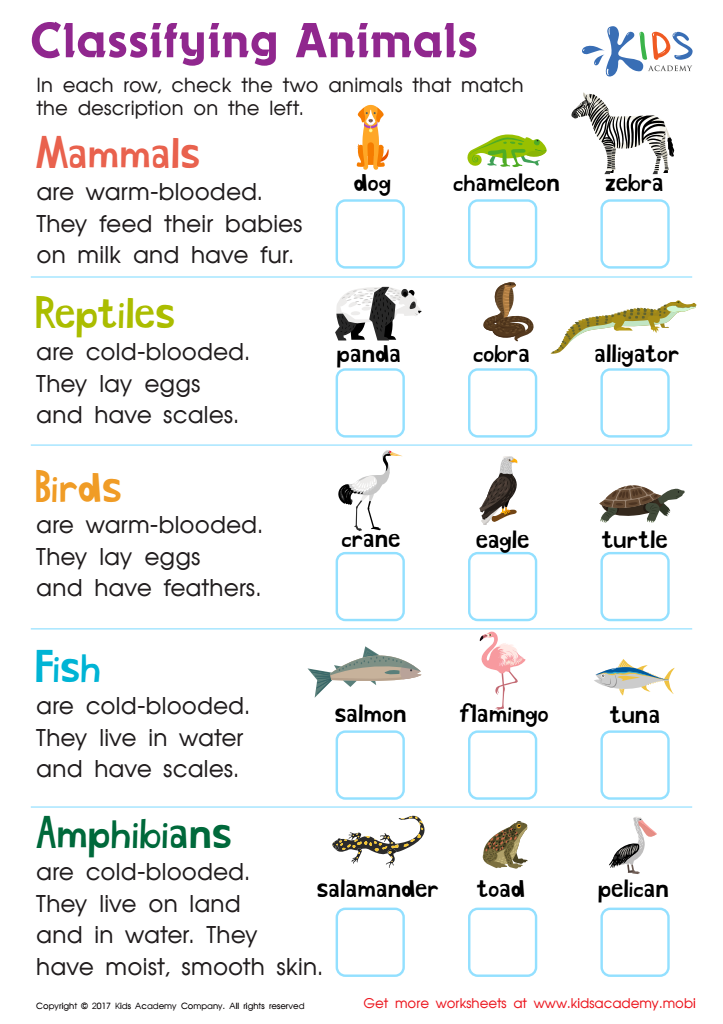
Classifying Animals Worksheet





Introducing children ages 4-7 to animal classification through activities like tabletop drawings or coloring books provides foundational understanding critical for their cognitive development. Animal classification, part of "normal science", fosters children’s ability to observe, categorize, and understand the natural world. Through age-appropriate activities like sorting animals by type (mammals, birds, reptiles, etc.), young children develop organizational skills and learn about biological diversity.
Parents and teachers should care about this subject since it enhances logical thinking and critical observation from an early age. Recognizing the basic characteristics that define different animal classes helps children to start recognizing patterns and relationships, reinforcing early scientific thinking that is crucial for more complex learning later on.
Moreover, animal classification activities encourage curiosity and involvement with nature, fostering a lifelong interest in the environment and conservation. Engaging children in such cognitive exercises also supports vocabulary development and language skills as they learn specific animal names and characteristics. Interacting with peers during learning activities enhances their social skills as they share and discuss their observations.
In summary, focusing on animal classification for young children strengthens critical thinking, vocabulary, observational skills, and a deep appreciation for biology and the natural world. This foundational knowledge sets the stage for more advanced science education and nurtures a deeper understanding of the environment they live in.







