
Animal identification Normal Science Worksheets for Ages 4-7
5 filtered results
Difficulty Level
Grade
Age
-
From - To
Subject
Activity
Standards
Welcome to our collection of Animal Identification Normal Science Worksheets, perfect for children aged 4-7! Designed to ignite curiosity and foster a love for nature, these engaging worksheets help young learners explore the fascinating world of animals. Through fun activities like matching pictures, coloring tasks, and simple identification exercises, kids develop critical thinking and observational skills. These worksheets cater to various learning styles and are ideal for home and classroom use. Whether your child is discovering the difference between mammals and reptiles or admiring their favorite animals, our resources provide delightful learning experiences that promote knowledge and creativity!
Favorites
With answer key
Interactive
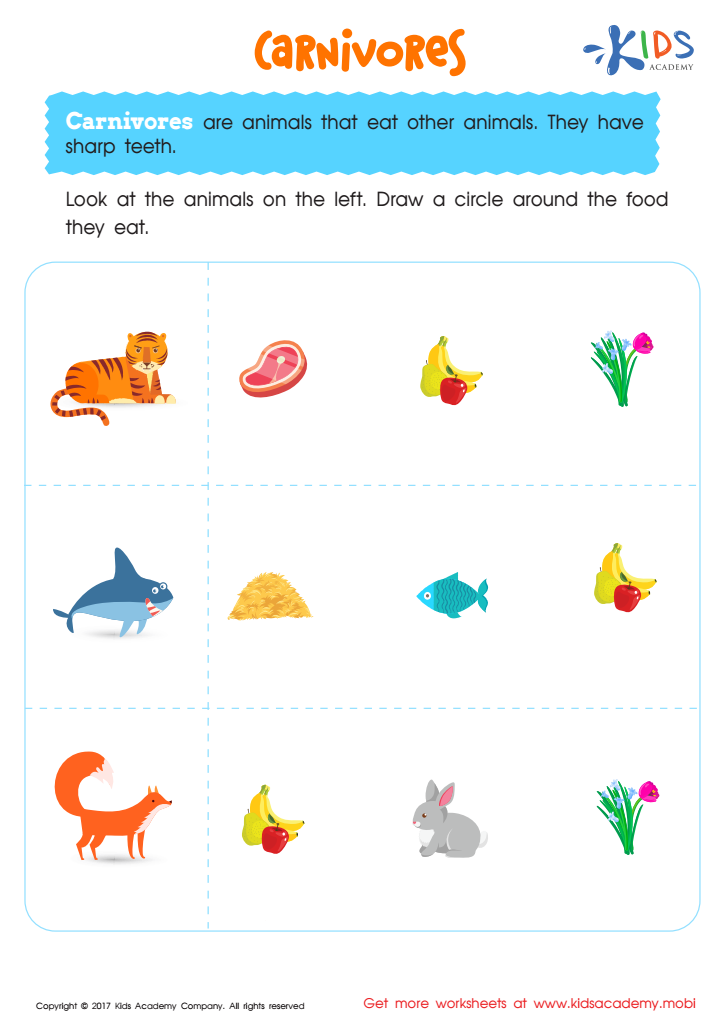
Carnivores Worksheet
Boost their vocabulary and help them explore the incredible world of carnivores.
 Assign to My Students
Carnivores Worksheet
Worksheet
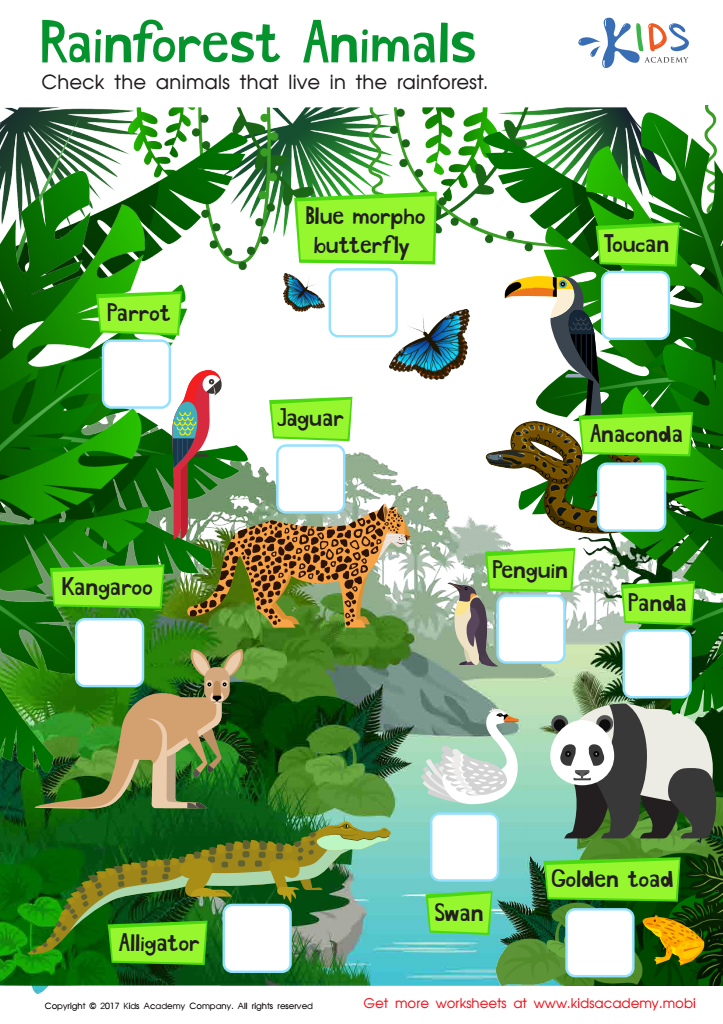
Rainforest Animals Worksheet
Kids love the bright, vivid pics of rainforest animals in this worksheet. It fuels their interest in life science and brings joy to their learning. It encourages them to study these animals in detail.
Rainforest Animals Worksheet
Worksheet
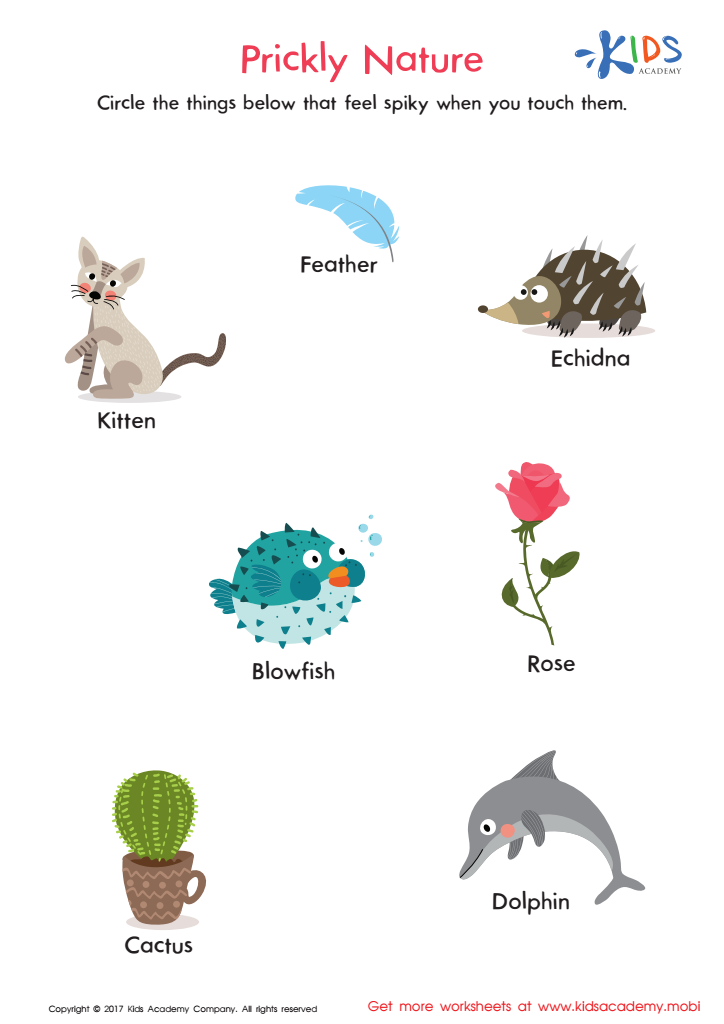
Prickly Nature Worksheet
Help your child stay safe and enhance critical thinking skills with this prickly nature worksheet. It can help them recognize spiky objects in their environment by teaching them to differentiate between prickly and soft textures. Plus, your kid will learn how to admire and avoid them. Get started today!
Prickly Nature Worksheet
Worksheet
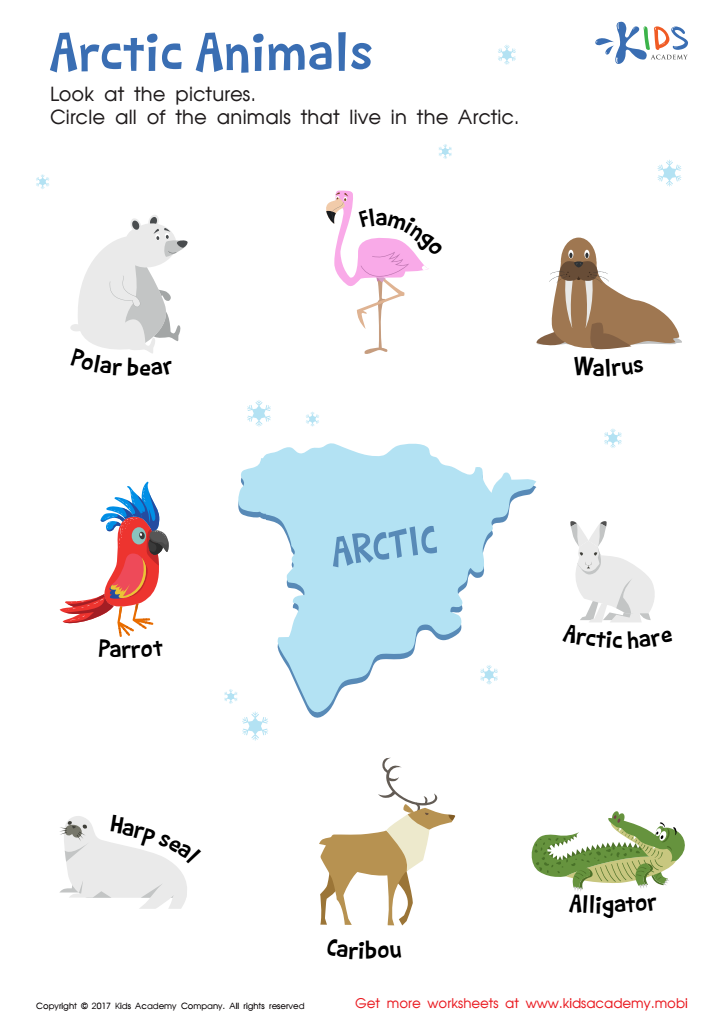
Arctic Animals Worksheet
Kids love animals and this worksheet is a great way to teach them where they live. It reinforces classification skills and introduces new animals, like the Arctic hare. Use it to discuss the Arctic climate and how these animals live, then ask your child where other animals live to keep the conversation going.
Arctic Animals Worksheet
Worksheet
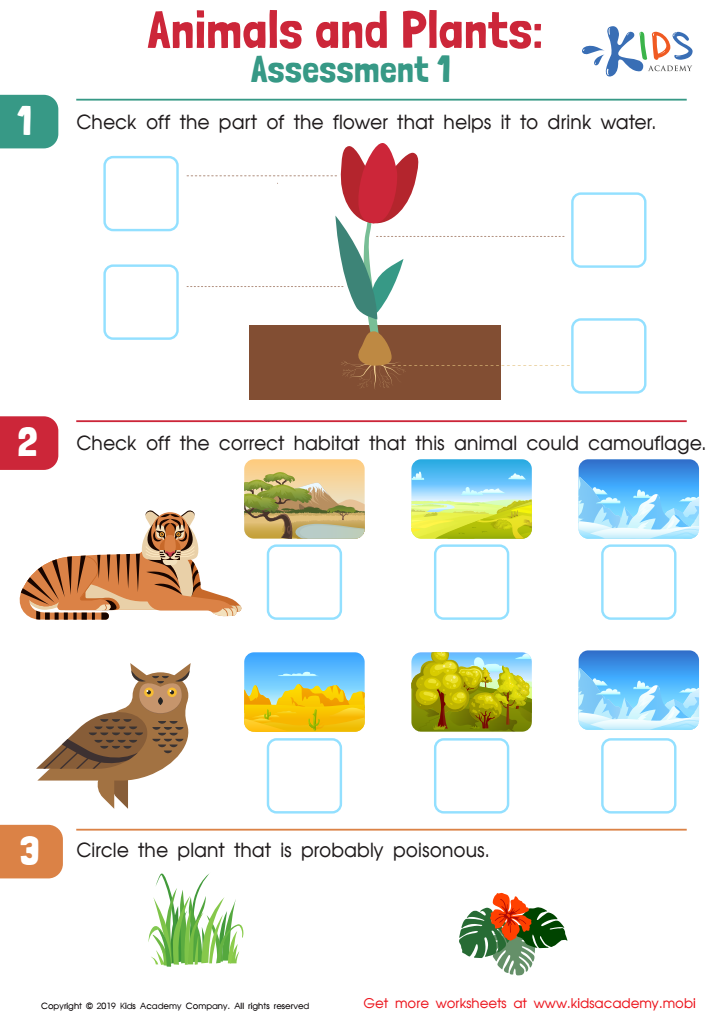
Animals and Plants: Assessment 1 Worksheet
Do you want to easily assess your child's understanding of basic science concepts? This colorful PDF offers a free opportunity for them to test their knowledge about parts of a flower, poisonous plants, animal habitats and more! Bright pictures make it fun and easy for you to see what they know.
Animals and Plants: Assessment 1 Worksheet
Worksheet
Join Kids Academy for Free
Who is primarily going to use this learning content?







Animal identification is crucial for young learners aged 4-7, as it serves as a gateway to understanding the natural world and fostering a sense of responsibility towards animals. For parents and teachers, engaging children in activities that promote animal identification can stimulate curiosity and encourage exploration of nature.
Understanding different animals helps children develop essential observational skills and enhances their ability to classify and categorize information, which are foundational skills in science. By learning to identify animals, children also gain insights into diversity, habitats, and ecosystems, leading to a greater appreciation for the environment.
Moreover, animal identification can promote empathy. As children recognize that animals have unique traits and needs, they learn compassion and respect for living creatures. This emotional connection is crucial for nurturing environmentally responsible citizens.
Additionally, introducing animal identification can build vocabulary, as children expand their language through discussions about various species. Activities such as animal-themed games, picture books, and nature walks enable interactive learning, making science fun and accessible.
In summary, animal identification enriches children's education, promotes critical thinking, enhances vocabulary, fosters empathy, and lays the groundwork for a healthy relationship with the environment. Parents and teachers play a vital role in guiding this educational journey.







