Basic astronomy knowledge Normal Science Worksheets for Ages 4-7
3 filtered results
-
From - To
Explore our engaging "Basic Astronomy Knowledge Normal Science Worksheets" designed for children ages 4-7! These printable worksheets introduce young learners to the fascinating world of astronomy, sparking their curiosity about the universe. With colorful illustrations and simple instructions, children will discover essential concepts such as planets, stars, and the moon. Tailored to meet early learning standards, our worksheets promote critical thinking and enhance literacy skills while making science fun. Perfect for use at home or in the classroom, these resources make foundational astronomy concepts accessible and exciting for young minds. Start your child's journey through the stars today!
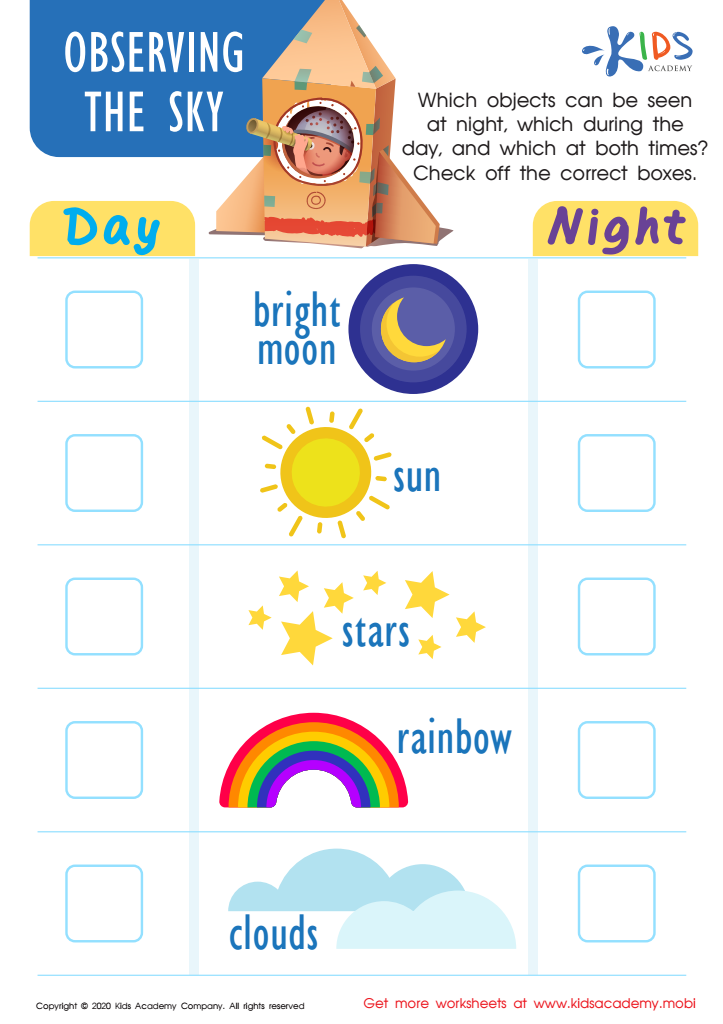
Observing the Sky Worksheet
 Assign to My Students
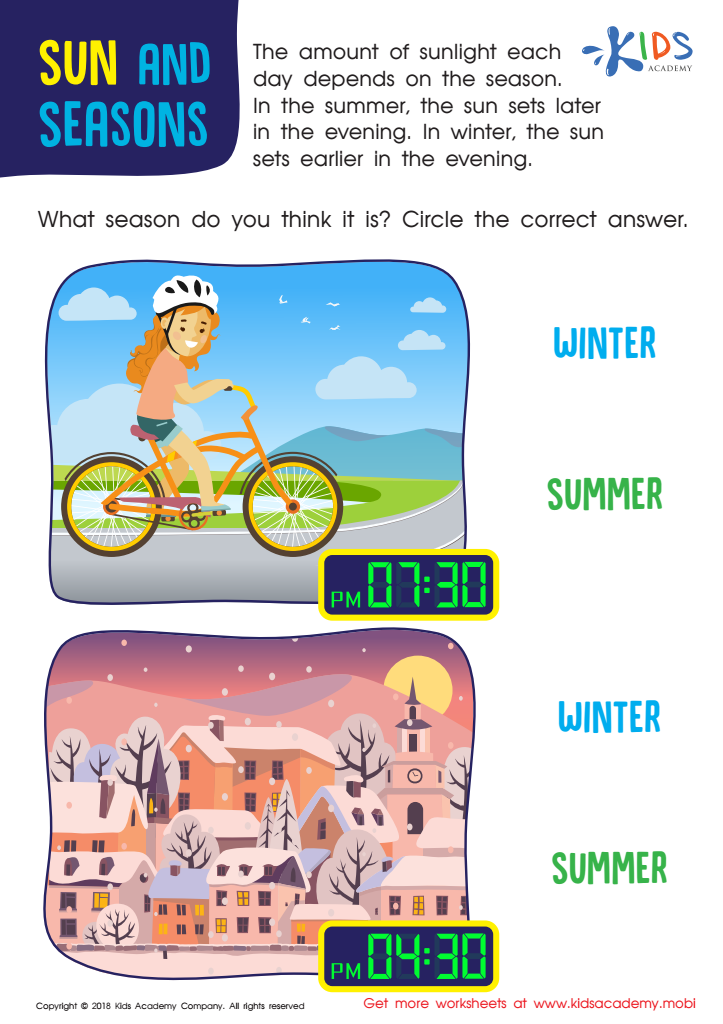
Sun and Seasons Worksheet
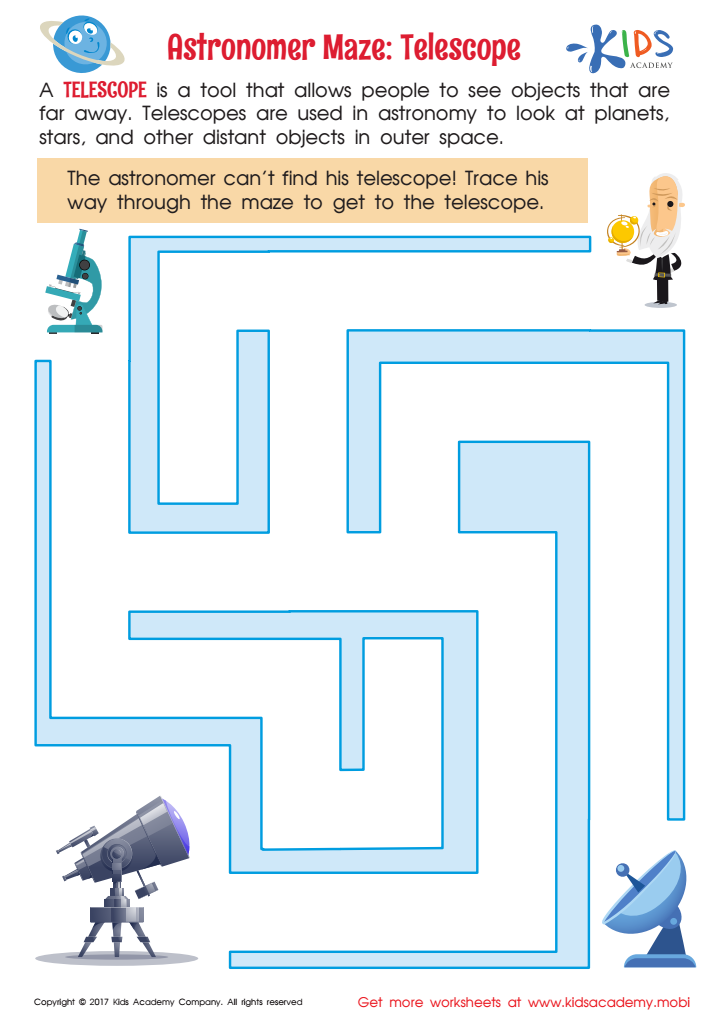
Astronomer Maze: Telescope Worksheet








Parents and teachers should care about basic astronomy knowledge for young children ages 4-7 because it nurtures curiosity and supports cognitive development. At this age, children are naturally inquisitive, asking questions about the stars, planets, and the universe. Introducing them to astronomy fosters critical thinking skills, encouraging them to explore and understand scientific principles early on.
Basic astronomy also helps build a foundational vocabulary; words like "orbit," "planet," and "star" infuse their language development with scientific terminology. Additionally, discussing celestial bodies can inspire a fascination for science, technology, engineering, and mathematics (STEM), potentially sparking a lifelong interest in these areas.
Moreover, engagements in astronomy-themed activities—like stargazing, planet crafts, or visiting planetariums—promote bonding moments between parents, teachers, and children, cultivating a love for lifelong learning. Finally, astronomy introduces concepts of time and space, aiding children in grasping their own place in the universe while developing observational skills. Overall, equipping children with basic astronomy knowledge lays a strong foundation for future academic pursuits and encourages them to appreciate the wonders of our world and the universe beyond.







