Developing analytical skills Normal Science Worksheets for Ages 4-7
3 filtered results
-
From - To
Unlock the potential of young minds with the "Developing Analytical Skills Normal Science Worksheets," specially designed for children aged 4-7. These engaging worksheets foster critical thinking and observational skills through fun and interactive activities that explore fundamental scientific concepts. Each worksheet encourages kids to ask questions, make predictions, and analyze data, nurturing their innate curiosity and promoting a love for learning. Perfect for home or classroom use, our resources make science accessible and enjoyable, enabling early learners to build a strong foundation for future academic success. Explore science with creativity and inquiry through our thoughtfully crafted worksheets today!
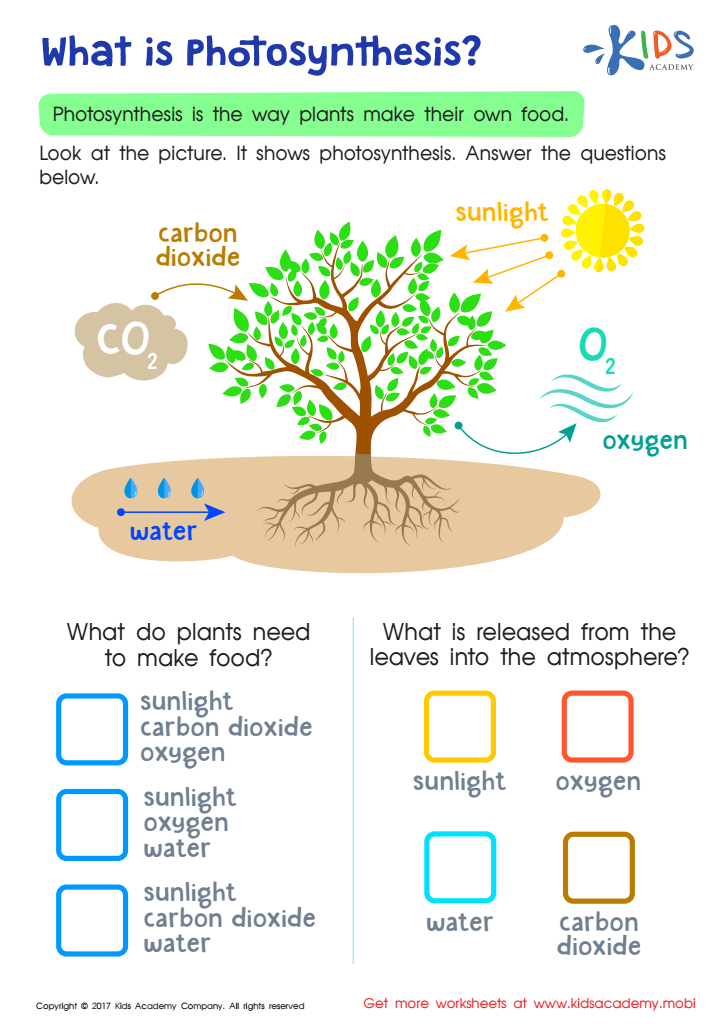
What is Photosynthesis Printable
 Assign to My Students
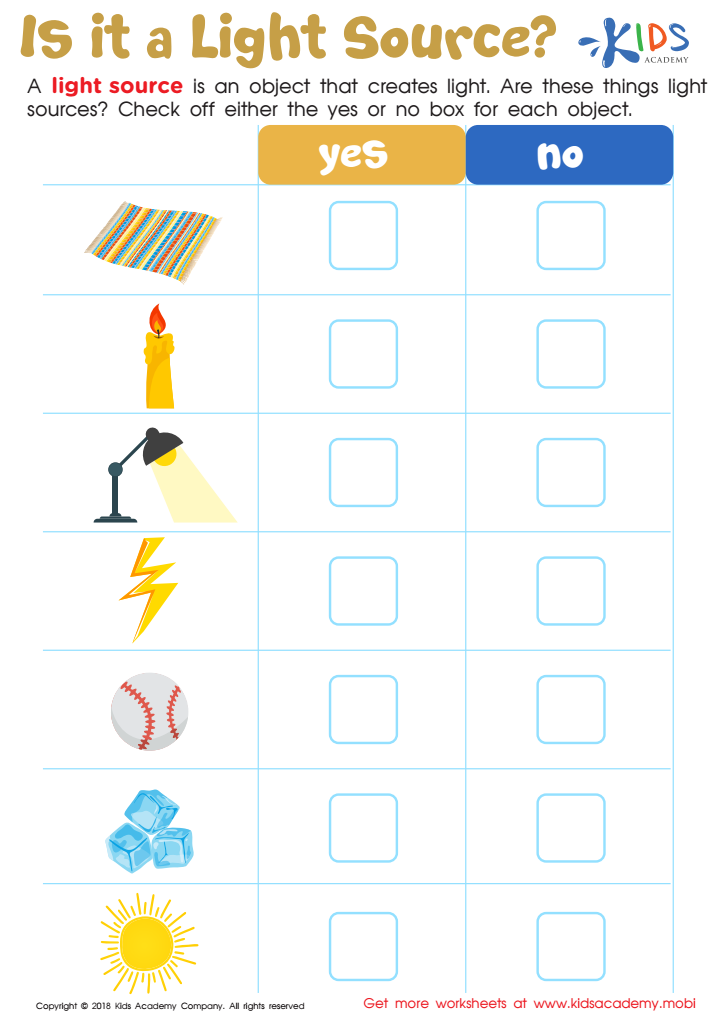
Is It a Light Source? Worksheet

How Light Travels Worksheet




.jpg)


Developing analytical skills in young children, particularly in the realm of science, is crucial as it lays the foundation for effective problem-solving and critical thinking abilities. At ages 4-7, children's cognitive capacity is rapidly expanding, making it an ideal time to introduce them to basic scientific principles through exploration, observation, and inquiry. By engaging in activities that promote analytical thinking—such as asking questions, forming hypotheses, conducting simple experiments, and discussing outcomes—children learn to make sense of the world around them.
Parents and teachers should care about fostering these skills because they encourage curiosity and resilience. Children learn that failure is an opportunity for learning, enhancing their willingness to take on new challenges. Moreover, analytical skills are essential not just in science, but across all disciplines, influencing literacy, math proficiency, and social skills. The world is increasingly reliant on data and technology, so early exposure equips children with the necessary tools to navigate complex situations in the future. Furthermore, it nurtures a lifelong love for learning, setting the stage for academic success and informed citizenship as they grow. By prioritizing analytical skill development through normal science activities, adults can empower the next generation to think critically and innovate.







