Shape Recognition Normal Science Worksheets for Ages 4-7
3 filtered results
-
From - To
Enhance your child's understanding of shapes with our engaging Shape Recognition Normal Science Worksheets for Ages 4-7! These expertly designed worksheets promote early science education by helping young learners identify and classify various shapes in their environment. With fun illustrations and interactive activities, children will develop critical observation skills and foster a love for geometry. Our worksheets are ideal for classrooms and home learning, ensuring that every child can master shape recognition while enjoying the learning process. Encourage creativity and curiosity with these essential tools, perfect for young minds eager to explore the world of shapes! Download and start learning today!
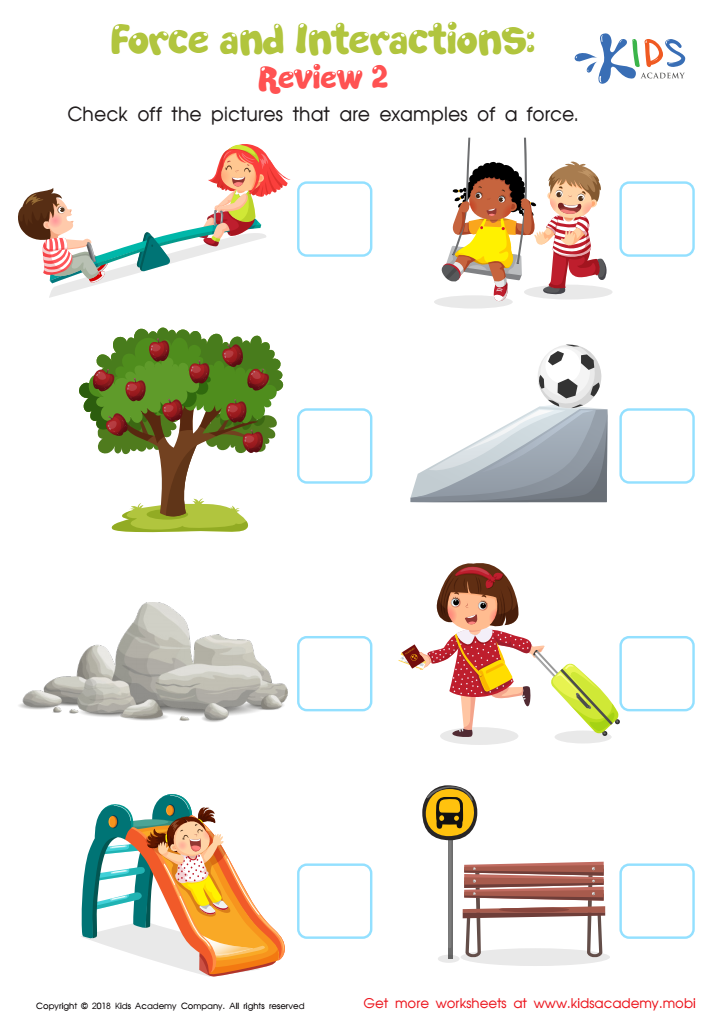
Force and Interactions: Review 2 Worksheet
 Assign to My Students
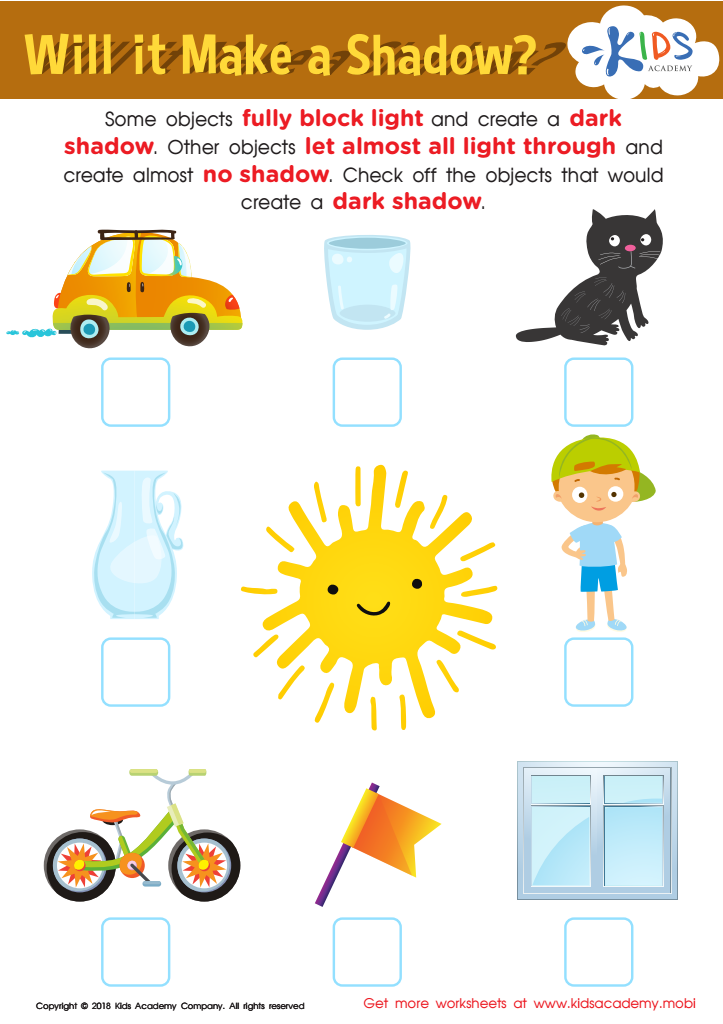
Will It Make a Shadow? Worksheet
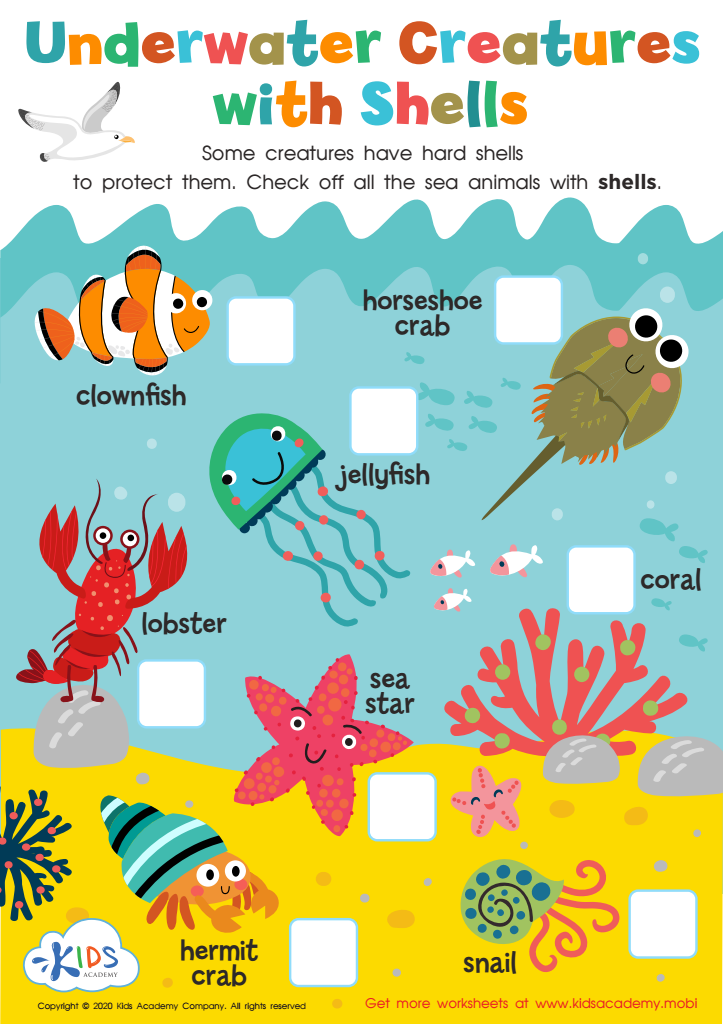
Underwater Creatures with Shells Worksheet







Shape recognition is a foundational aspect of Early Childhood Education, particularly for children aged 4-7. At this stage, children are not only developing their cognitive skills but also laying the groundwork for critical thinking and problem-solving abilities. When parents and teachers focus on shape recognition, they help children understand the world around them through the concepts of geometry and spatial awareness.
Recognizing shapes aids in language development as children learn to articulate the properties and names of various geometric forms, enriching their vocabulary. Furthermore, shape recognition enhances children's ability to categorize and organize information, essential skills for future academic success.
Engaging with shapes through play—such as sorting, building, and art activities—fosters creativity and critical thinking. These experiences support motor skills development as well, as children manipulate different objects, thus navigating their physical world.
Moreover, shape recognition is interconnected with early mathematics concepts, like counting and measuring, and encourages logical reasoning. By incorporating shape recognition into everyday activities, parents and teachers can create a multi-faceted learning environment that is both enjoyable and intellectually nourishing for young children. This foundational skill offers a pathway to stronger academic performance and holistic development in later years.







