Understanding pollination Normal Science Worksheets for Ages 4-7
3 filtered results
-
From - To
Unlock the wonders of nature with our "Understanding Pollination" Normal Science Worksheets, specially designed for young learners aged 4-7! This engaging resource introduces children to the fascinating process of pollination through vibrant illustrations and easy-to-follow activities. Each worksheet encourages hands-on exploration, helping little minds grasp essential concepts related to plants, insects, and their vital roles in our ecosystem. From matching games to simple questions, these worksheets foster curiosity, critical thinking, and a love for science. Ideal for classroom use or at-home learning, our materials create a fun and educational experience that makes discovering the world of pollination exciting for early learners!
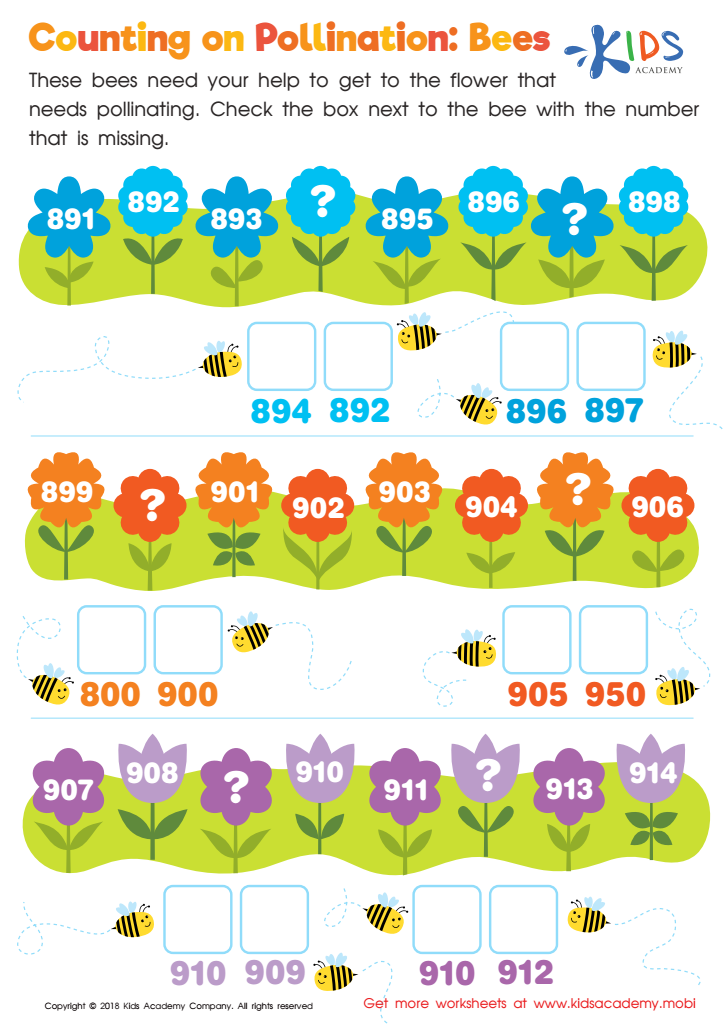
Counting on Pollination: Bees Worksheet
 Assign to My Students
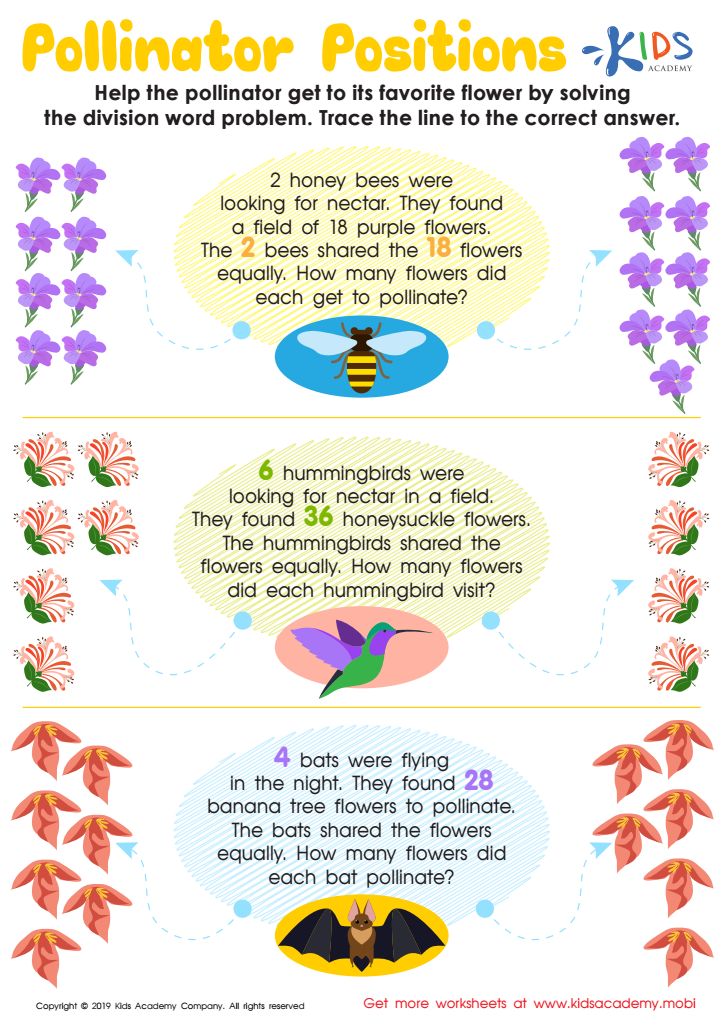
Pollinator Positions Worksheet
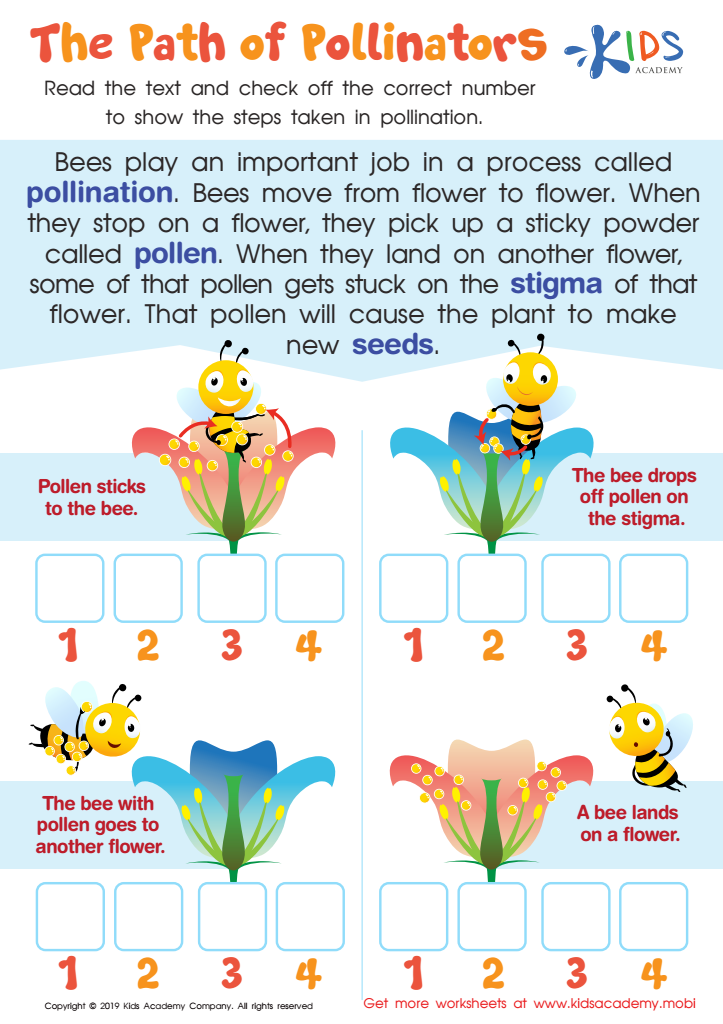
The Path of Pollinators Worksheet






Understanding pollination is crucial for children aged 4-7 as it lays the foundation for their awareness of nature and the environment. Young learners are naturally curious, and introducing the concept of pollination can spark their interest in science and inspire a love for the natural world.
Pollination is a key process that helps plants reproduce, providing vital food sources for both humans and animals. By teaching children about this process, parents and teachers can foster appreciation for plants and ecosystems, emphasizing the importance of biodiversity. This knowledge nurtures responsibility towards the environment from an early age.
Furthermore, learning about pollination contributes to early literacy in science. Through stories, hands-on activities, and observations in nature, children can understand key scientific concepts like life cycles and ecosystems. Engaging them in activities, such as planting seeds or observing bees and butterflies, makes learning interactive and enjoyable, enhancing their cognitive and social skills.
Lastly, understanding pollination reinforces lessons about teamwork and cooperation, as many organisms work together to accomplish this vital task, illustrating the interconnectedness of life. By caring about this topic, parents and teachers guide young minds in becoming thoughtful and informed caretakers of the planet.







