Weather identification Normal Science Worksheets for Ages 4-7
4 filtered results
-
From - To
Explore our engaging Weather Identification Normal Science Worksheets, perfect for children aged 4-7. Designed to inspire curiosity, these worksheets introduce young learners to various weather types and elements. Through fun activities, kids will identify different weather conditions, enhancing their observation skills and understanding of the world around them. Each worksheet promotes critical thinking and encourages creativity while laying a foundation for future science learning. Ideal for classroom use or at-home learning, our resources are aligned with educational standards, providing parents and educators with tools to foster a love for science in young minds. Discover the joy of learning about weather today!
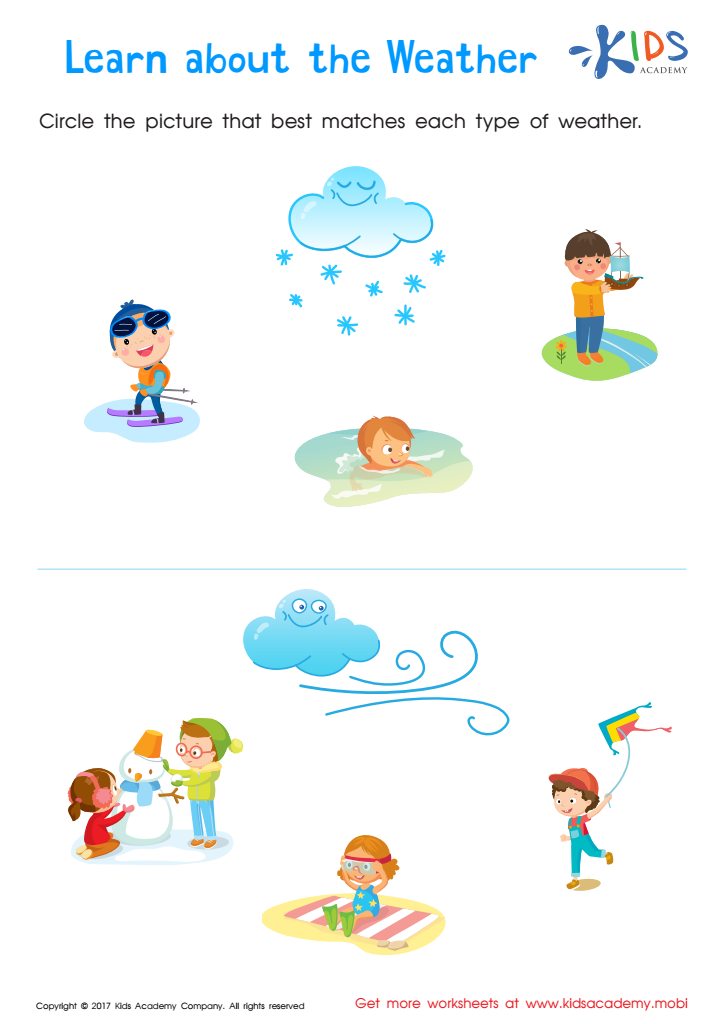
About the Weather Printable
 Assign to My Students
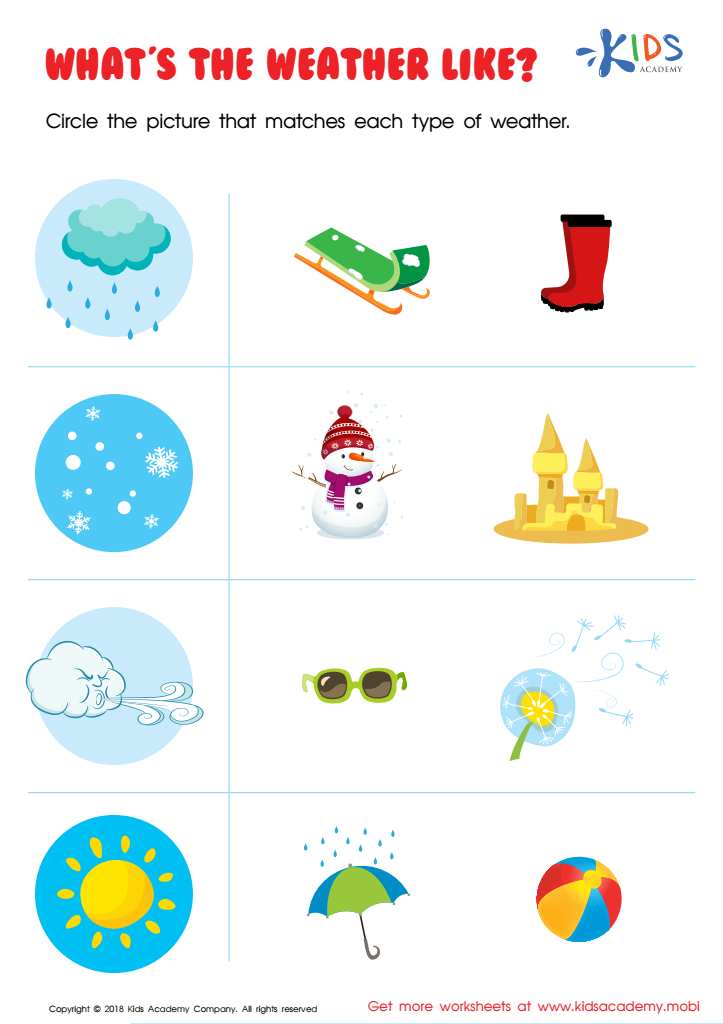
What's the Weather Like? Worksheet
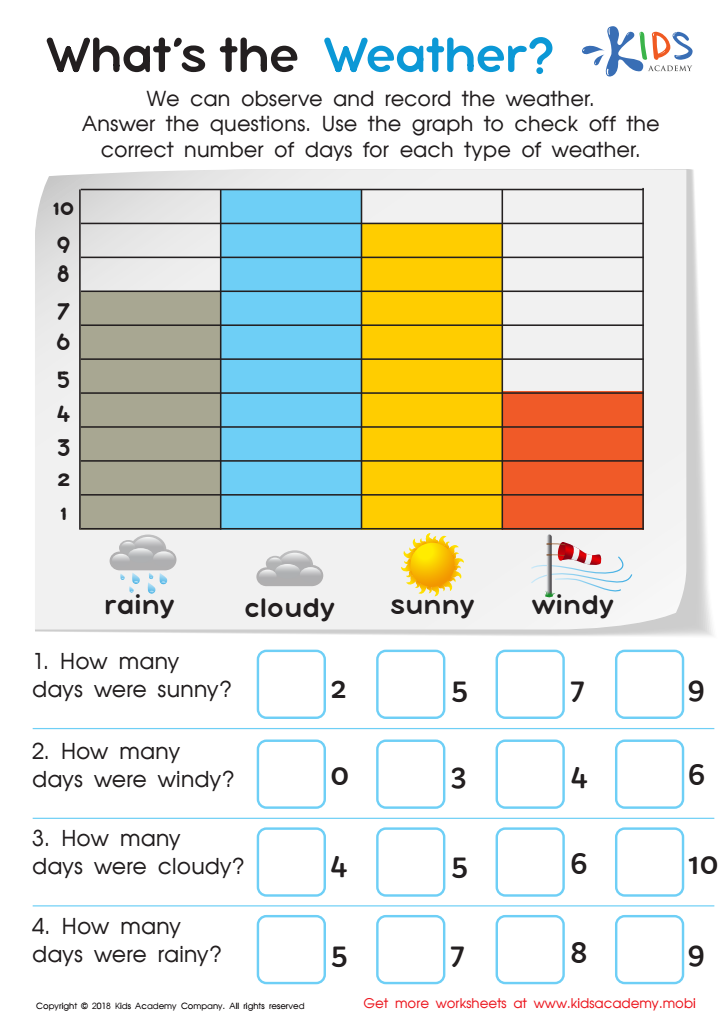
What's the Weather? Worksheet
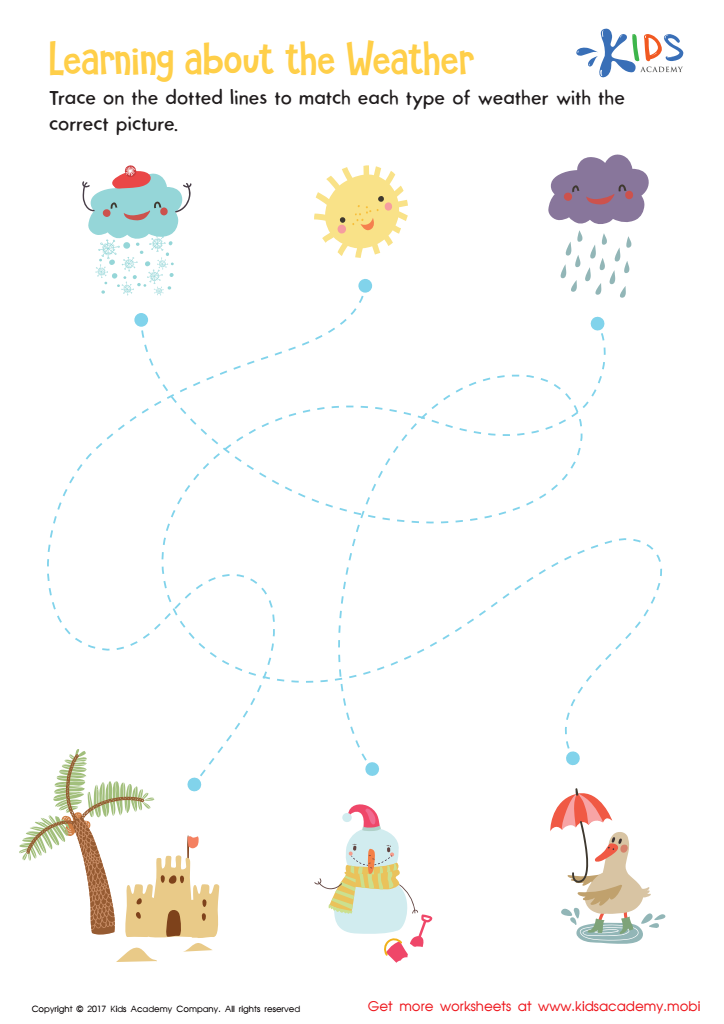








Understanding weather identification is crucial for young children ages 4-7, as it lays the foundation for a variety of essential life skills. Parents and teachers should care about this subject because it promotes awareness of the natural world and encourages curiosity. Weather plays a significant role in our daily lives, influencing what we wear, our activities, and our safety. By teaching young children to identify different weather types, such as sunny, rainy, snowy, or windy, we help them understand and adapt to their environment.
Furthermore, learning about the weather supports cognitive development. It introduces basic scientific concepts, including observation, forecasting, and the water cycle, fostering critical thinking and inquiry. Engaging in discussions about weather also aids language development, as children learn new vocabulary and practice communication skills.
Additionally, knowledge of weather identification promotes responsibility. Children can better prepare themselves and their families for different weather conditions, enhancing their independence. Involving parents in these discussions fosters stronger connections and emphasizes the importance of being observant and informed citizens about their environment. Ultimately, weather identification is a meaningful component of early education, enriching children's understanding of the world around them.







