Animal Classification Normal Plants and Animals Worksheets for Ages 4-7
5 filtered results
-
From - To
Discover an engaging collection of "Animal Classification Normal Plants and Animals Worksheets" designed for ages 4-7 at Kids Academy. These worksheets introduce young learners to the basics of animal classification, helping them distinguish between different types of plants and animals. Perfect for early graders, the fun and educational activities enhance their understanding of biological categories through interactive exercises and vivid illustrations. Ideal for both classroom and home use, these resources make learning about the animal kingdom exciting and accessible. Foster a love for science in your child with these thoughtfully created, age-appropriate worksheets. Start exploring today!
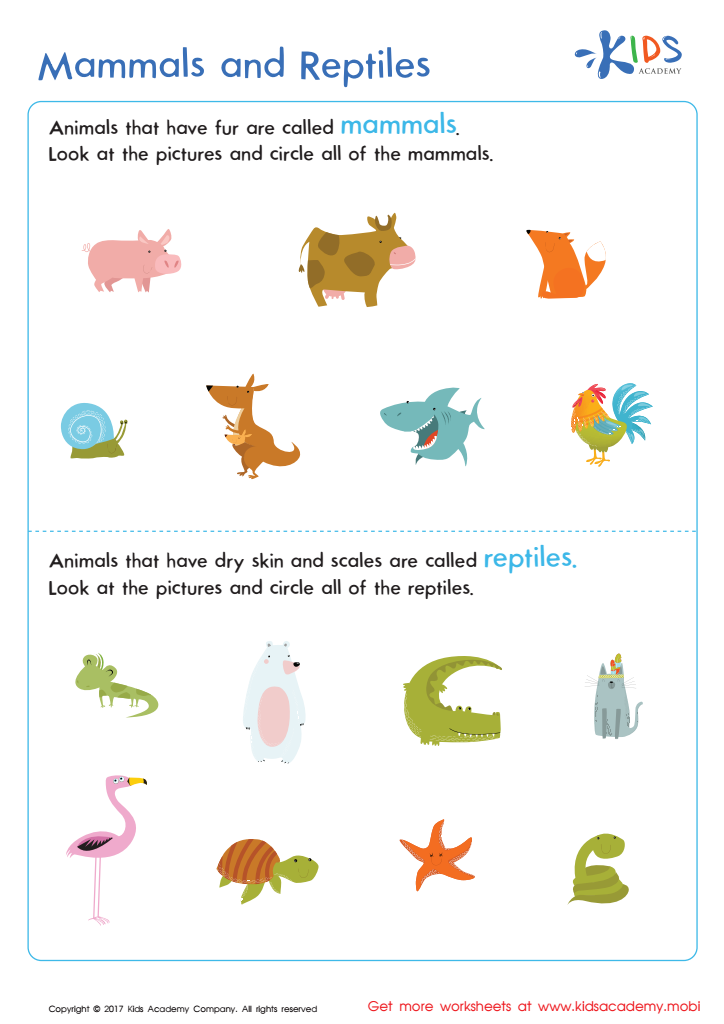
Mammals and Reptiles Worksheet
 Assign to My Students
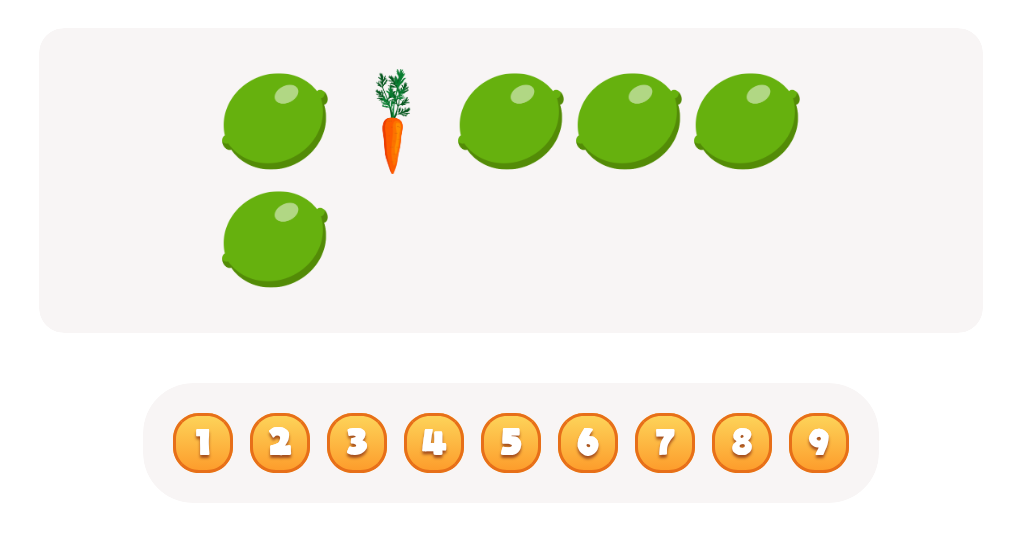

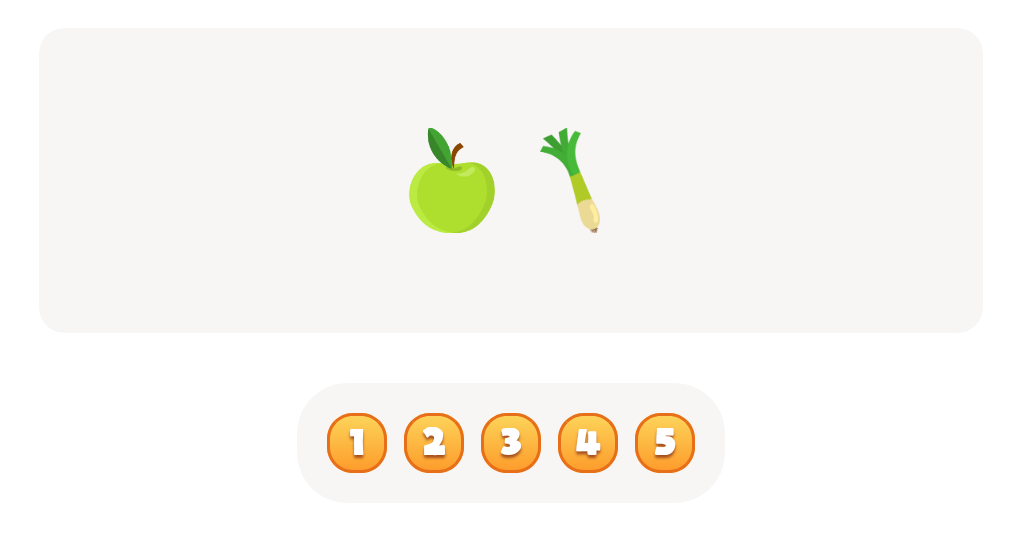
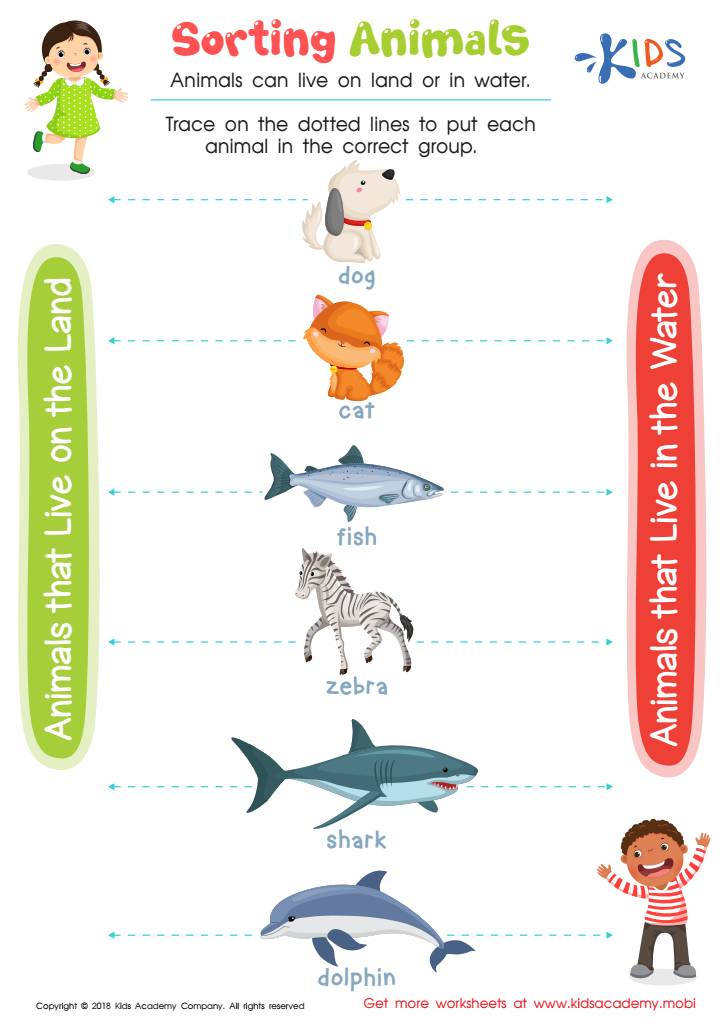
Sorting Animals Worksheet
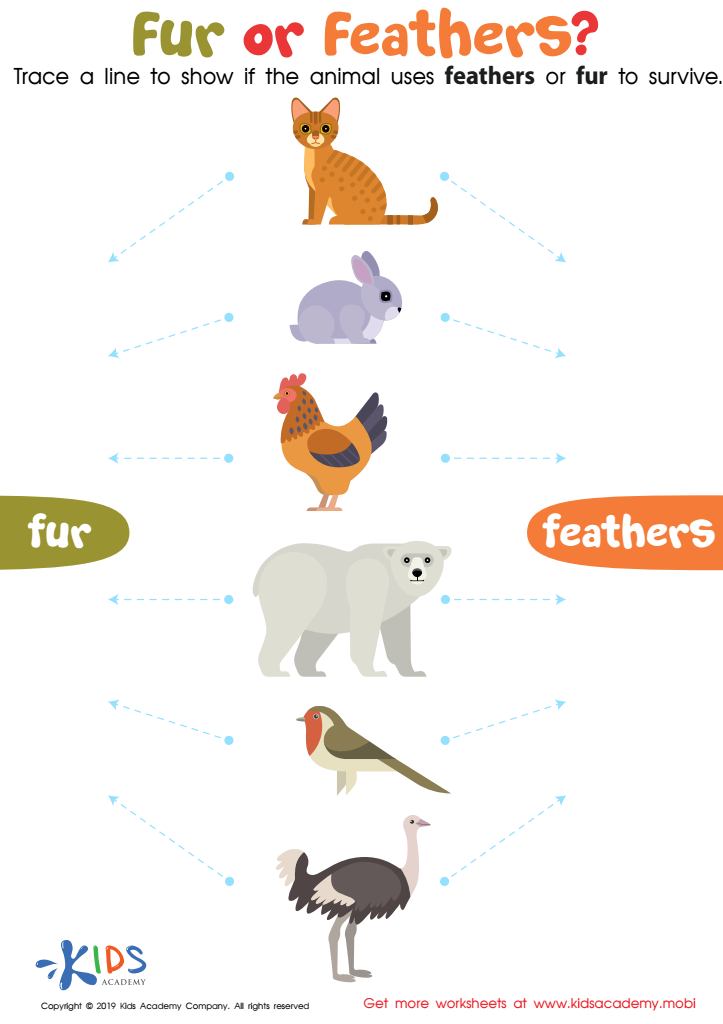
Fur or Feathers? Worksheet
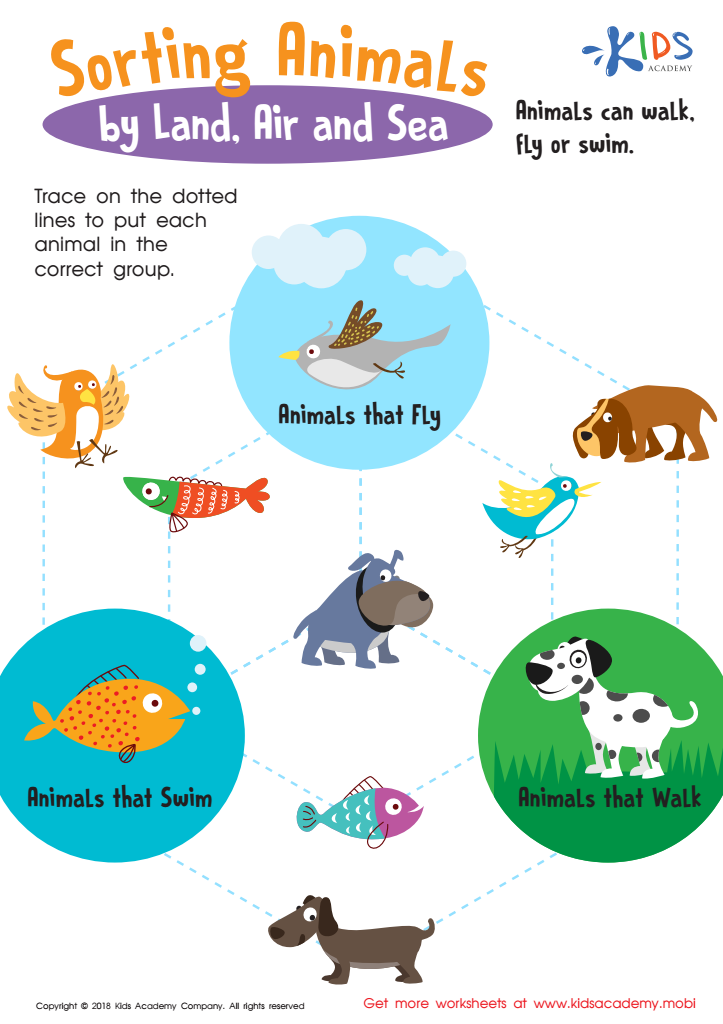
Sorting Animals by Land, Air and Sea Worksheet
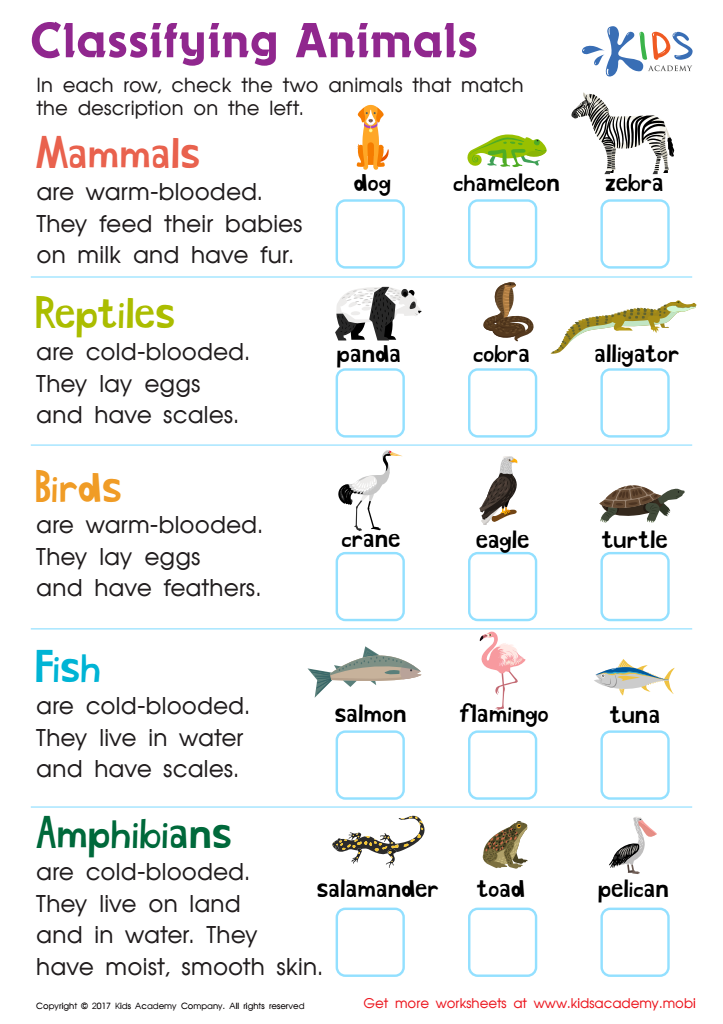
Classifying Animals Worksheet






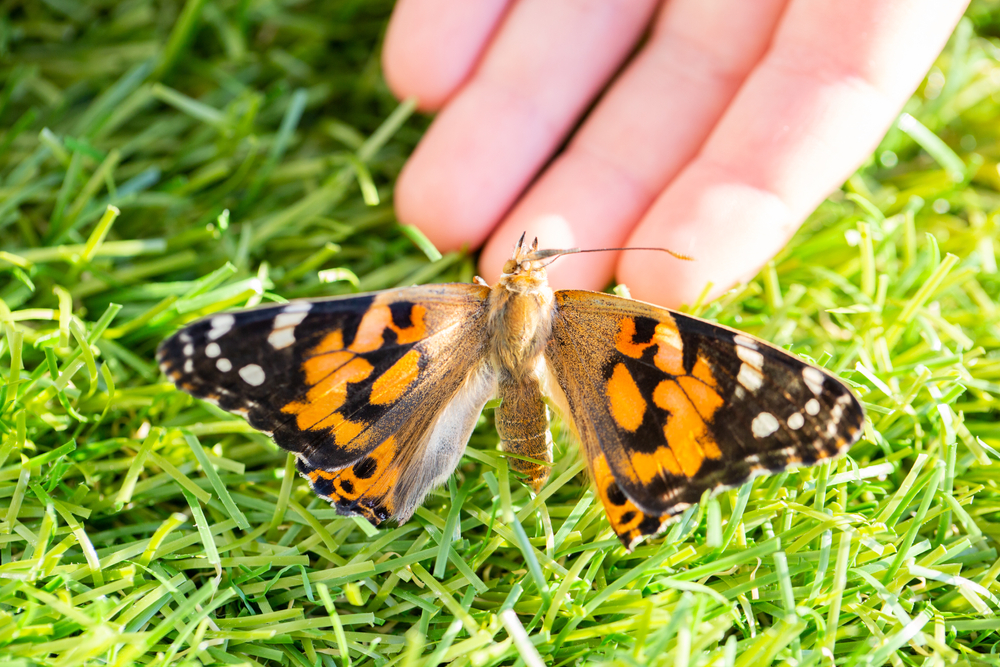

Teaching children ages 4-7 about animal classification and basic plant and animal biology is crucial for several reasons. First, it cultivates curiosity and an appreciation for the natural world, fostering a sense of wonder that can blossom into a lifelong passion for learning and exploration. Early exposure to these subjects also helps kids make sense of the world around them, enhancing cognitive development as they learn to categorize and differentiate between various species and types of plants.
Understanding animal classification helps young learners develop critical thinking skills. They start to notice patterns and relationships, e.g., mammals have fur and warm blood, while reptiles have scales and lay eggs. These intellectual building blocks are foundational for later scientific learning and reasoning. Additionally, teaching about plants introduces children to concepts of growth, photosynthesis, and ecosystems, creating an early understanding of nature's interconnectedness.
Caring about these subjects early on also instills a sense of stewardship for the environment. When children understand the diversity of life and how it functions, they are more likely to develop attitudes that favor conservation and responsible earthly stewardship.
Moreover, integrating these subjects can boost language skills through new vocabulary, storytelling, and descriptive language. Social skills are also enhanced through collaborative learning and shared discovery activities. Thus, animal classification and basic plant and animal studies serve as gateways to a wide array of additional educational and developmental benefits for young children.