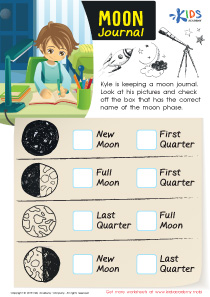
Categorization skills Normal Plants and Animals Worksheets for Ages 4-7
4 filtered results
-
From - To
Boost your child’s understanding of the natural world with our "Categorization Skills Normal Plants and Animals Worksheets" designed for ages 4-7. These engaging, age-appropriate worksheets help young learners differentiate between various plants and animals, fostering essential science skills early on. Our thoughtful activities support cognitive development by improving sorting and classifying abilities. Perfect for playful learning, each worksheet is visually engaging and easy to follow, turning education into an adventure. Allow your child to discover the wonders of nature while honing their categorization skills through fun, hands-on experience. Visit Kids Academy to explore and download activities today!
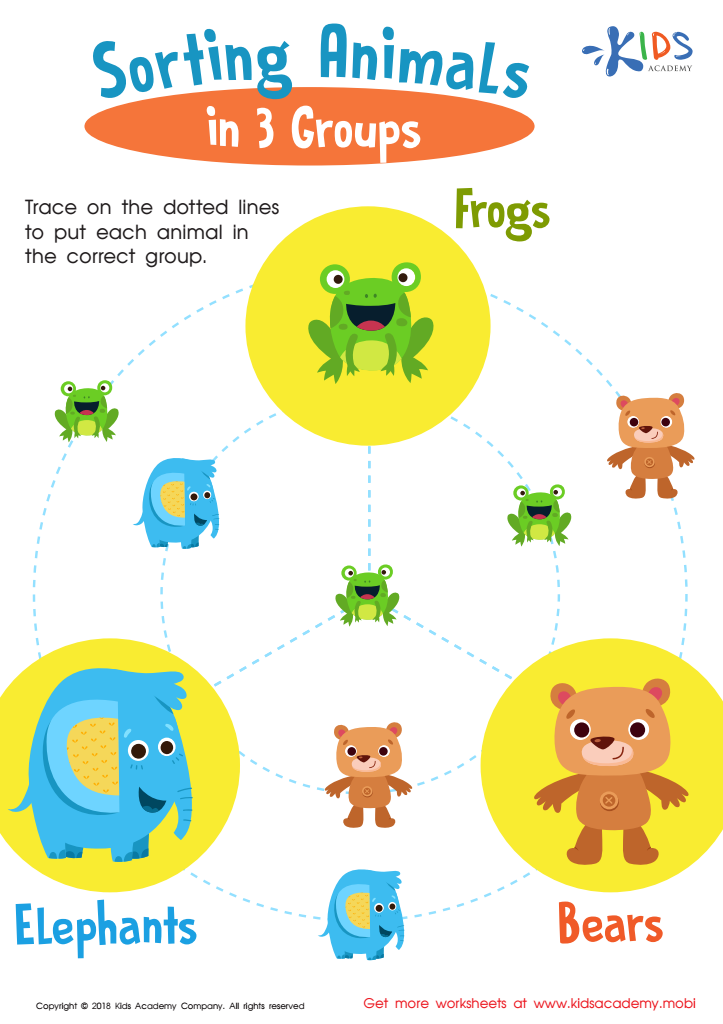
Sorting Animals in 3 Groups Worksheet
 Assign to My Students
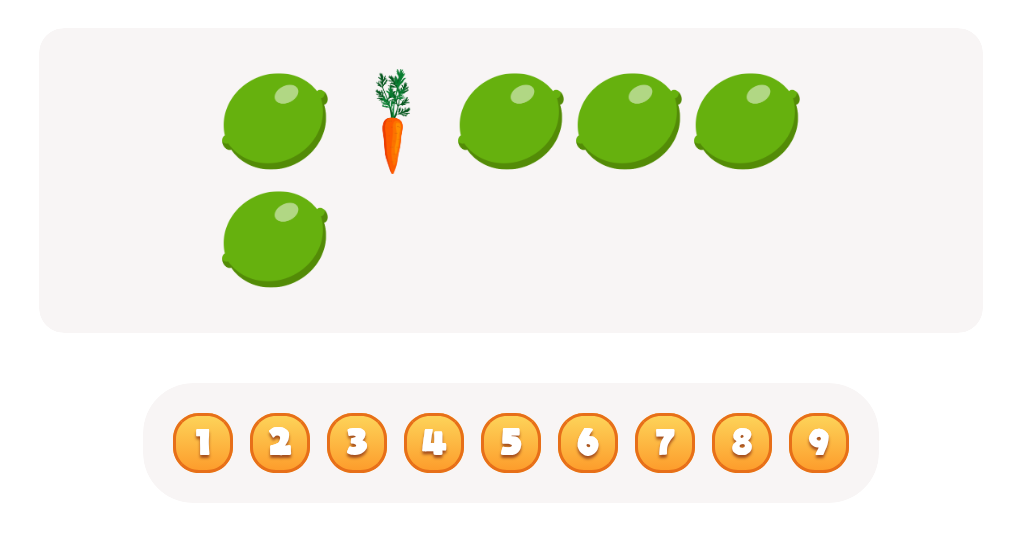

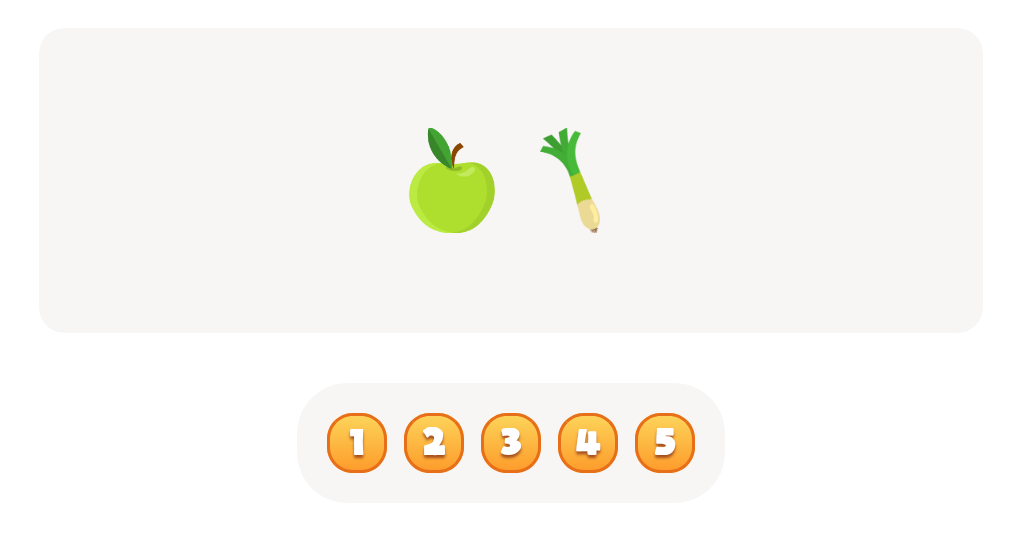
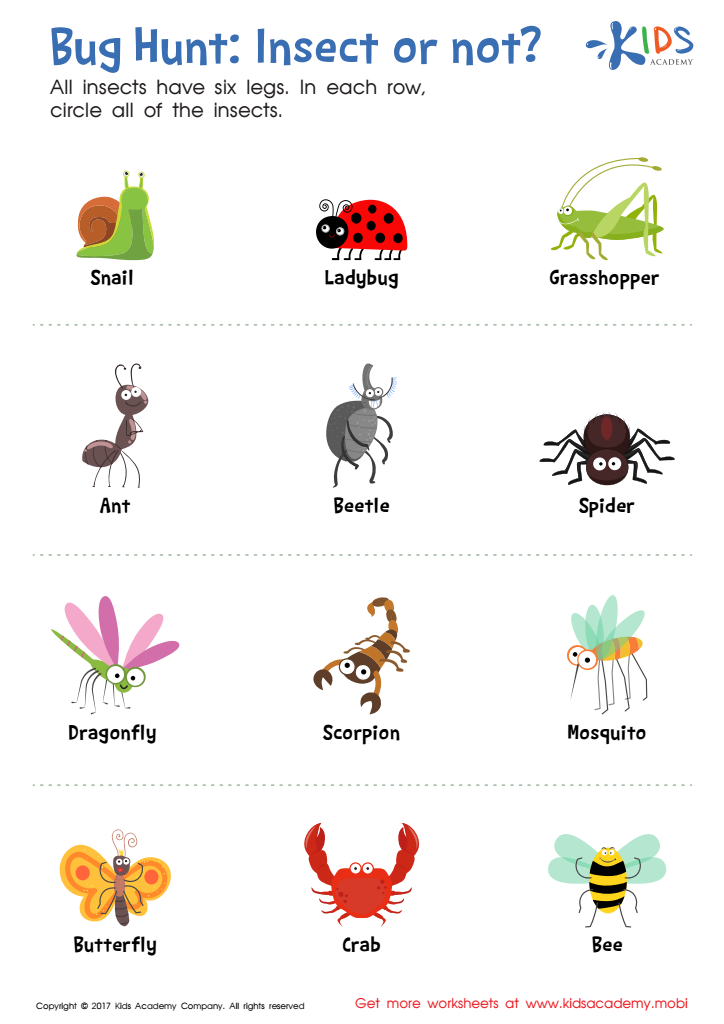
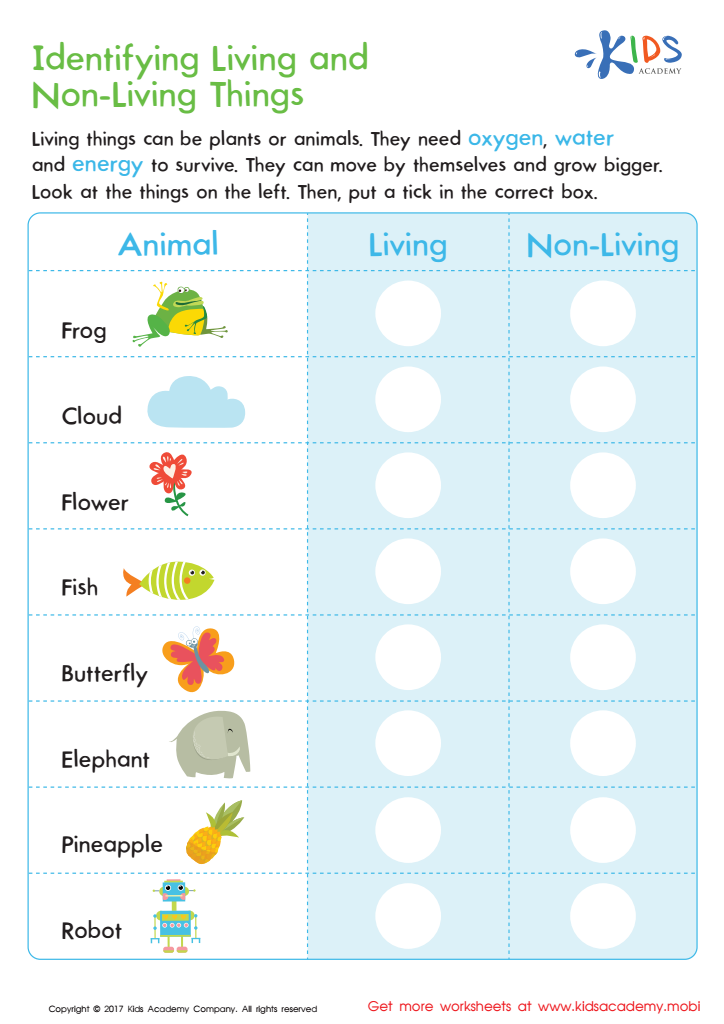
Identifying Living or Non–living Worksheet
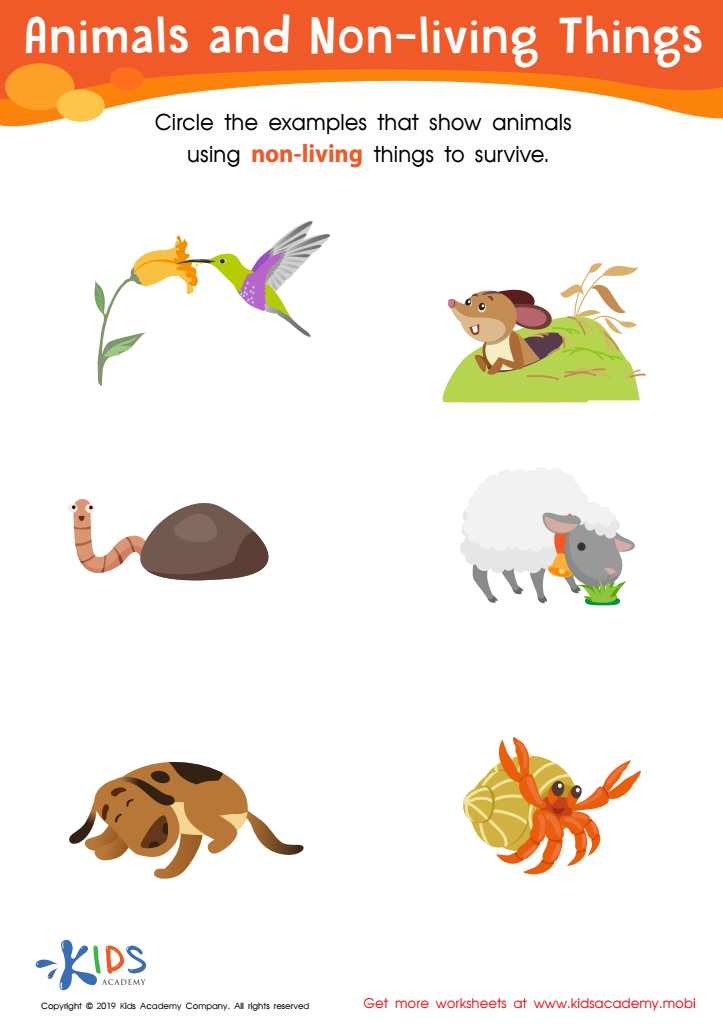
Animals and Non-Living Things Worksheet





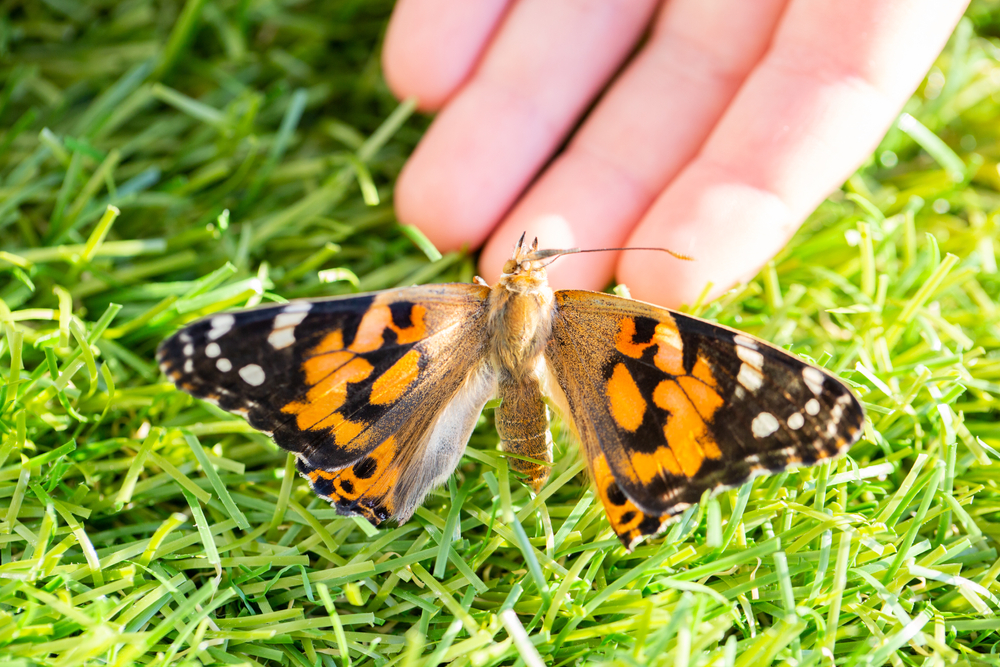


Categorization skills, particularly in recognizing and understanding normal plants and animals, are crucial for children's cognitive development between the ages of 4 and 7. At this stage, young learners are rapidly expanding their knowledge of the world and developing crucial thinking and reasoning abilities. Parents and teachers should prioritize helping children enhance these skills for several reasons.
Firstly, categorization forms the foundation for more advanced cognitive processes such as critical thinking, problem-solving, and decision-making. When children learn to differentiate between plants and animals, they are essentially learning to observe, compare, and classify, which are important precursors to scientific thinking.
Secondly, knowledge of normal plants and animals encourages environmental awareness and responsibility. Understanding the natural world helps foster a sense of curiosity and respect for nature, which is essential for developing a future generation that values and protects the environment.
Moreover, categorization skills enhance language development and vocabulary. By learning the names and characteristics of various species, children expand their language skills and can communicate more effectively about the world around them.
Lastly, fostering an early interest in nature can enhance learning motivation and engagement. The sense of discovery and excitement associated with identifying and classifying living organisms can make learning more enjoyable and meaningful for young children.