Geography knowledge Normal Community Worksheets for Ages 4-7
3 filtered results
Difficulty Level
Grade
Age
-
From - To
Subject
Activity
Standards
Enhance your child's geographical knowledge with our Normal Community Worksheets for Ages 4-7. Designed to introduce young learners to the foundations of geography within their community, these engaging and educational worksheets cover essential topics like maps, landmarks, and directions. Each worksheet encourages children to explore and understand the world around them in a fun and interactive way. Ideal for early grade students, these worksheets help develop critical thinking and foundational geography skills. Incorporate these resources into your students’ learning routine to foster curiosity and build a strong understanding of their immediate environment. Enjoy structured learning today!
Favorites
With answer key
Interactive
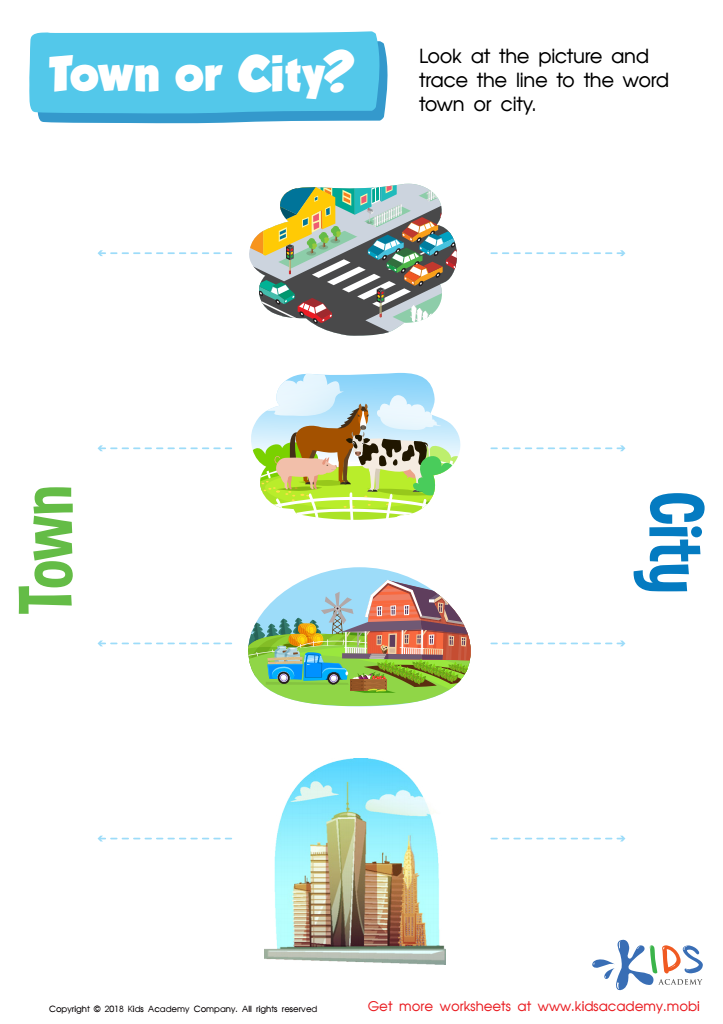
Town or City? Worksheet
Kids will have fun with this free worksheet, matching pictures to either a city or a town. Fine motor skills will be practiced as they trace the lines to their answer. It's a great way to reinforce the differences between cities and towns.
 Assign to My Students
Town or City? Worksheet
Worksheet
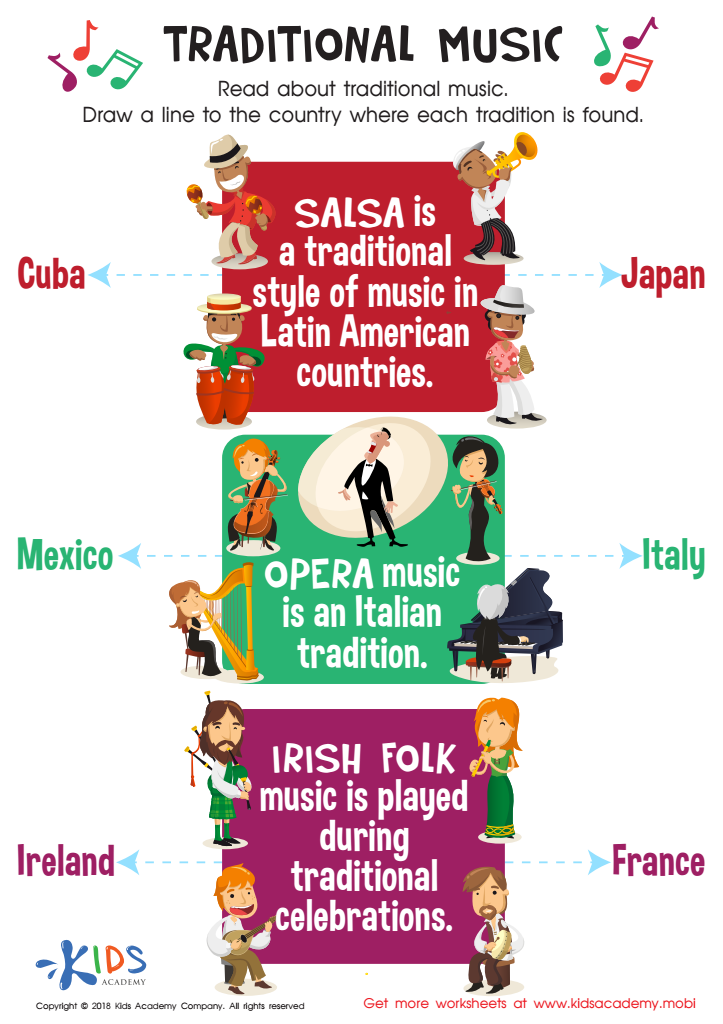
Traditional Music Worksheet
Exploring different countries' music is a great way for global learners to appreciate their place in the world. This worksheet helps them match music - like Salsa and Irish Folk - to various geographic regions with colorful visuals. It boosts reading comprehension while supporting their cultural understanding.
Traditional Music Worksheet
Worksheet

Towns Worksheet
Towns are generally quiet and safe, making them attractive for young families. Cities have more people, businesses and tall buildings. Roads are busy, and there is often plenty to do and see. Help your kids check which pictures in this worksheet show towns.
Towns Worksheet
Worksheet
Join Kids Academy for Free
Who is primarily going to use this learning content?







Parents and teachers should prioritize geography knowledge for children ages 4-7 to foster spatial awareness, cultural understanding, and environmental respect. Early exposure to geography helps young children develop a sense of place, recognizing their immediate surroundings and how these fit into the larger world. By learning basic geography, children can understand directions, landmarks, and natural features, which enhances their cognitive mapping skills and spatial reasoning.
Introducing geography at an early age also lays the foundation for cultural awareness and global citizenship. Children become aware of diverse cultures, traditions, and lifestyles, promoting tolerance and empathy. This understanding cultivates respect for others and prepares them to thrive in a multicultural society.
Moreover, geography education instills an appreciation for the environment. Kids learn about different ecosystems, conservation, and the impact of human activities on the planet. This awareness can foster responsible attitudes toward nature and motivate future generations to engage in sustainable practices.
Overall, geographical knowledge enriches early childhood education by integrating critical thinking, curiosity, and ethical values, setting the stage for lifelong learning and responsible global citizenship. Investing in geography for young children empowers them with essential skills and perspectives that benefit both their personal growth and their community.