Shape Recognition Normal Community Worksheets for Ages 4-7
4 filtered results
-
From - To
Discover our engaging Shape Recognition Normal Community Worksheets designed for children ages 4-7! These fun and interactive resources introduce kids to essential shapes while connecting them to their community. By exploring common shapes found in everyday objects, children will enhance their observation skills and build a solid foundation in geometry. Our worksheets encourage creativity and critical thinking through colorful illustrations and hands-on activities. Perfect for both classroom and home learning, these tools ensure that young learners enjoy a well-rounded educational experience. Download them today and watch your child develop confidence in shape recognition while enjoying the learning process!
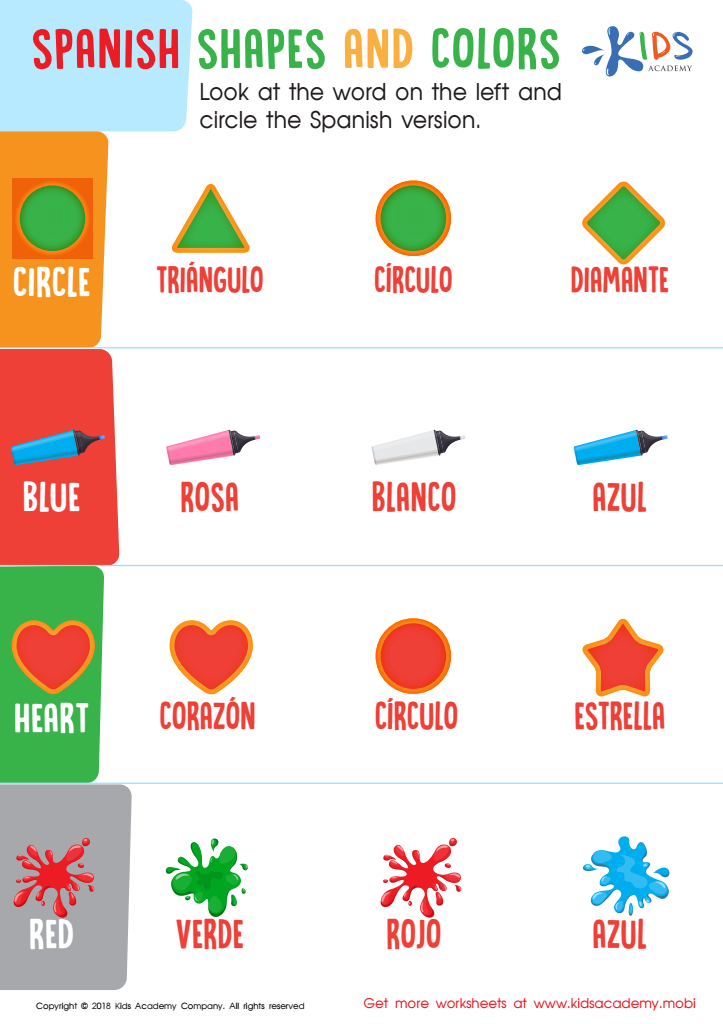
Spanish Shapes and Colors Worksheet
 Assign to My Students

Let's Check! Assessment Worksheet

Playground Worksheet
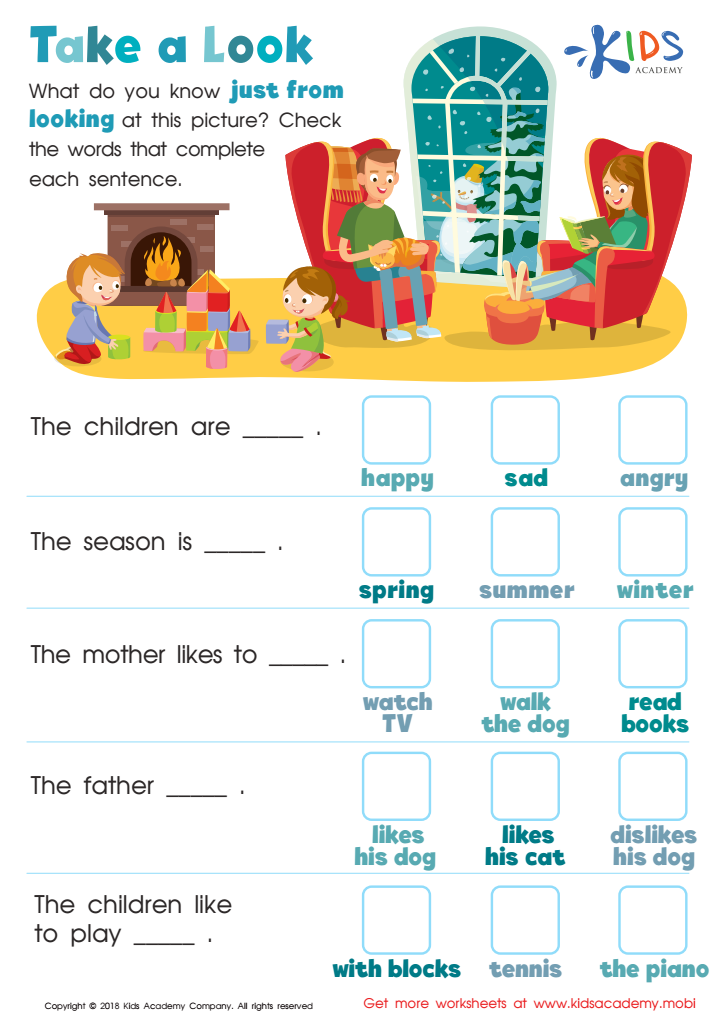
Take a Look - Part 1 Worksheet








Shape recognition is a fundamental skill that lays the groundwork for various mathematical concepts in young children. For parents and teachers of children aged 4-7, understanding its significance is crucial. First, recognizing shapes helps children develop spatial awareness, which enhances their ability to process and understand their environment. This skill is essential for problem-solving and critical thinking.
Additionally, shape recognition supports early literacy skills. Shapes are often connected to letters and numbers, facilitating learning in these areas. Children who master shape identification can better comprehend patterns and relationships, which are vital concepts in both math and reading.
Moreover, participating in shape recognition activities fosters social interaction. In a community setting, children can engage in cooperative learning, enhancing their communication skills and building friendships through collaborative tasks and games.
Encouraging shape recognition also promotes cognitive development. Engaging activities, such as arts and crafts or outdoor exploration, allow children to use their creativity while reinforcing their knowledge.
In summary, prioritizing shape recognition in early education empowers children with critical skills that advance their overall development, both academically and socially, making it essential for parents and teachers to foster this foundational learning area.








