Map reading skills Normal Geography Worksheets for Ages 4-7
8 filtered results
-
From - To
Help young learners navigate the world with our carefully crafted map reading skills worksheets, designed for ages 4-7. These engaging and educational activities introduce children to fundamental geography concepts, such as directions, landmarks, and symbols, enabling them to understand and use maps effectively. Each worksheet is tailored to be age-appropriate, promoting critical thinking and spatial awareness through interactive exercises. From identifying simple map elements to recognizing everyday locations, these worksheets turn learning into an exciting adventure, fostering a lifelong interest in geography and world exploration. Visit Kids Academy to download and start your child's journey in mastering map reading today!
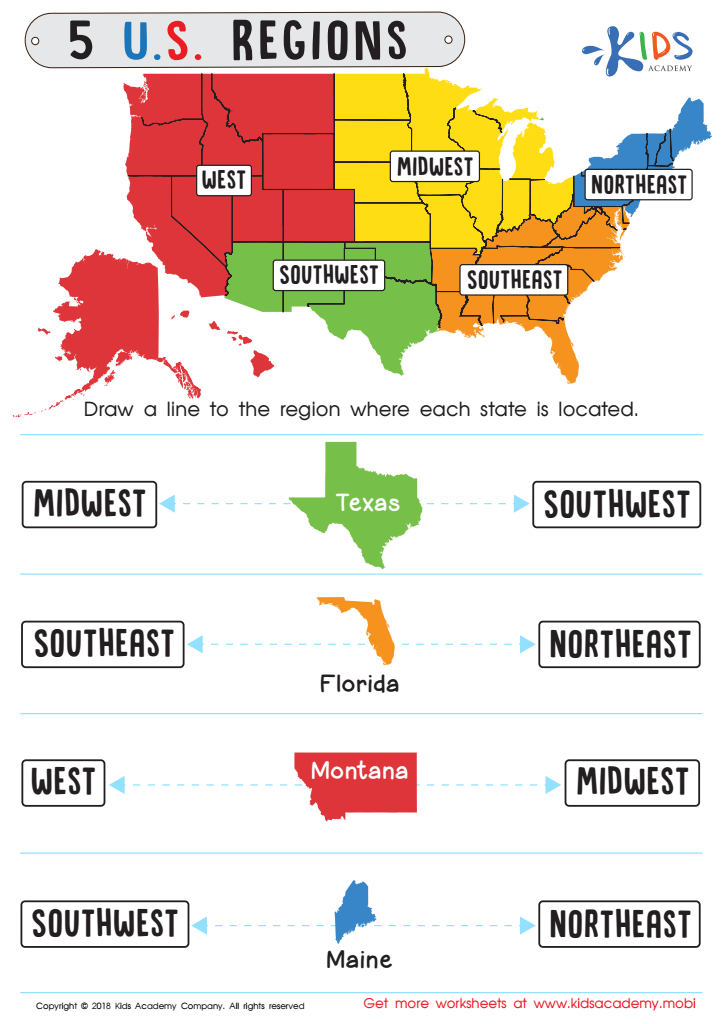
5 U.S. Regions Worksheet
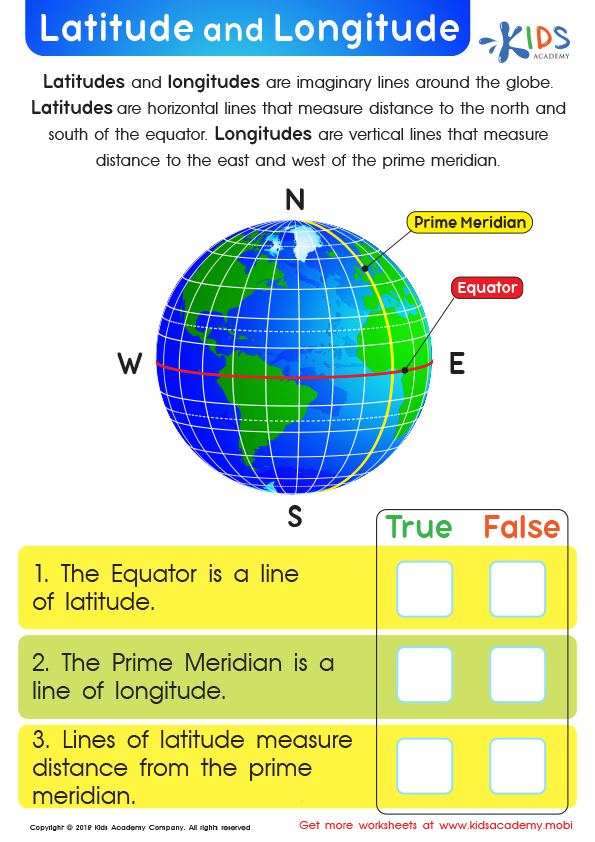
Latitude and Longitude Worksheet
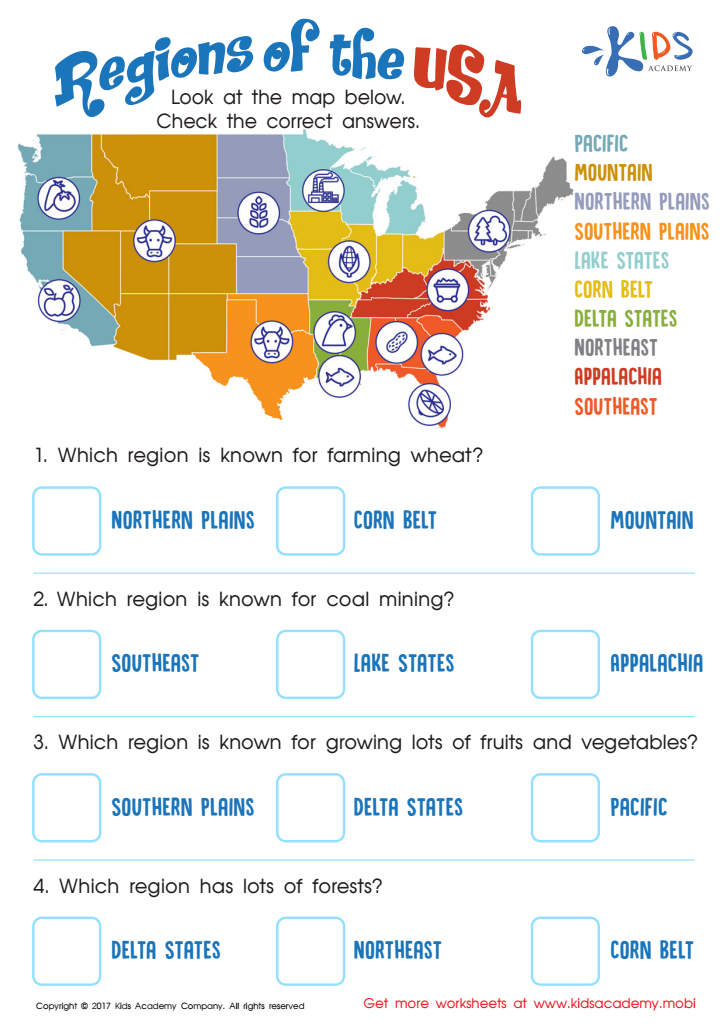
Regions of the USA Worksheet
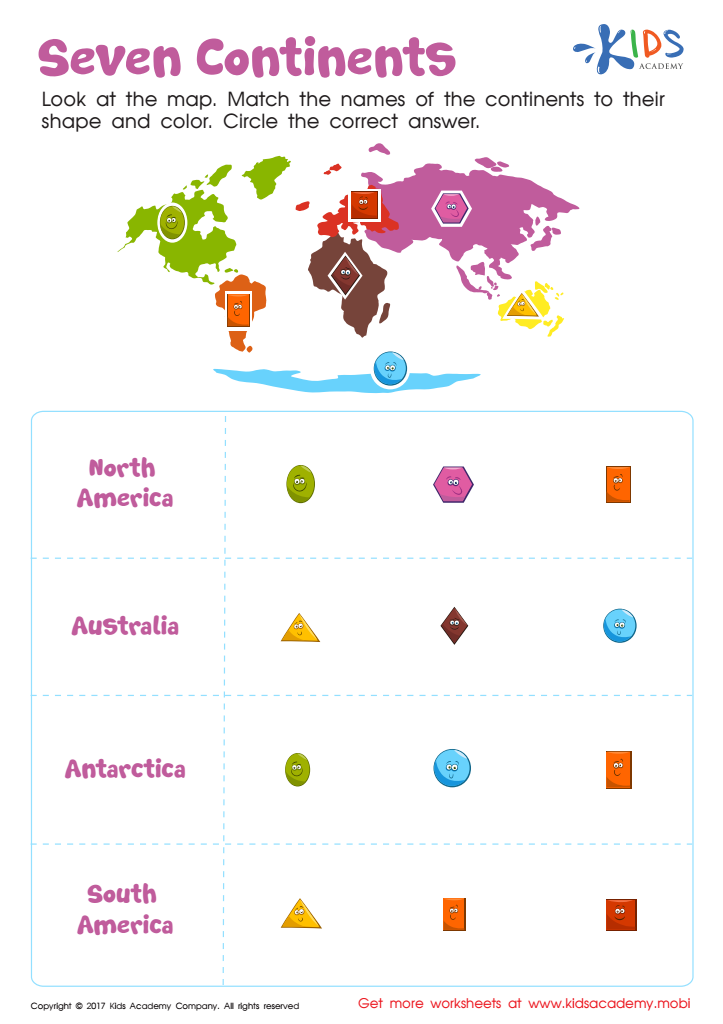
Seven Continents Worksheet
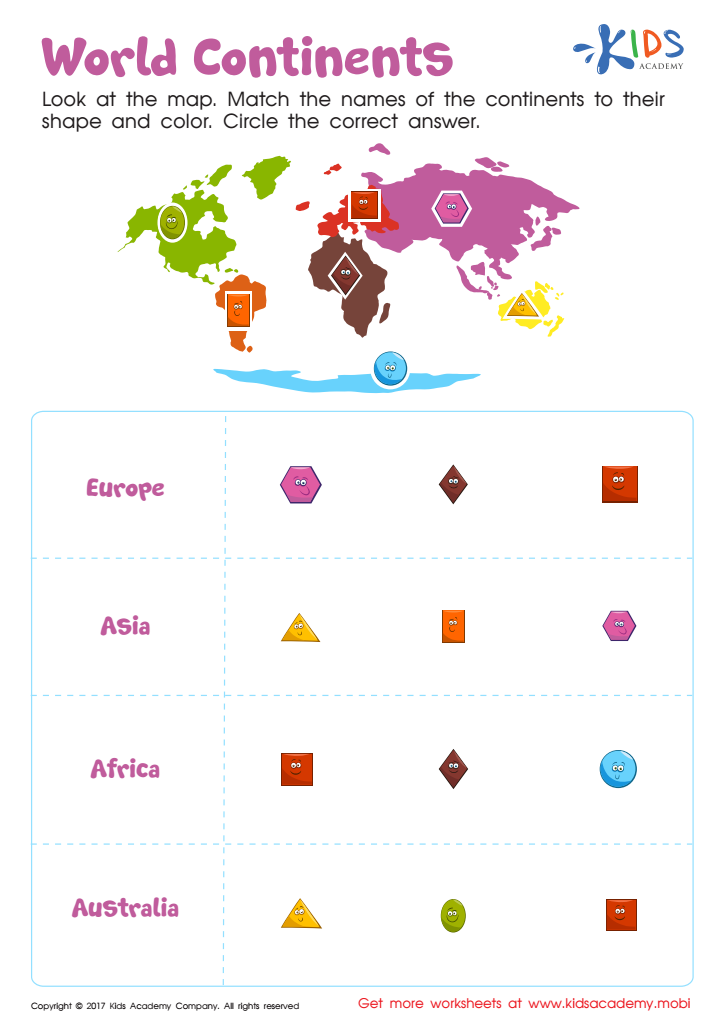
World Continents Worksheet
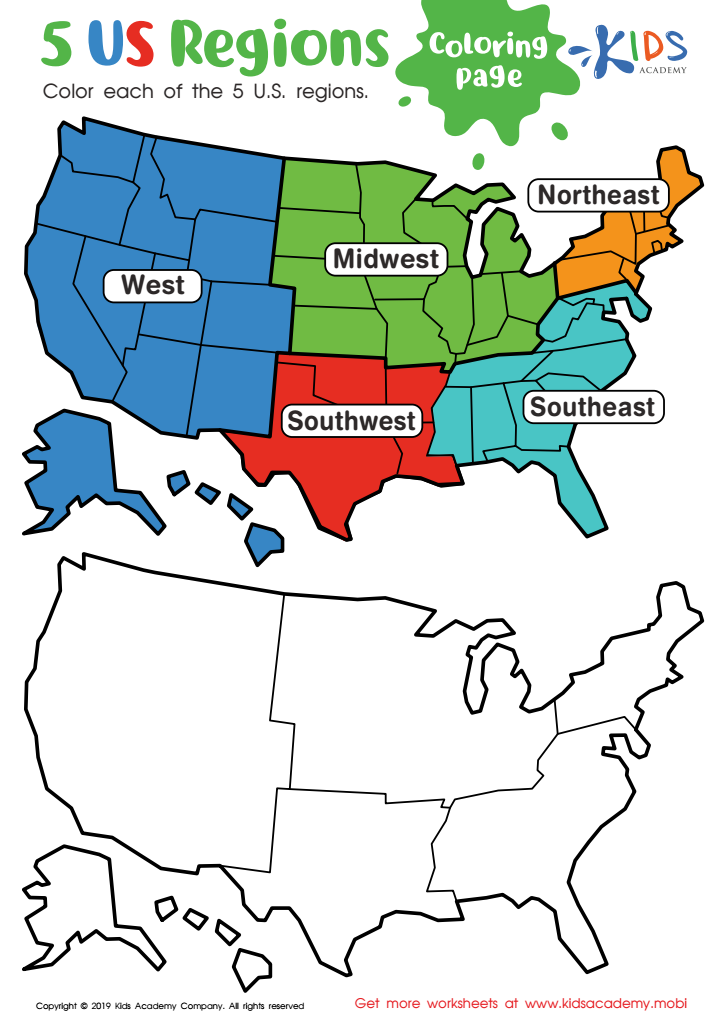
US Regions Coloring Page Worksheet
 Assign to My Students
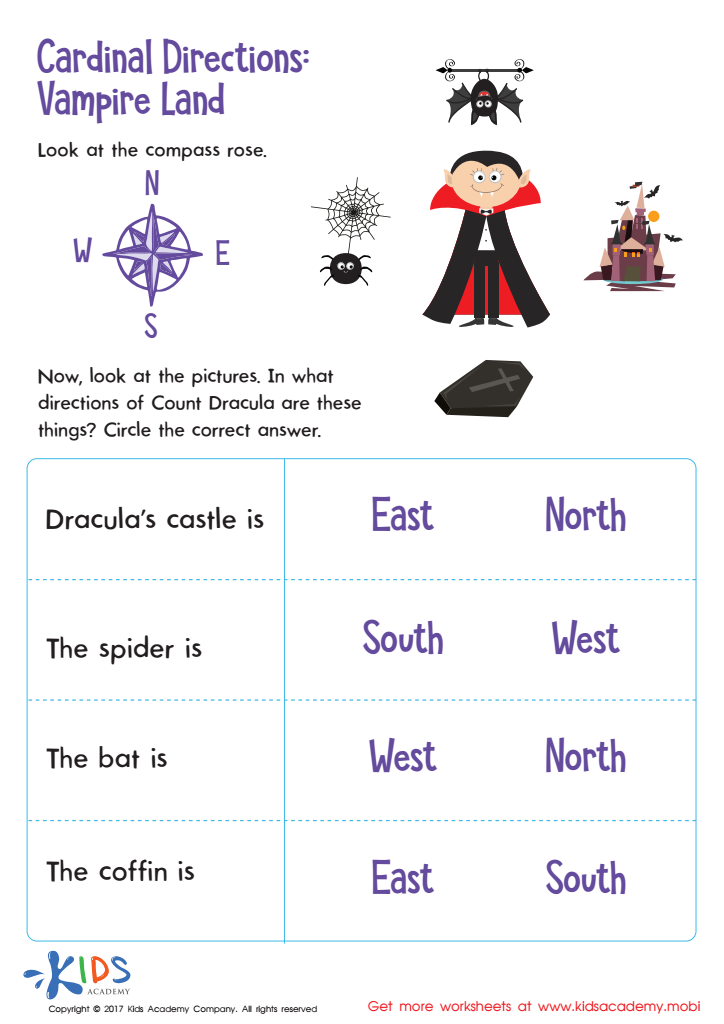
Cardinal Directions Printable
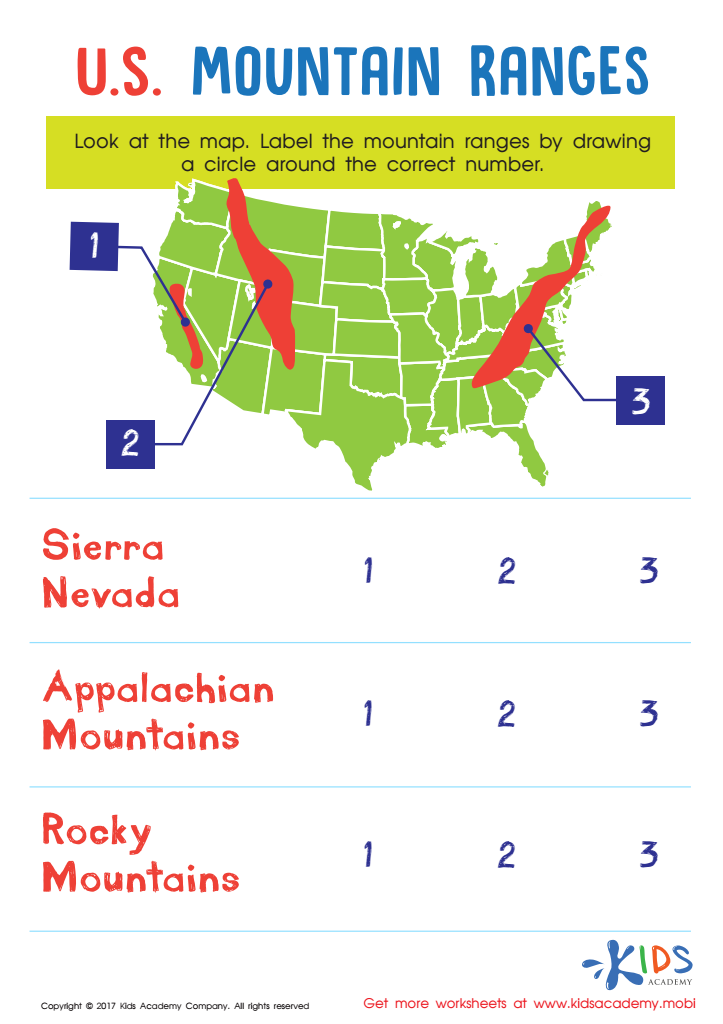
US Mountain Ranges Worksheet




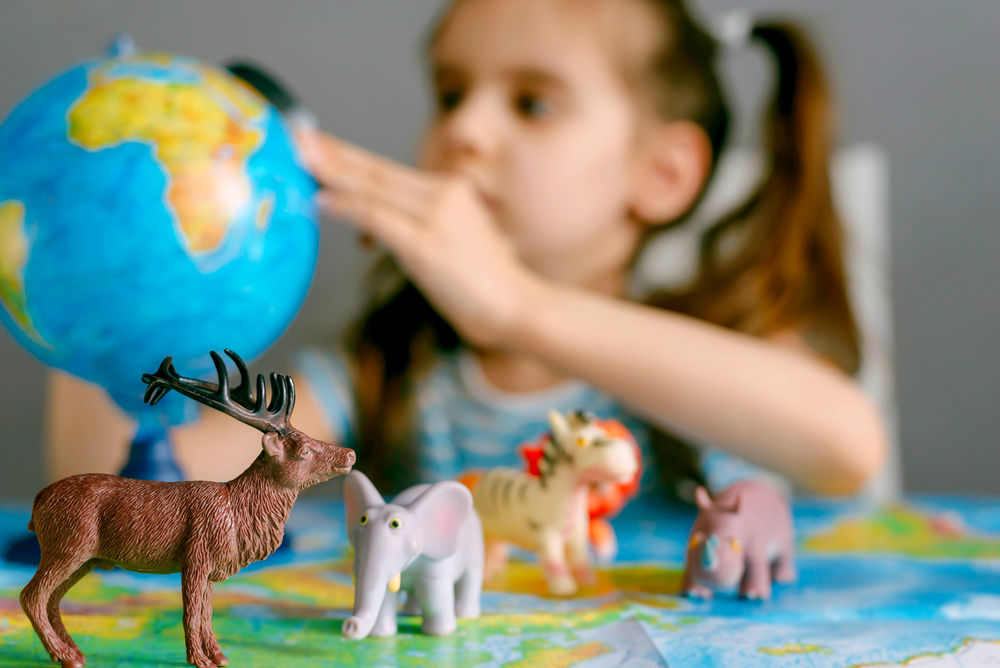


Map reading skills are essential for young children as they lay the foundation for spatial awareness, critical thinking, and independence. For children between the ages of 4 and 7, developing these skills can significantly impact their cognitive and social development. Understanding basic geography and how to read maps helps children grasp the concepts of distance, direction, and scale, which are crucial for their everyday decision-making and problem-solving abilities.
Parents and teachers should prioritize map reading because it enhances children's understanding of their environment, promoting a sense of curiosity and exploration. Introducing basic geography at an early age can also boost a child’s cultural awareness and empathy by helping them understand diverse places and communities. Furthermore, engaging with maps supports language development through the introduction of new vocabulary such as "north," "south," "city," and "country."
For educators, incorporating map activities in the curriculum can make learning interactive and fun, holding the children's attention and involving them in hands-on tasks. Parents can use family trips as practical lessons in geography, turning travel time into educational experiences. Overall, nurturing map reading skills early on not only equips children with practical knowledge but also fosters a lifelong interest and a better understanding of the world around them.








