Understanding history Normal Social Studies Worksheets for Ages 4-7
3 filtered results
-
From - To
Explore engaging "Understanding History" Social Studies worksheets designed for children ages 4-7! These educational resources help young learners grasp essential historical concepts through fun and interactive activities. Our worksheets enhance their knowledge of the past, focusing on key themes like time, important figures, and significant events. With colorful illustrations and age-appropriate tasks, children will develop critical thinking skills while discovering the foundations of their world. These Normal Social Studies worksheets not only promote learning but also encourage curiosity about history, fostering a love for exploration and knowledge. Download and inspire your child's understanding of the past today!
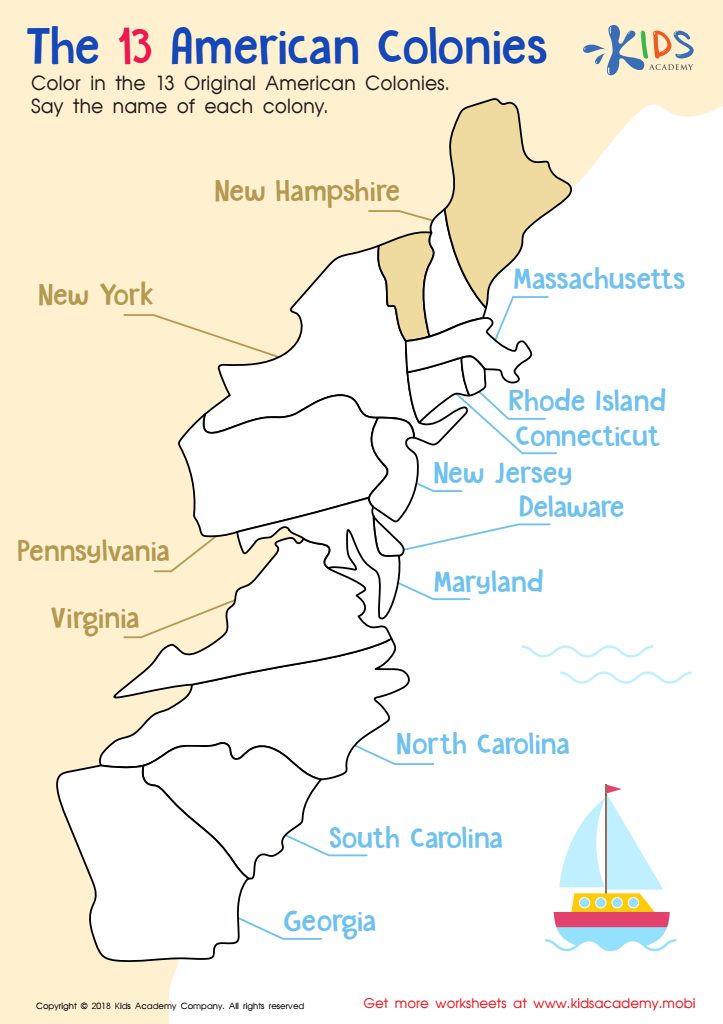
The 13 American Colonies Worksheet
 Assign to My Students
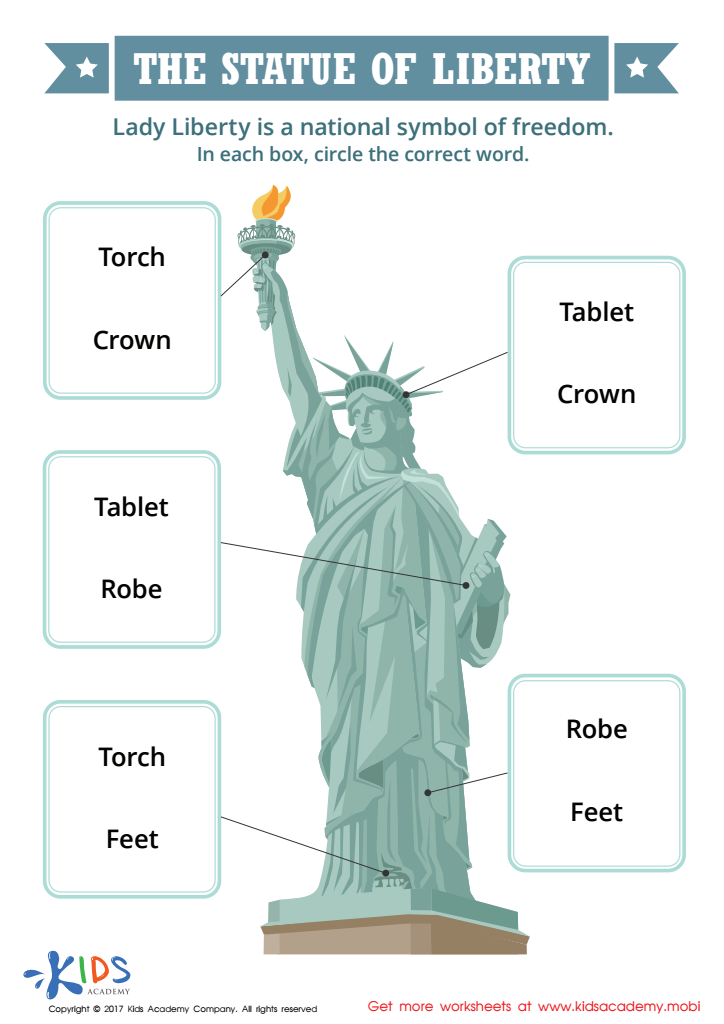
The Statue of Liberty Printable
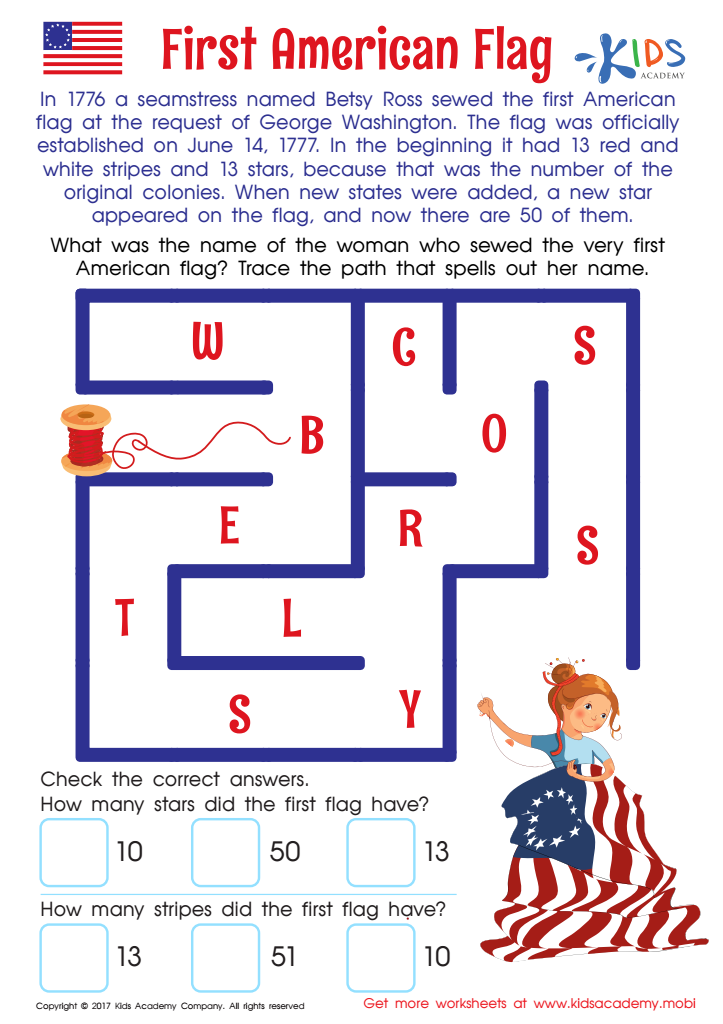
First American Flag Worksheet







Understanding history and social studies is essential for children aged 4-7 because it shapes their identity and understanding of the world. During these formative years, children develop a sense of belonging within their communities. By learning about history, they gain insights into their cultural backgrounds, as well as the diverse histories of others, fostering empathy and respect for different perspectives.
Parents and teachers have a pivotal role in guiding children through age-appropriate historical narratives, which can transform abstract concepts into relatable stories. Engaging children in topics such as family history or significant local events can spark their curiosity and promote critical thinking skills.
Moreover, early exposure to social studies concepts, like timelines, national symbols, or important figures, encourages cognitive development and literacy skills. It lays the groundwork for responsible citizenship, helping children understand their roles in society and the importance of civic engagement.
Ultimately, a comprehensive understanding of history and social studies cultivates informed individuals who can navigate complex social dynamics. It instills a sense of connection to the world around them, encouraging children to ask questions and explore their roles within a larger narrative. This early foundation is crucial for fostering lifelong learners and active, engaged community members.