Weather Vocabulary Normal World Around Us Worksheets for Ages 4-7
3 filtered results
-
From - To
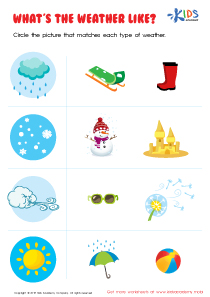
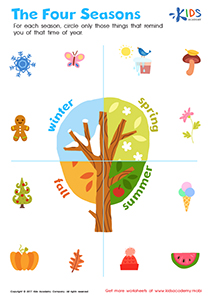
Discover our engaging "Weather Vocabulary Normal World Around Us Worksheets" designed specifically for children ages 4-7! These colorful and interactive worksheets introduce young learners to essential weather-related vocabulary, helping them explore concepts such as sunny, rainy, cloudy, and snowy. Our materials foster language development, enhance observational skills, and spark curiosity about the world around them. Perfect for both classroom and home learning, these worksheets make understanding weather fun and interactive. Encourage your child's learning journey with activities that promote creativity and critical thinking while they connect words with real-life weather phenomena. Dive into the adventure of weather vocabulary today!
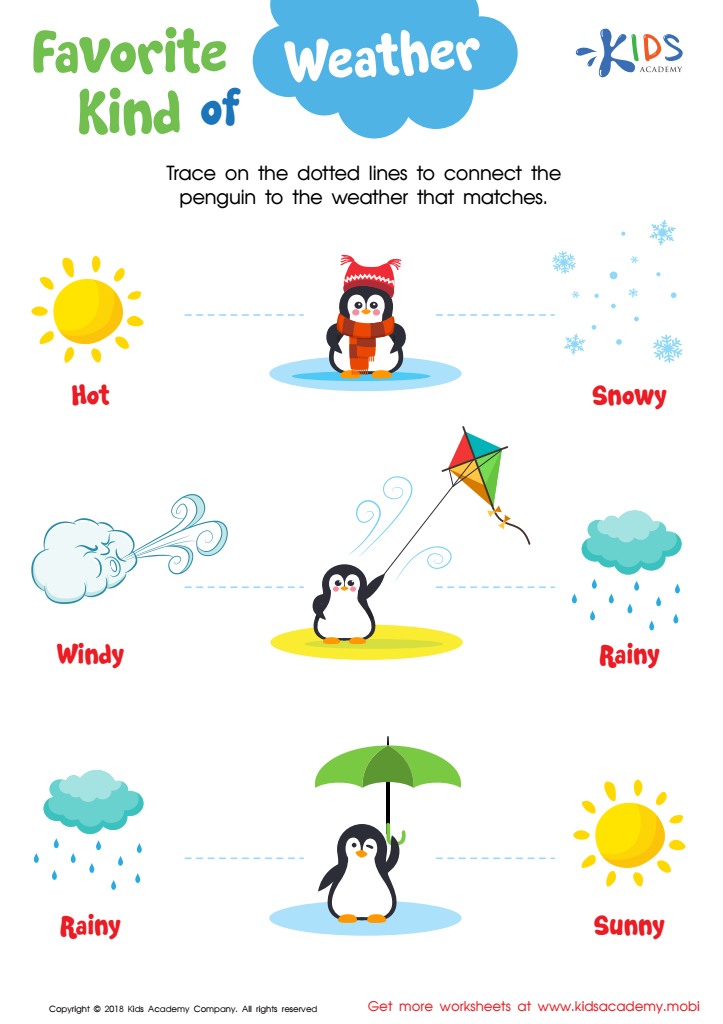
Favorite Kind of Weather Worksheet
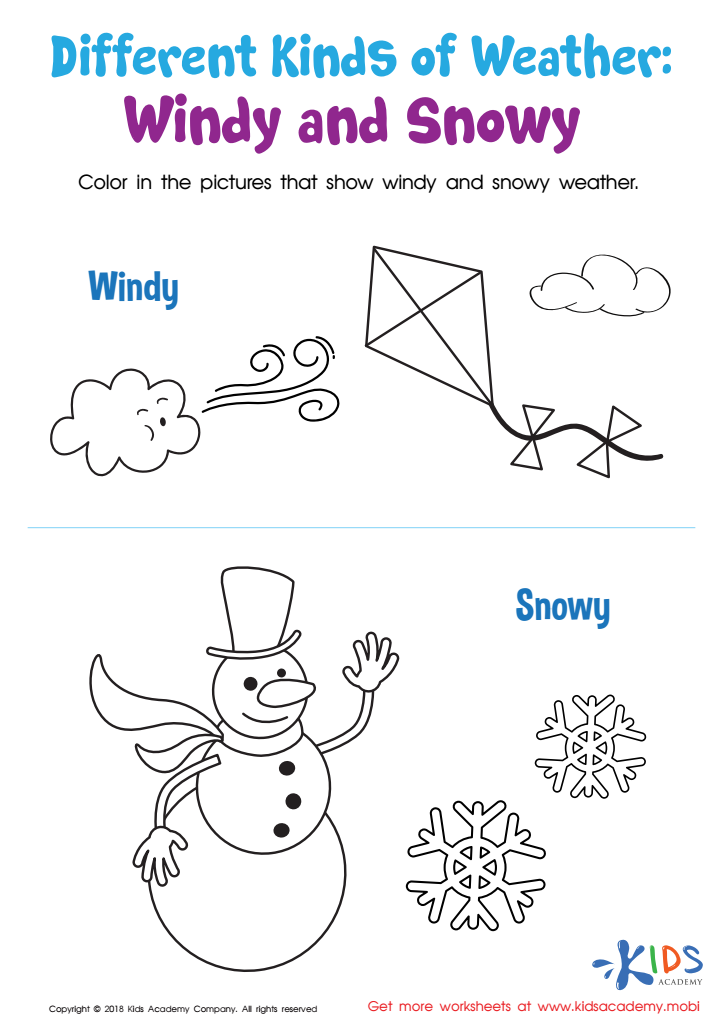
Different Kinds of Weather: Windy and Snowy Worksheet
 Assign to My Students








Understanding weather vocabulary is essential for young children, ages 4-7, as it lays the foundation for their comprehension of the world around them. At this age, children are naturally curious about their environment, and weather plays a significant role in their daily experiences. When parents and teachers engage children with weather vocabulary, it helps them develop crucial language skills, enhances their communication abilities, and fosters storytelling and imaginative play.
Moreover, weather discussions can be linked to various subjects, including science, math, and art. For instance, kids can learn about the water cycle, understand seasonal changes, and explore measurements through temperature and precipitation patterns. This interdisciplinary learning not only enriches their overall education but also cultivates critical thinking and inquiry-based learning.
Additionally, fostering an understanding of weather can promote emotional well-being, as recognizing weather conditions affects playtime and outdoor activities. This awareness encourages adaptability and resilience in children as they learn to dress appropriately and plan for different weather scenarios.
In summary, investing time in weather vocabulary enables young learners to connect with their surroundings, enhances cognitive and social skills, and equips them for lifelong learning. It's a practical and relevant aspect of education that parents and teachers should prioritize.