Spelling practice Normal Grammar Worksheets for Ages 4-7 - Page 2
26 filtered results
-
From - To
 Assign to My Students
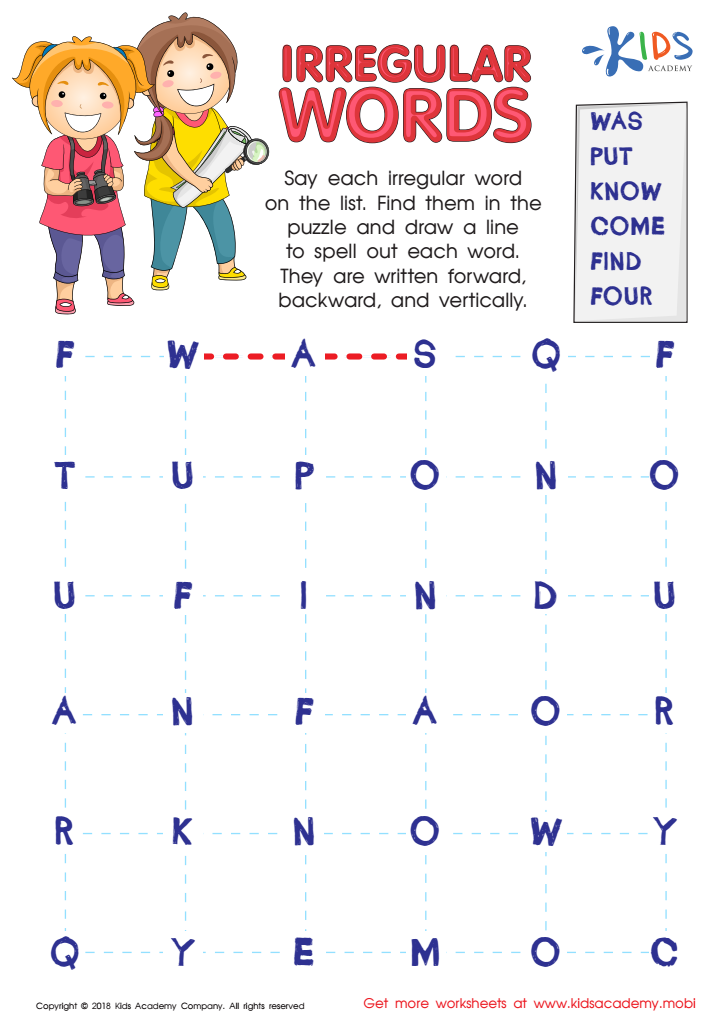
Irregular Words Worksheet








Parents and teachers should place a high value on spelling practice and normal grammar for children aged 4-7 because these early years are crucial for language development. During this period, children are in their prime time of linguistic absorption, making it easier for them to grasp new concepts, words, and linguistic structures. Spelling practice helps children understand the relationship between sounds and letters—otherwise known as phonemic awareness—which is foundational for reading and writing proficiency. By mastering spelling, children also enrich their vocabulary, enabling them to express themselves more clearly and confidently.
Normal grammar usage is equally important, as it provides the rules and structure that govern language. By learning proper grammar at an early age, children develop the ability to construct meaningful and coherent sentences. This foundational skill supports improved comprehension and communication, both of which are essential for academic success and everyday interactions.
Furthermore, early mastery of spelling and grammar instills good study habits and a love for learning. When children experience success in these areas, they often develop higher self-esteem and a positive attitude toward education. Thus, focusing on spelling and grammar practice in early childhood creates strong communicators, avid readers, and lifelong learners.