Understanding suffixes Normal Grammar Worksheets for Ages 4-7
3 filtered results
-
From - To
Jumpstart your child’s reading and writing skills with our “Understanding Suffixes Normal Grammar Worksheets for Ages 4-7.” These printable worksheets from Kids Academy make learning fun and effective. Engaging activities help young learners recognize and understand common suffixes, boosting their vocabulary and comprehension. Perfect for early graders, each worksheet is designed to be age-appropriate, combining vibrant visuals and engaging tasks to reinforce essential grammar skills. Ideal for both classroom and home learning, our worksheets offer a solid foundation to support your child’s literacy journey. Discover the power of suffixes and watch your child's confidence soar!
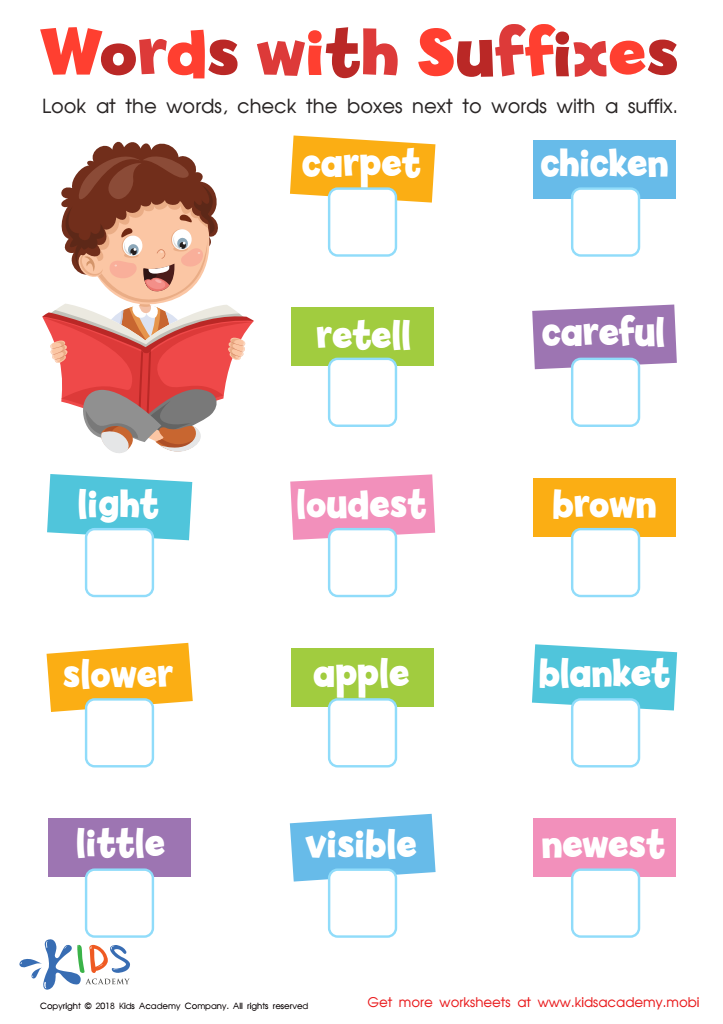
Reading: Words With Suffixes Worksheet
 Assign to My Students
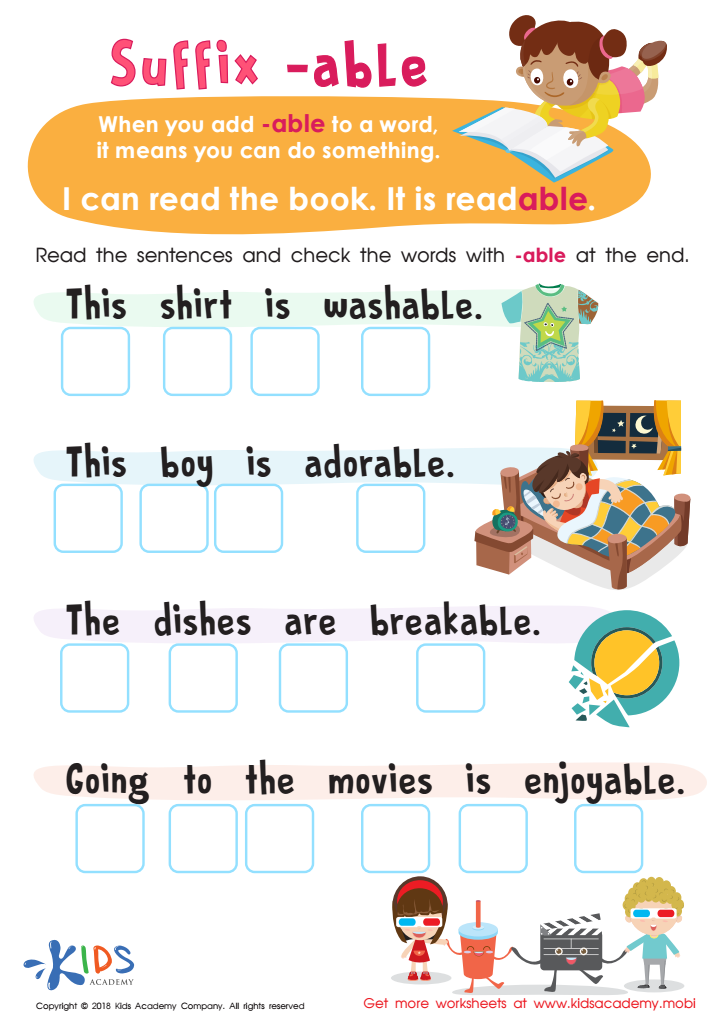
Suffix -Able Worksheet
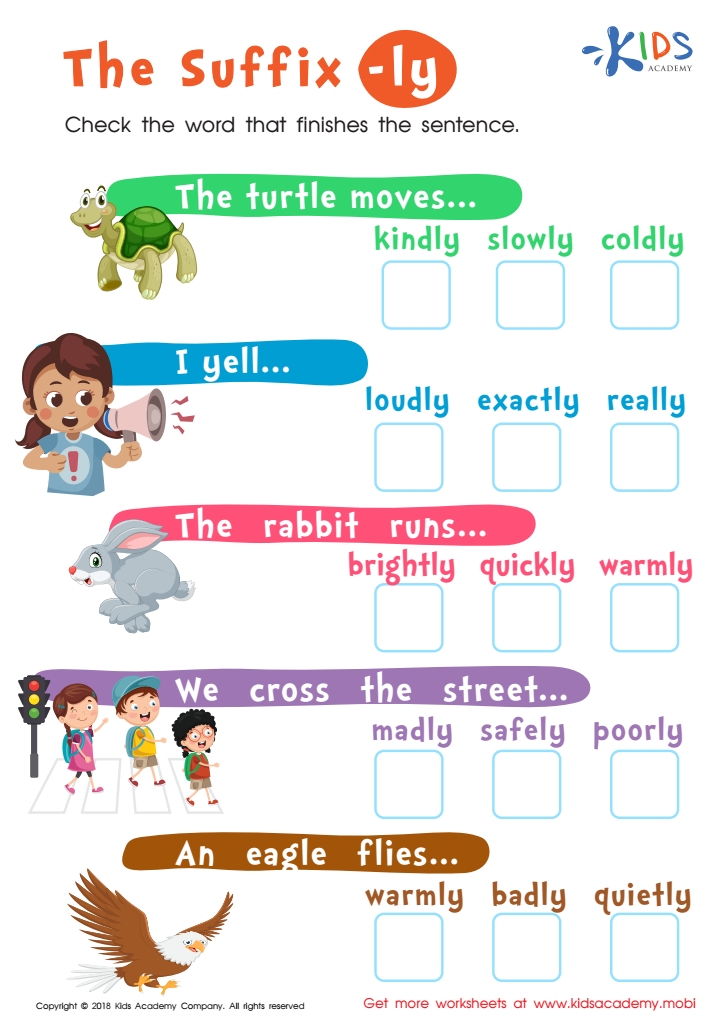
The Suffix -Ly Worksheet




.jpg)


Understanding suffixes is vital for young learners because it builds foundational language skills, important for both parents and teachers to recognize. Suffixes, the word endings added to root words, help indicate tense, plural forms, and comparative degrees, which are essential for early communication. For example, understanding that adding "-ed" creates the past tense, or "-ing" denotes an ongoing action, helps children navigate and construct sentences clearly.
When teachers and parents focus on these linguistic details, they enhance a child's reading and writing proficiency. For ages 4-7, being familiar with suffixes can expand vocabulary and improve comprehension. As children encounter more words through stories or conversations, knowing suffixes enables them to decode meanings independently, boosting their confidence and academic performance.
Moreover, recognizing patterns in suffixes aids in spelling and pronunciation. By practicing suffixes, children learn to spell new words correctly and pronounce them clearly, fostering early literacy skills. Therefore, emphasizing suffixes supports broader educational goals, making learning more accessible and enjoyable for young children, and ensuring they are well-prepared for higher levels of education. This approach lays a strong groundwork for effortless communication, critical thinking, and lifelong literacy.