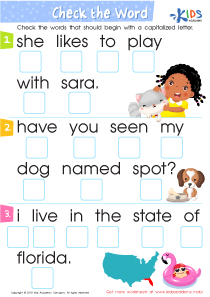
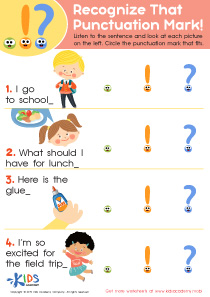
Vocabulary expansion Normal Grammar Worksheets for Ages 4-7 - Page 2
26 filtered results
-
From - To
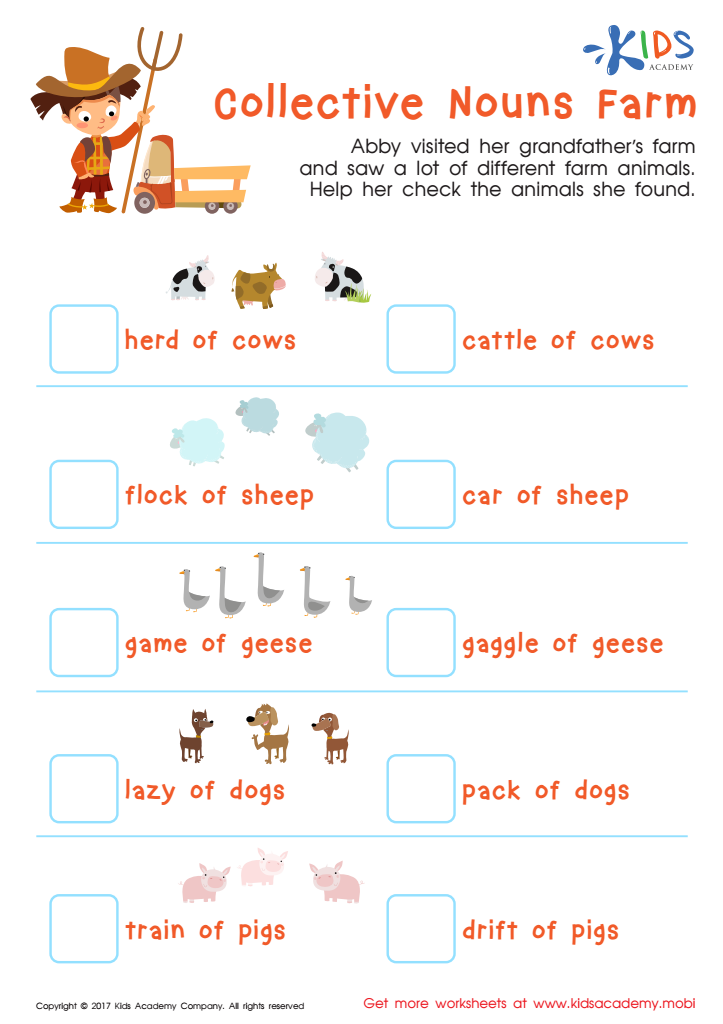
Collective Nouns Worksheet
 Assign to My Students
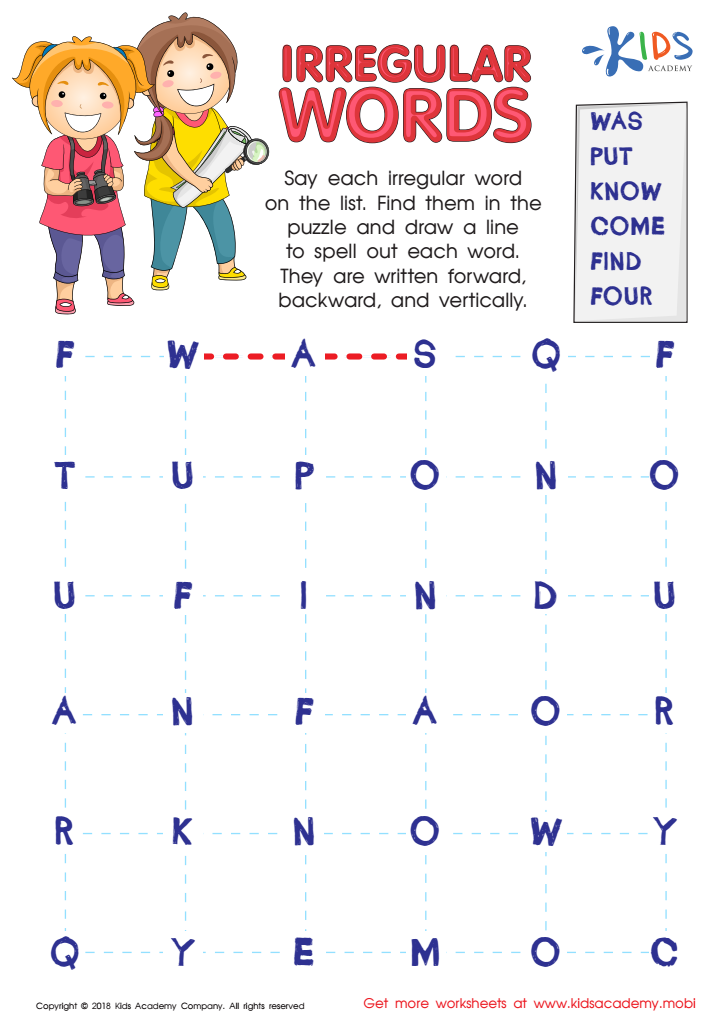
Irregular Words Worksheet






.jpg)
Vocabulary expansion and normal grammar development are crucial for children aged 4-7 as these skills form the cornerstone of their future communication abilities. At this formative age, children's brains are highly receptive to language learning, and a rich vocabulary helps them express their thoughts, needs, and emotions more precisely. When children are exposed to a broad spectrum of words, they can better comprehend instructions, stories, and conversational exchanges, facilitating smoother interactions both inside and outside the classroom.
Normal grammar development is equally important. As children start grasping the rules of grammar, they become competent in constructing coherent sentences. Correct grammar usage lays the groundwork for effective writing and reading skills, critical for academic success. Poor grammar can lead to misunderstandings and limit a child's ability to fully express themselves and engage with others.
Parents and teachers can support this development by engaging children in conversations, reading aloud to them, and introducing new words in context. Using songs, games, and storytelling can make the learning process enjoyable. Immersing children in a language-rich environment encourages both vocabulary growth and grammatical accuracy, ultimately fostering better communication skills, critical thinking, and a lifelong love for learning. Investing time in expanding children’s vocabulary and grammar yields dividends in their academic and social lives, laying a solid foundation for their future.