Motor skills development Normal ABC Letters Worksheets for Ages 4-8
3 filtered results
-
From - To
Motor Skills Development Normal ABC Letters Worksheets for Ages 4-8 are designed to enhance fine motor skills and foundational handwriting abilities in young learners. These engaging, printable worksheets guide children through letter tracing and practice, helping them achieve precise hand-eye coordination and muscle memory for writing. Each worksheet presents appealing illustrations and progressive difficulty levels to maintain interest and challenge students appropriately. Ideal for classroom and home use, these resources support early literacy development while making learning enjoyable. Jumpstart your child’s handwriting journey with these expertly crafted worksheets made to foster growth and confidence in every young writer.

Letter H Tracing Page










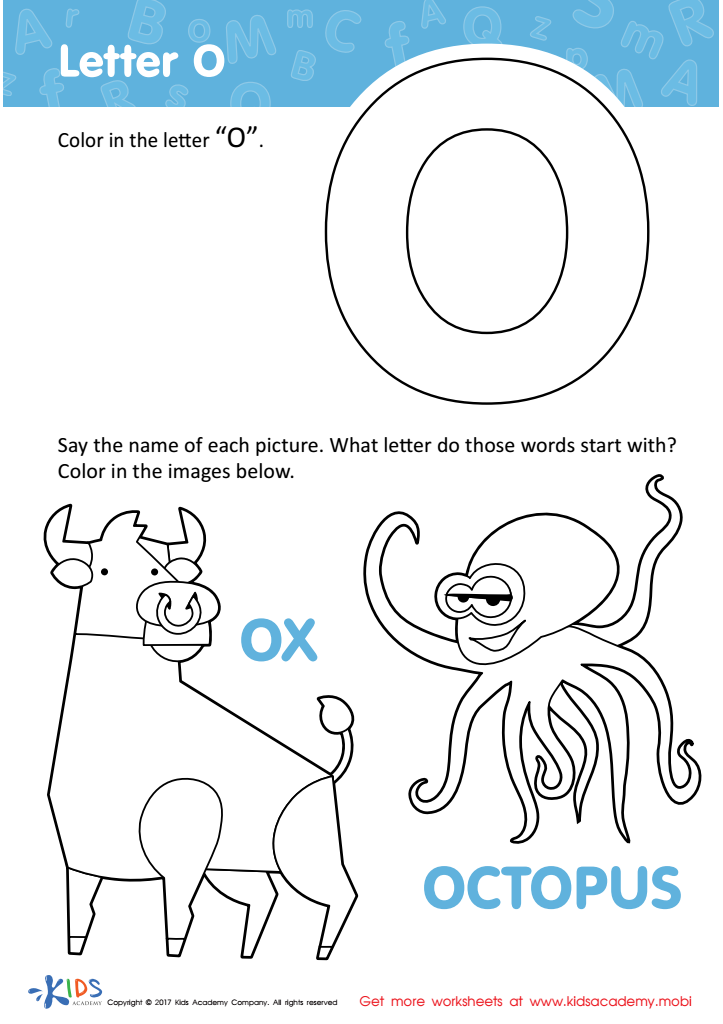
Letter O Coloring Sheet
 Assign to My Students

Letter B Tracing Page






Parents and teachers should deeply care about motor skills development for children aged 4-8 because these skills form the foundation for many aspects of their growth and future learning. Fine motor skills, which involve the use of small muscles in the hands and fingers, are vital for tasks such as writing, buttoning clothes, and using utensils. These tasks foster independence and self-confidence.
When it comes to learning ABC letters, the integration of fine motor skills is crucial. Activities like tracing letters, holding pencils correctly, and cutting with scissors help refine these skills. Mastering alphabet letters is fundamental for reading and writing, which are cornerstones of academic success. Engaging children in motor skill activities linked to ABCs makes learning more interactive and enjoyable, enhancing cognitive development and memory retention.
Gross motor skills, involving larger muscle groups, are equally important. Activities like running, jumping, and climbing promote physical health and coordination. They enable children to participate in playground activities and sports, which are essential for social interaction.
Therefore, monitoring and supporting motor skills development ensures a holistic approach to a child’s early education. By fostering these skills, adults set the stage for a strong academic foundation, physical health, and overall well-being, equipping children with essential tools for life.







