Uppercase identification Normal Alphabet Worksheets for Ages 4-8
5 filtered results
-
From - To
Discover fun and engaging Uppercase Identification Normal Alphabet Worksheets designed for children aged 4-8! These worksheets provide an effective way for young learners to recognize and reinforce their understanding of uppercase letters through various interactive activities. Each worksheet encourages creativity and critical thinking, making learning enjoyable. Your child will enhance their letter recognition skills, essential for reading and writing development. Perfect for at-home practice or classroom activities, these worksheets cater to diverse learning styles, ensuring every child can thrive. Join us in fostering a love for learning with our thoughtfully crafted resources that support early literacy skills!
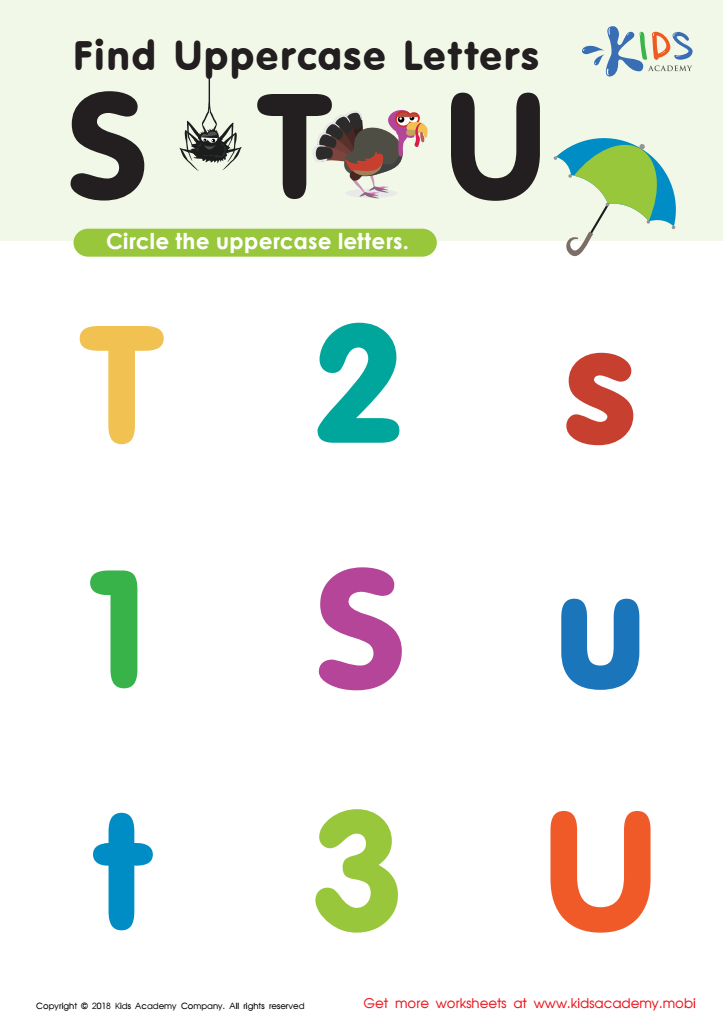
Find Uppercase Letters Worksheet
 Assign to My Students
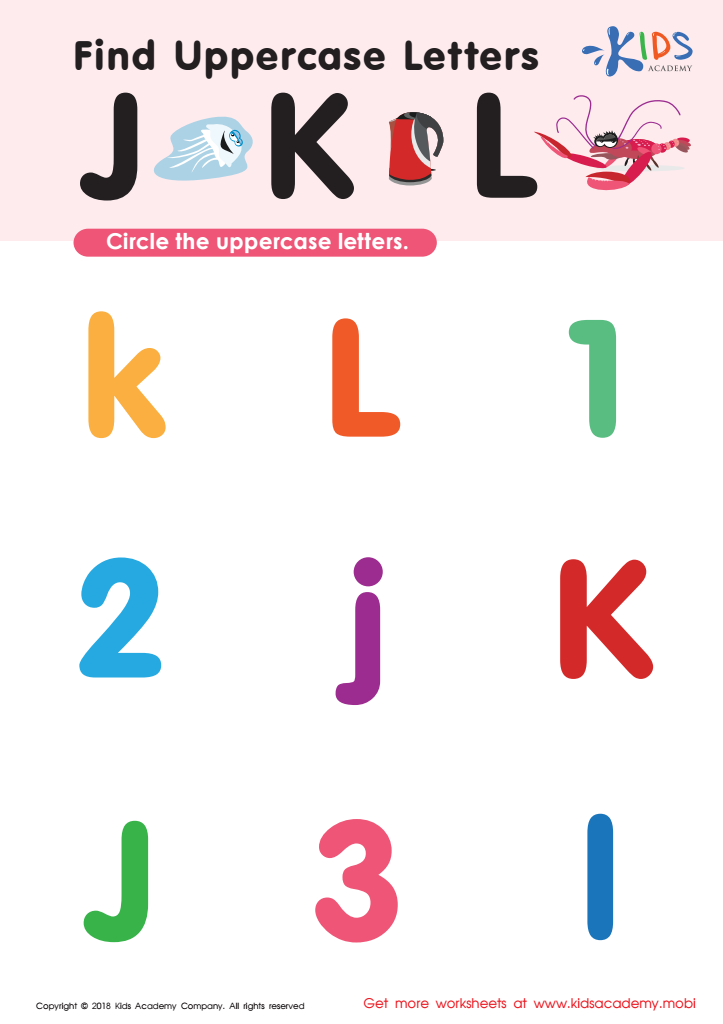
Find Uppercase Letters J, K, and L Worksheet
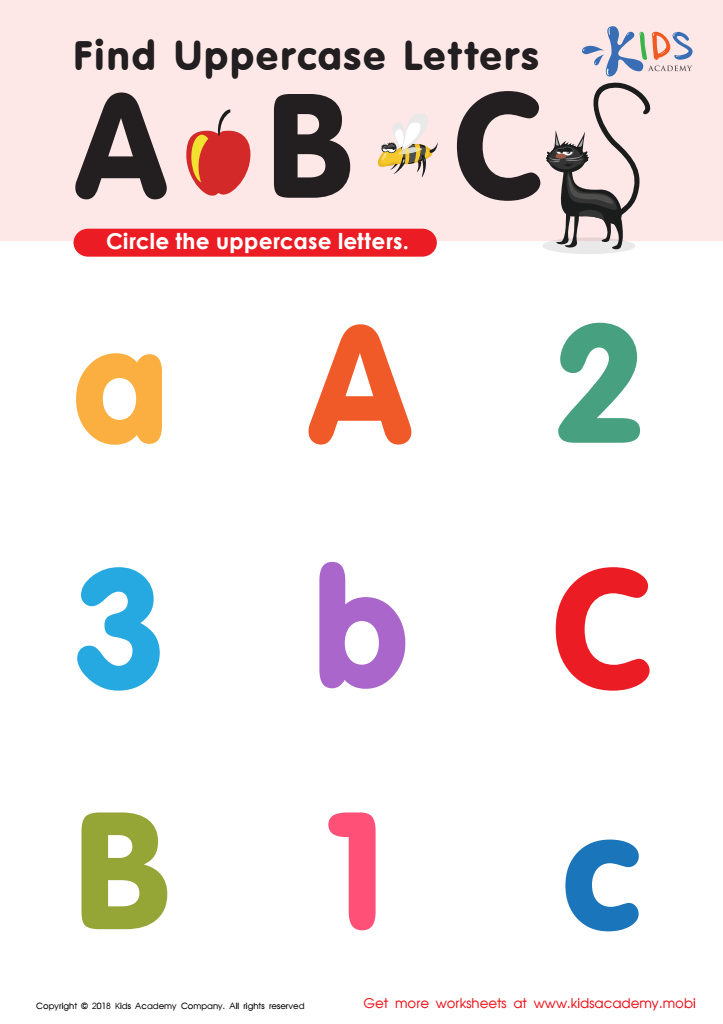
Find Uppercase Letters A, B, and C Worksheet
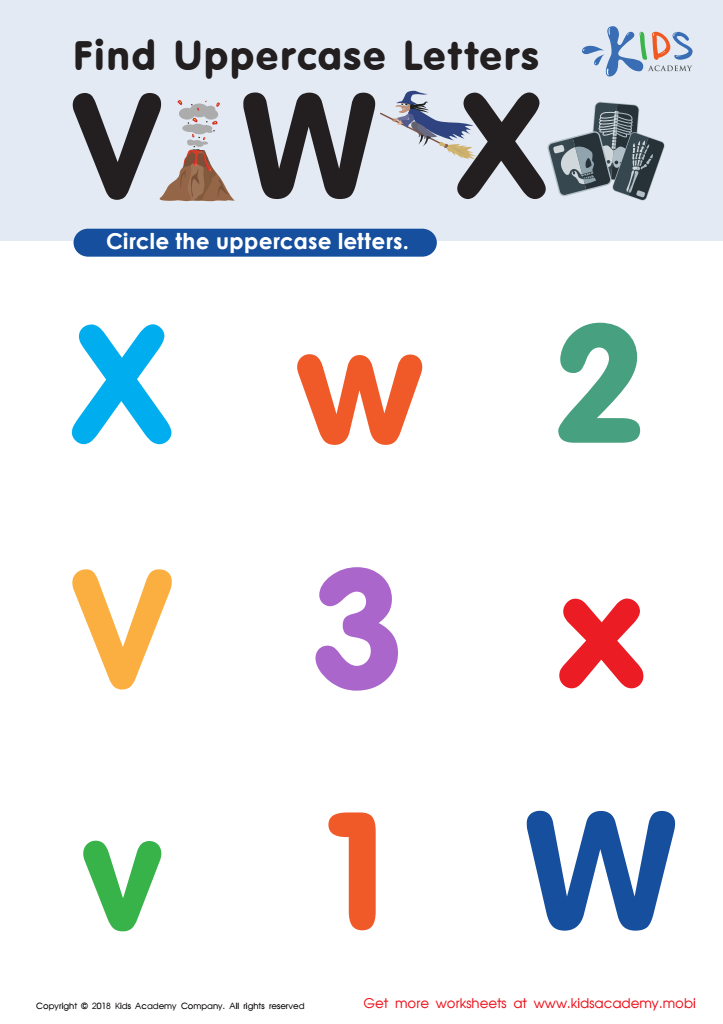
Find Uppercase Letters V, W, X Worksheet
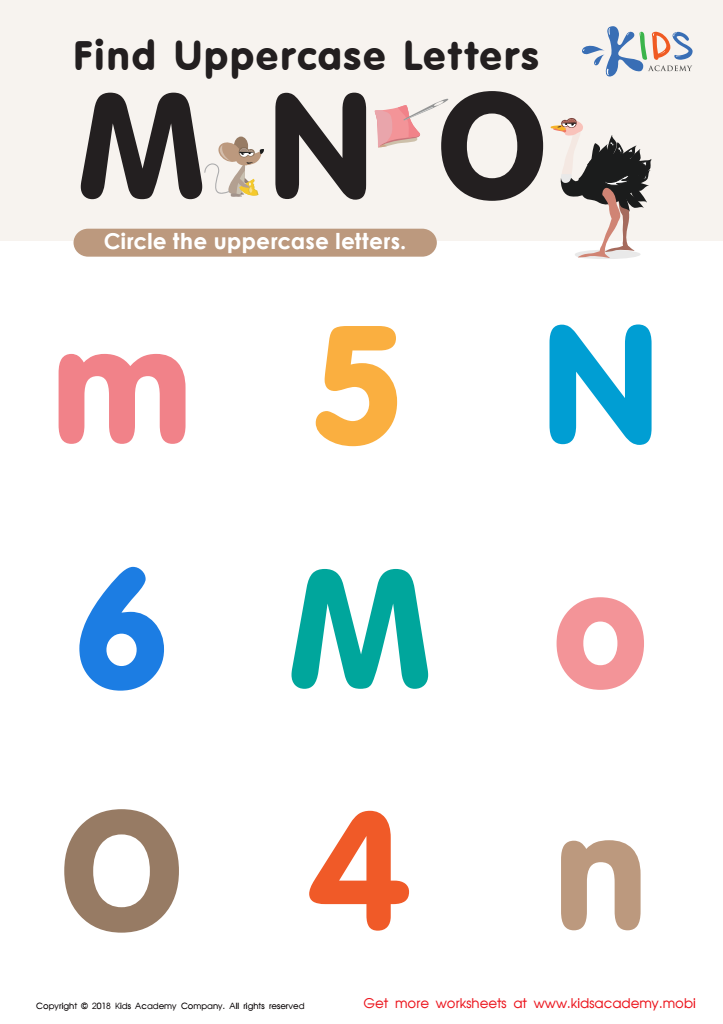
Find Uppercase Letters M, N, and O Worksheet







Uppercase letter identification is a crucial foundation for early literacy development in children aged 4-8. At this stage, children are often introduced to the alphabet, and mastery of uppercase letters is an essential skill that supports their reading and writing abilities.
For parents and teachers, understanding the significance of uppercase letter identification is vital because it fosters a child's ability to recognize and differentiate between letters, assisting their transition into reading and spelling. Recognizing uppercase letters helps children develop phonemic awareness, enabling them to decode words effectively.
Moreover, uppercase letters frequently appear in essential contexts, such as names, titles, and at the beginnings of sentences. Children with strong uppercase letter identification skills are better equipped to engage with written text, promoting higher self-esteem and motivation to learn.
Additionally, parents and teachers can promote engagement through interactive activities like games, flashcards, and creative writing exercises. These methods not only enhance letter recognition but also develop fine motor skills through writing practice.
Incorporating uppercase letter identification into early education will lay the groundwork for lifelong literacy skills, cognitive development, and a love for reading—all critical for academic success and effective communication. Thus, attention to uppercase identification is essential for nurturing confident and competent young learners.







