Lowercase letter writing Normal Letter Recognition Worksheets for Ages 4-8
3 filtered results
-
From - To
Discover our engaging Lowercase Letter Writing worksheets, perfect for children aged 4-8. These Normal Letter Recognition printables help early learners improve handwriting skills by focusing on lowercase alphabets. Fun and interactive exercises ensure your child grasps proper letter formation while enhancing motor skills. Ideal for homeschool or classroom use, these worksheets encourage consistent practice, guaranteeing development in literacy foundations. Let your child enjoy tracing, writing, and learning with these expertly designed activities, fostering a seamless transition into confident and competent readers and writers. Unlock the joy of learning with Kids Academy’s trusted resources today!
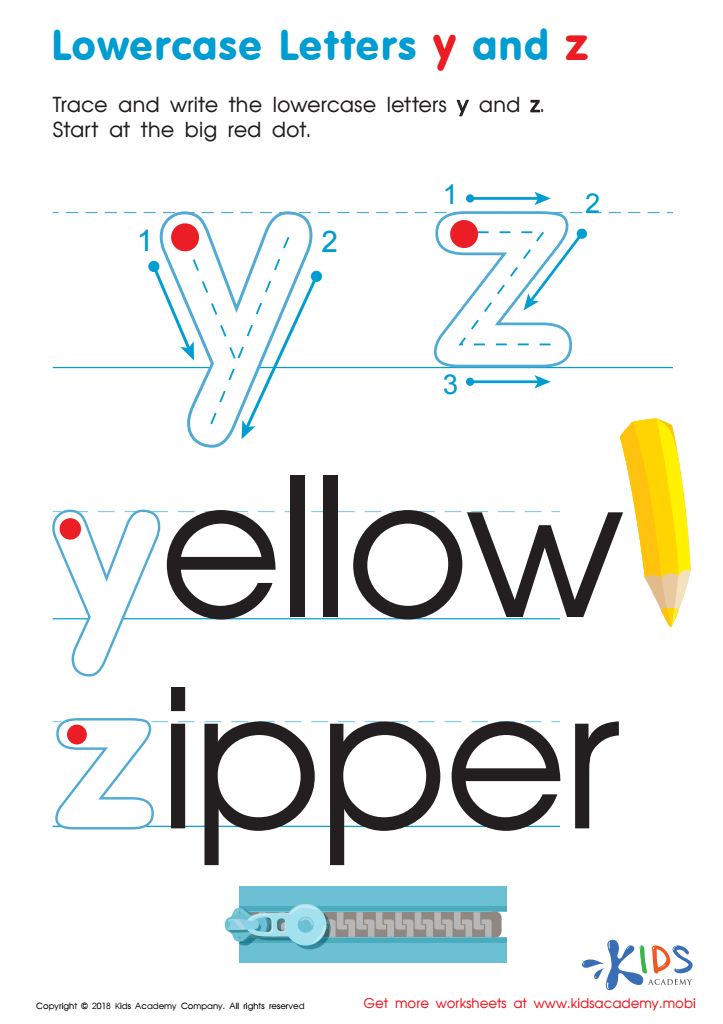
Lowercase Letters y z Worksheet
 Assign to My Students
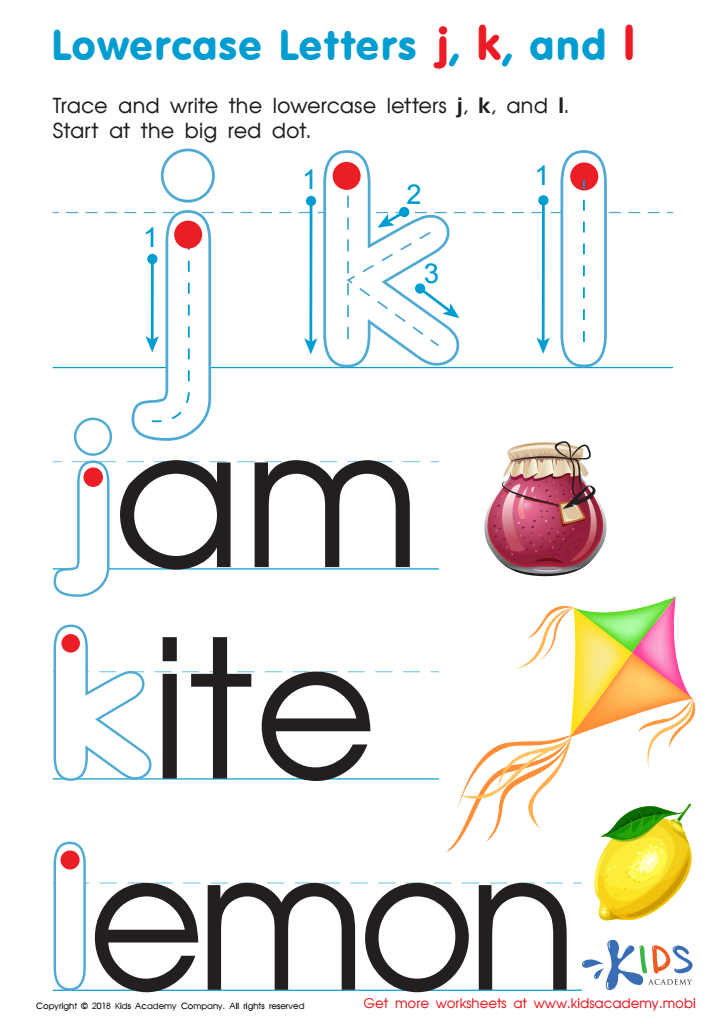
Lowercase Letters j k l Worksheet
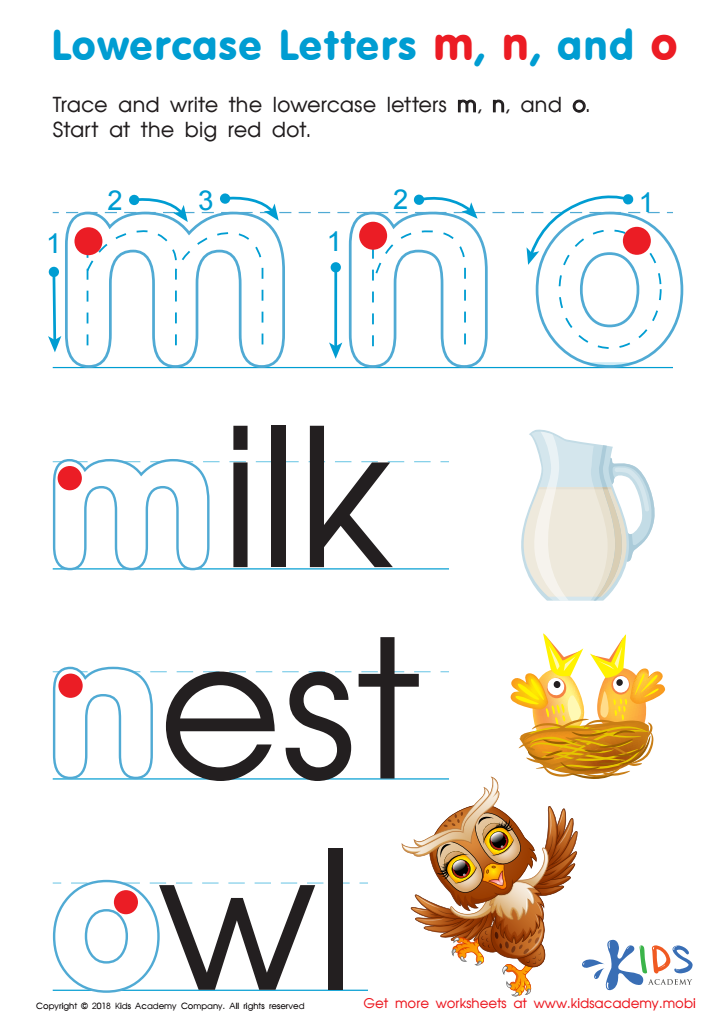
Lowercase Letters m n o Worksheet








Parents and teachers should prioritize lowercase letter writing and normal letter recognition for children aged 4-8 as these skills form the bedrock of literacy. At this critical developmental stage, children are transitioning from theoretical understanding of language to practical application in reading and writing. Lowercase letters dominate most written texts, accounting for the vast majority of letters children will encounter in books, signs, and their own writing activities. Hence, familiarizing young learners with lowercase letters ensures smoother reading experiences.
Furthermore, lowercase letter recognition and writing are essential cognitive skills that enhance fine motor control, hand-eye coordination, and visual discrimination. These foundational skills make it easier for children to gradually engage with more complex literacy tasks, such as stringing words together to form sentences or paragraphs.
In addition to cognitive and motor development, mastering lowercase letter writing boosts confidence and encourages a positive attitude toward learning. As children begin to recognize and write letters with ease, they experience a sense of achievement that fosters motivation and perseverance.
Ultimately, strong letter recognition and writing skills set the stage for academic success, as literacy competency is interwoven with almost every subject children will learn in school. Prioritizing these skills within the early years will place children on a promising path for future educational achievements.








