Motor skills development Normal Letter Recognition Worksheets for Ages 4-8
3 filtered results
-
From - To
Boost your child's motor skills and letter recognition with our specialized worksheets for ages 4-8! Designed to enhance fine motor development, these engaging activities support early learners in mastering essential literacy foundations. Our carefully crafted worksheets combine fun with education, facilitating proper grip, hand-eye coordination, and letter formation. Perfect for home or classroom settings, each worksheet offers traceable letters, playful exercises, and vibrant illustrations that captivate young minds. Set your child on the path to reading success with tools that promote confidence and effective learning habits. Explore our collection today and watch your child's skills flourish!

Letter H Tracing Page
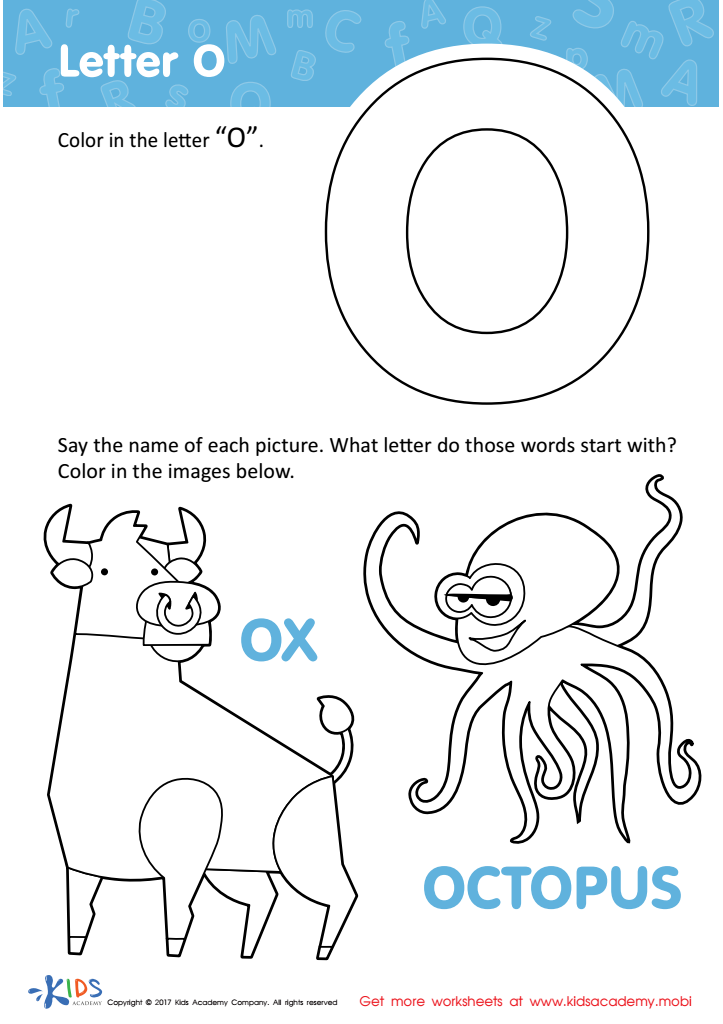
Letter O Coloring Sheet
 Assign to My Students
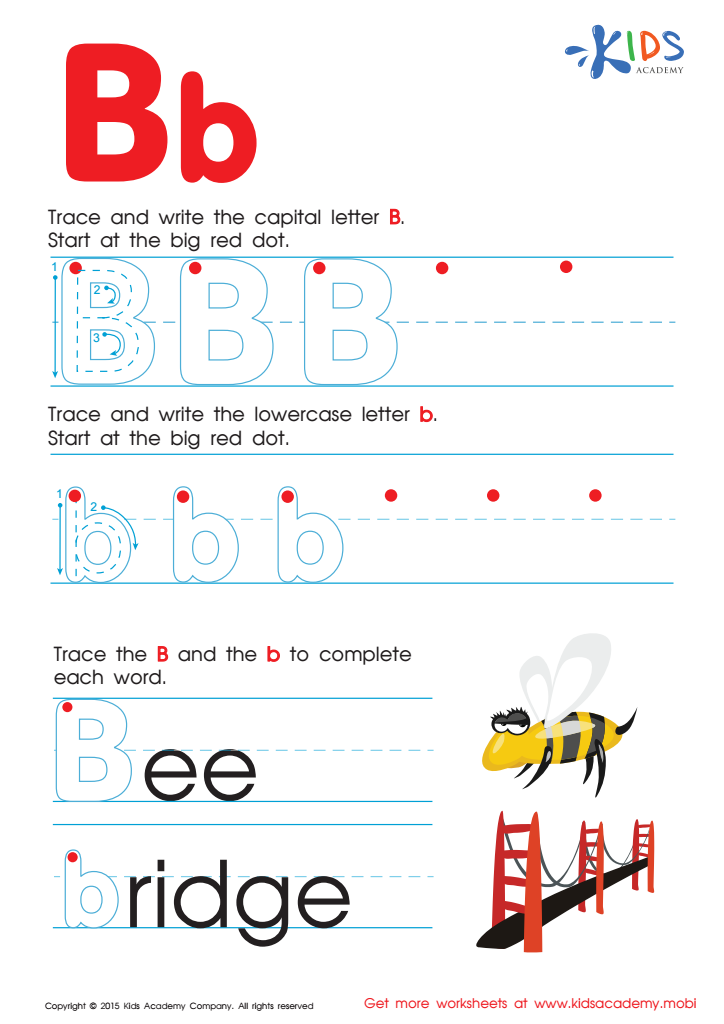
Letter B Tracing Page








Motor skills development and normal letter recognition for children ages 4-8 are foundational for their overall growth and academic success, and both parents and teachers play crucial roles in fostering these abilities.
Fine motor skills involve the coordination of small muscles, particularly in the hands and fingers, necessary for tasks such as writing, buttoning clothes, and using utensils. Developing these skills at an early age helps children become more independent and confident in their daily activities. Engaging in activities like playing with building blocks, cutting with scissors, or threading beads, allows children to strengthen their finger dexterity and hand-eye coordination. For instance, the ability to hold a pencil correctly is fundamental for writing neatly and efficiently.
Simultaneously, normal letter recognition—grasping the shapes and sounds of letters—is essential for literacy development. By the ages of 4-8, children should be familiarizing themselves with the alphabet, which serves as the pillar for reading and writing skills. Recognizing letters and understanding their corresponding sounds is vital for phonemic awareness, spelling, reading fluency, and comprehension. Enhanced literacy skills set the stage for all future learning, as almost all subjects require reading proficiency.
In essence, supporting motor skills and letter recognition during these formative years equips children with the tools they need for both academic success and daily life activities, setting a solid foundation for lifelong learning and development.








