
Phonics practice Normal Letter Recognition Worksheets for Ages 4-8
4 filtered results
Difficulty Level
Grade
Age
-
From - To
Subject
Activity
Standards
Enhance your child's reading foundation with our Phonics Practice Normal Letter Recognition Worksheets, specifically designed for ages 4-8. These engaging worksheets are an excellent tool for helping young learners identify letters, associate sounds, and build essential phonics skills. With colorful illustrations and fun activities, children will stay motivated while developing their letter recognition abilities. Our worksheets cater to various learning styles, making it easier for kids to grasp the fundamentals of reading. Start nurturing your child's literacy journey today and watch their confidence soar as they progress in their phonics practice, paving the way for a successful learning experience.
Favorites
With answer key
Interactive
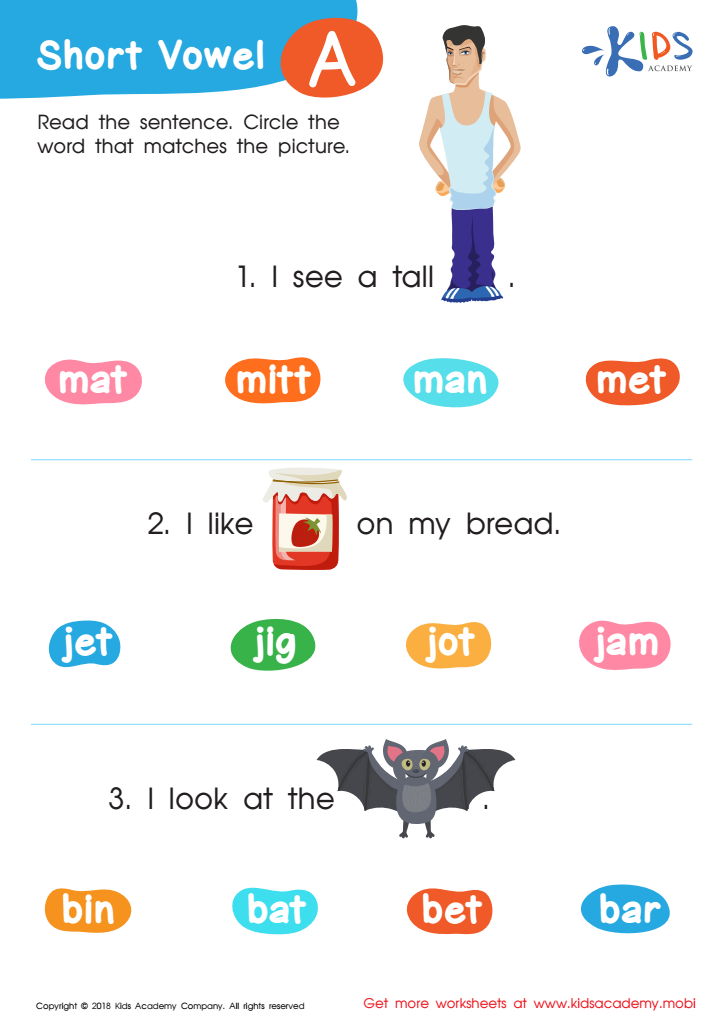
Short Vowel /a/ Worksheet
This free PDF helps new readers use sight words and pictures to read basic sentences. Then, they use accompanying word choices to find the correct word with the short a vowel sound. A key early reading skill, discriminating between short vowel sounds can be tricky in monosyllabic words, so use this PDF to help your reader reinforce it.
Short Vowel /a/ Worksheet
Worksheet
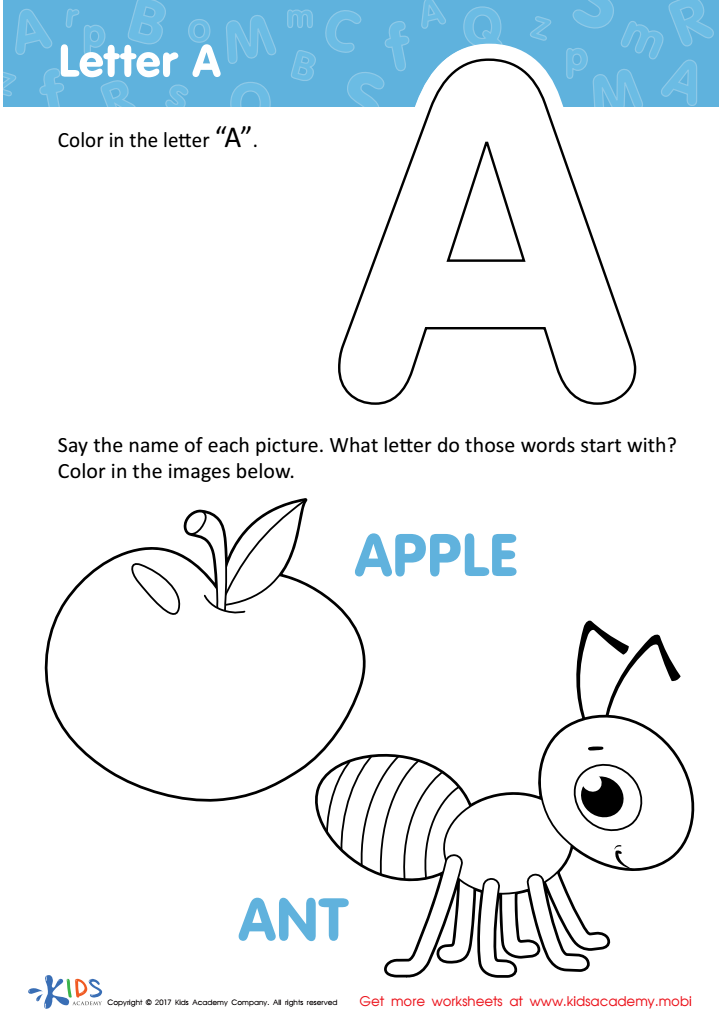
Letter A Coloring Sheet
This letter "A" coloring page is great for introducing kids to the alphabet! Let them exercise their creativity while they learn to recognize letters and sounds - it's a fun and easy way to help them get started.
Download (PDF)
 Assign to My Students
Assign to My Students
Letter A Coloring Sheet
Worksheet
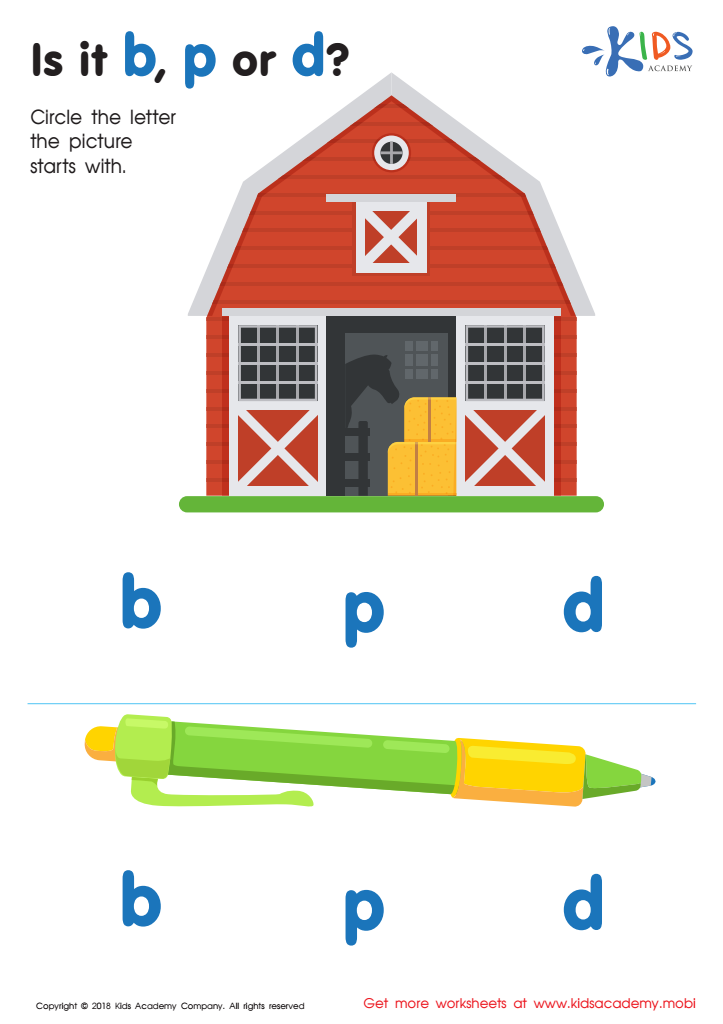
Is it b, p or d? Worksheet
Test your child's identification skills with this worksheet. They must identify the image and then circle the letter it begins with: 'b', 'p', or 'd' (e.g. an image of the sun would mean they circle 's').
Is it b, p or d? Worksheet
Worksheet
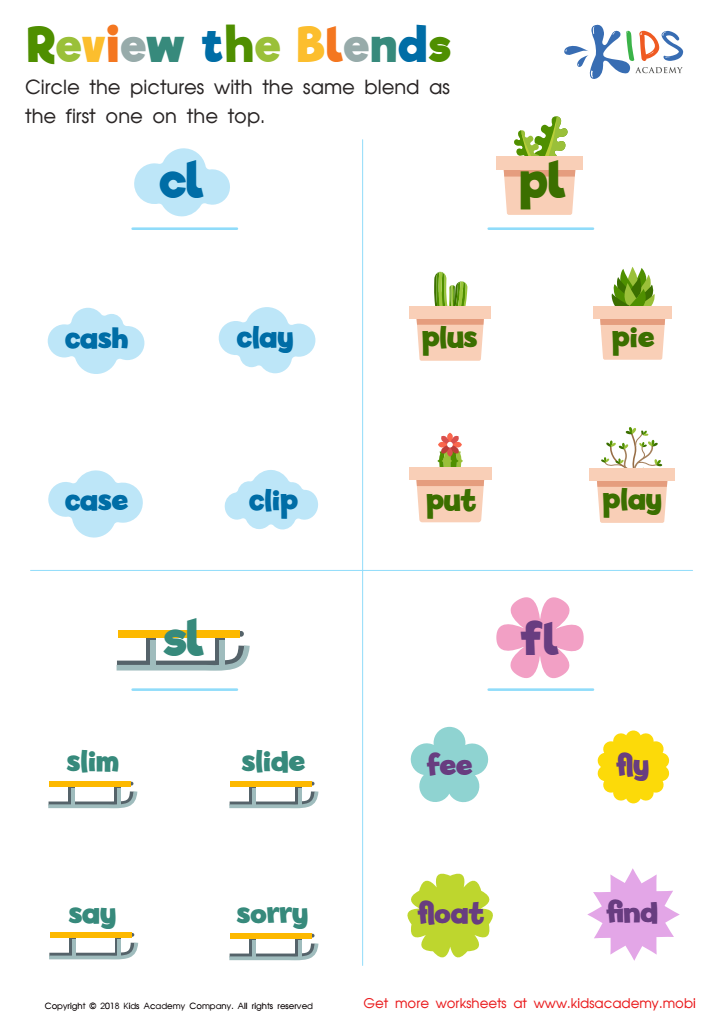
Review the Blends Worksheet
Consonant blends are two or three consonants that make a sound when pronounced together. L-blends like cl, bl, sl, fl and 3-letter blends like str, slp are common. This phonics worksheet helps early readers identify words containing two letter L-blends. Students must circle the words then read them aloud.
Review the Blends Worksheet
Worksheet
Join Kids Academy for Free
Who is primarily going to use this learning content?








Phonics practice and letter recognition are crucial components of early literacy development for children aged 4-8. During these formative years, children develop foundational skills that significantly influence their reading and writing abilities. Engaging in phonics practice equips young learners with the tools necessary to decode words, understand the relationship between sounds and letters, and build a robust vocabulary.
Parents and teachers should prioritize phonics because it fosters self-confidence in children's reading abilities. When children can recognize letters and understand how they sound when combined, they feel empowered to explore books independently. Additionally, mastering phonics prevents reading difficulties later on; evidence shows a strong correlation between phonics competence and future academic success.
Moreover, phonics activities can be interactive and fun, enhancing engagement and motivation among young learners. Games, songs, and rhymes make the learning process enjoyable, thereby supporting better retention of skills. Involvement from both parents and teachers reinforces the importance of literacy and creates a supportive learning environment.
Ultimately, strong phonics and letter recognition skills serve as the building blocks for proficient reading and writing, enabling children to express themselves effectively and paving the way for lifelong learning.








