Visual discrimination Normal Letter Recognition Worksheets for Ages 4-8
4 filtered results
-
From - To
Enhance early reading skills with our Visual Discrimination Normal Letter Recognition Worksheets designed for children ages 4-8. These engaging worksheets help young learners identify and distinguish letters through enjoyable, practice-based activities. Perfect for preschool and elementary students, the exercises boost visual perception and attention to detail—key components in developing strong reading foundations. Our educational resources offer a variety of thoughtfully crafted tasks that challenge and entertain, ensuring an interactive learning experience. Equip your classroom or home with these valuable teaching aids to support emerging readers on their journey to literacy success!
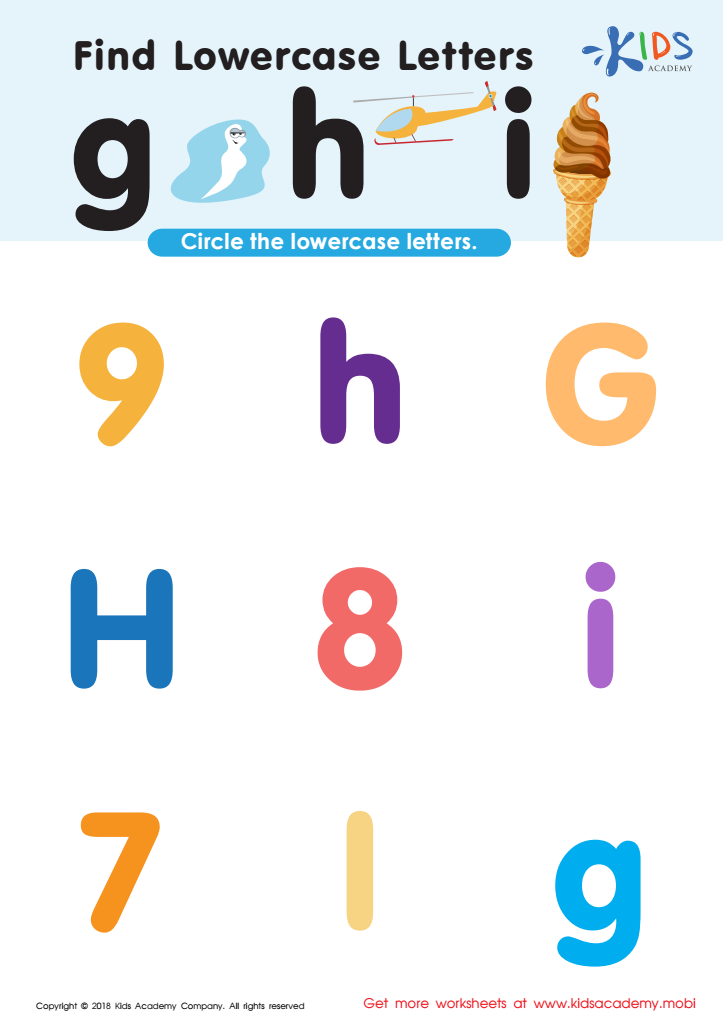
Find Lowercase Letters g h i Worksheet
 Assign to My Students
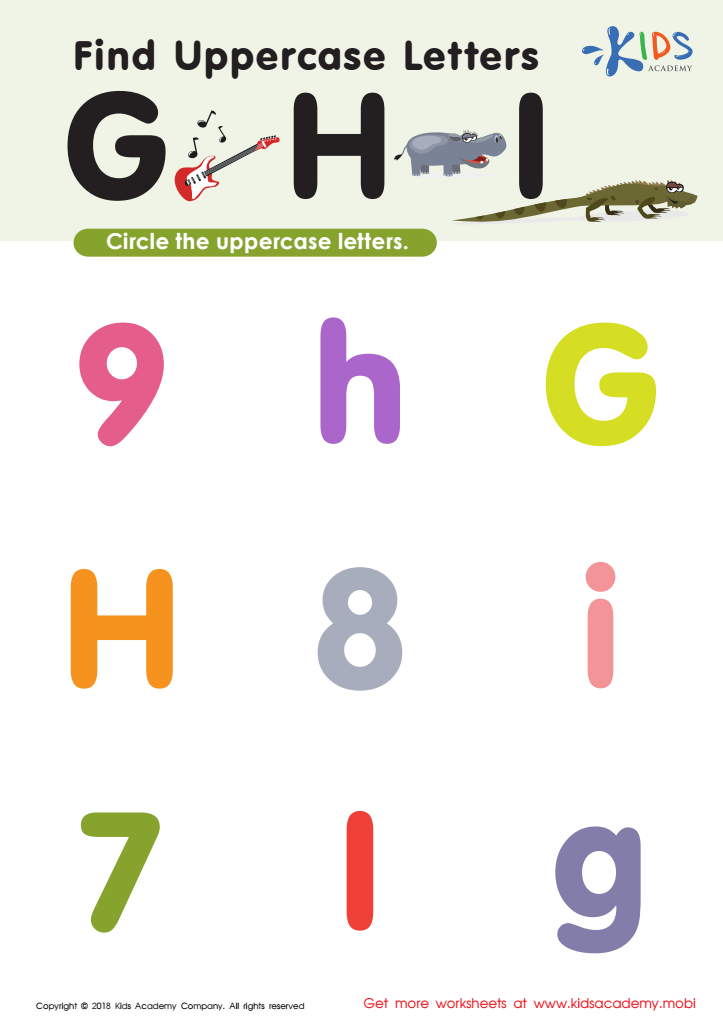
Find Uppercase Letters G, H, and I Worksheet
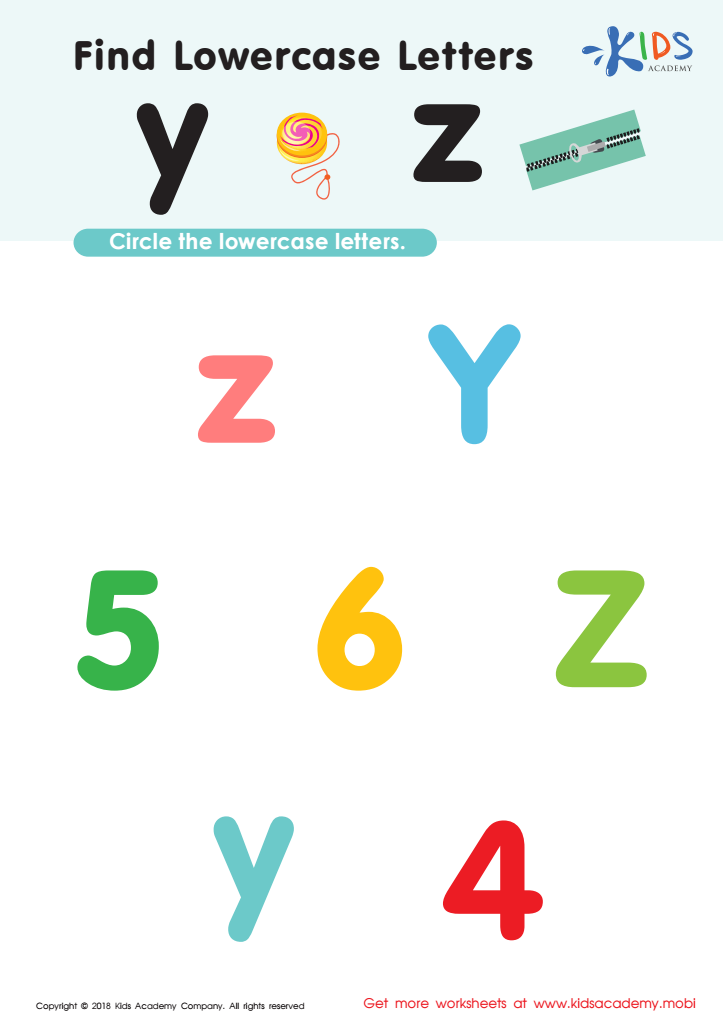
Find Lowercase Letters y z Worksheet
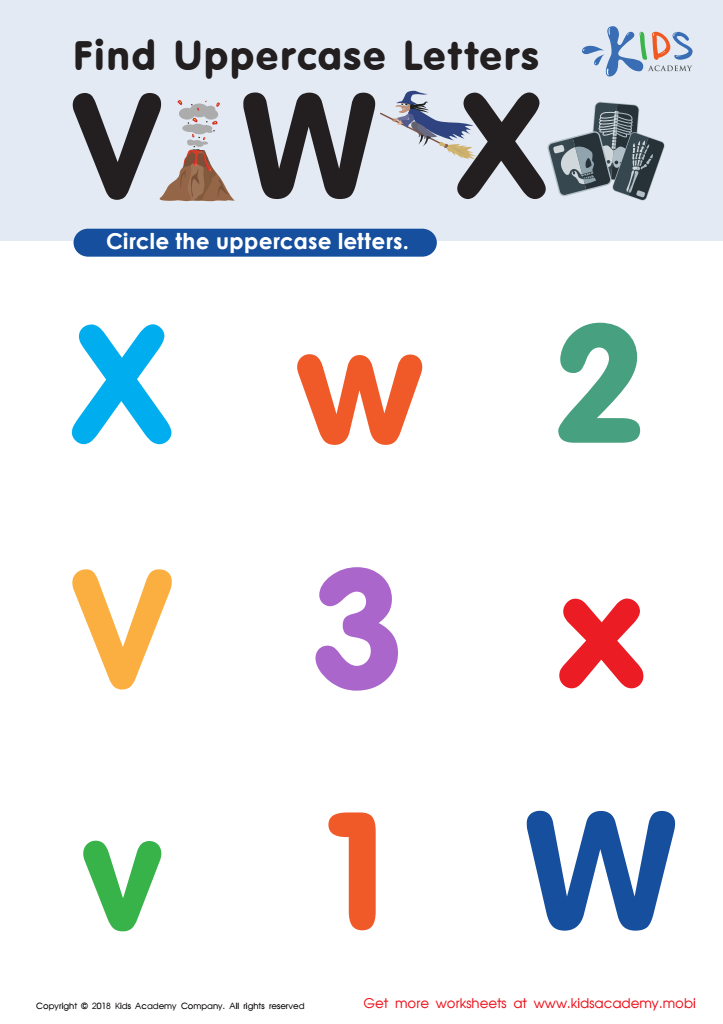
Find Uppercase Letters V, W, X Worksheet








Visual discrimination and normal letter recognition are crucial skills in early childhood development, especially for children aged 4-8. These abilities form the foundation for reading and writing, which are essential for academic success and lifelong learning.
Visual discrimination involves the ability to see and differentiate between various visual stimuli, including letters and words. This skill helps children distinguish between similar-looking letters such as 'b' and 'd,' or 'p' and 'q.' Without strong visual discrimination skills, children may struggle with reading, spelling, and writing, leading to difficulties in school.
Normal letter recognition takes visual discrimination a step further, involving the ability to correctly identify and name individual letters of the alphabet. This recognition is crucial for developing phonemic awareness, which is the understanding that letters represent specific sounds. When children can easily recognize and differentiate letters, they can start forming words, comprehending sentences, and gaining meaning from text, all of which are essential for reading proficiency.
Parents and teachers should prioritize nurturing these skills to ensure that children can confidently embark on their educational journey. Activities like puzzles, matching games, and interactive reading sessions can strengthen visual discrimination and letter recognition, setting the stage for a solid academic foundation. By fostering these abilities early on, adults can help children become successful, confident readers and writers.








