Phonics recognition Normal Letter Sounds Worksheets for Ages 4-8
5 filtered results
-
From - To
Unlock the world of reading for your little ones with our "Phonics Recognition Normal Letter Sounds Worksheets," designed specifically for ages 4-8. These engaging and interactive worksheets help children develop essential phonics skills through vibrant illustrations and fun activities. Focusing on letter sounds, our resources enhance early literacy, enabling kids to blend, decode, and pronounce words confidently. Perfect for home or classroom use, these worksheets promote a love for learning while building a strong foundation in reading. Join us on the journey to literacy success, and watch as your child gains confidence in their reading abilities! Explore now for engaging educational fun!
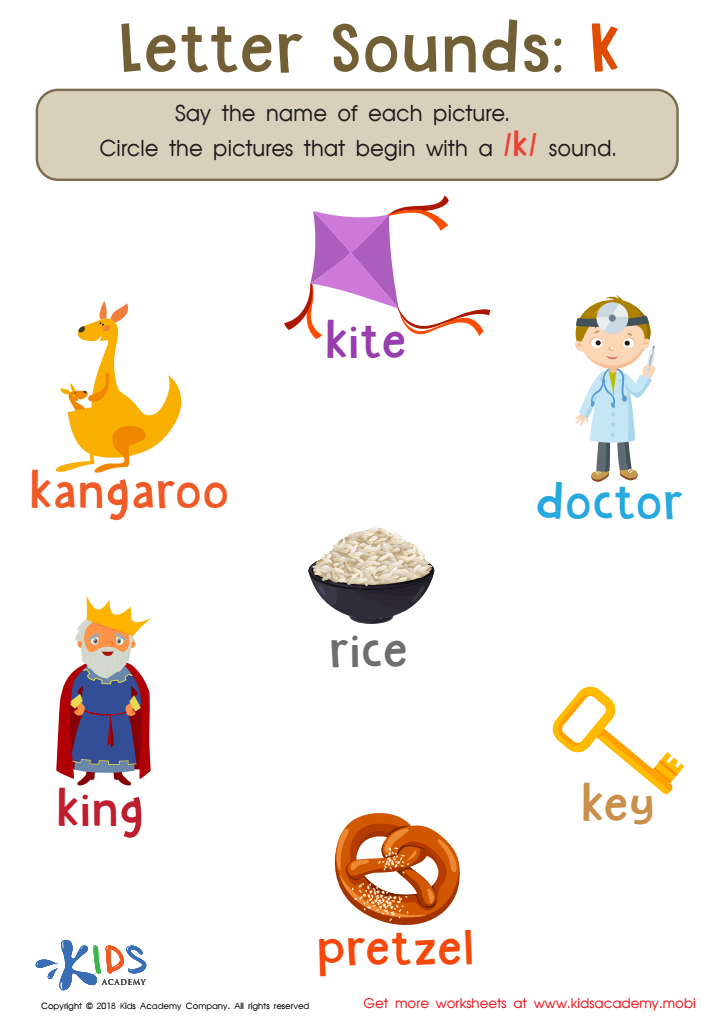
Letter K Sounds Worksheet
 Assign to My Students
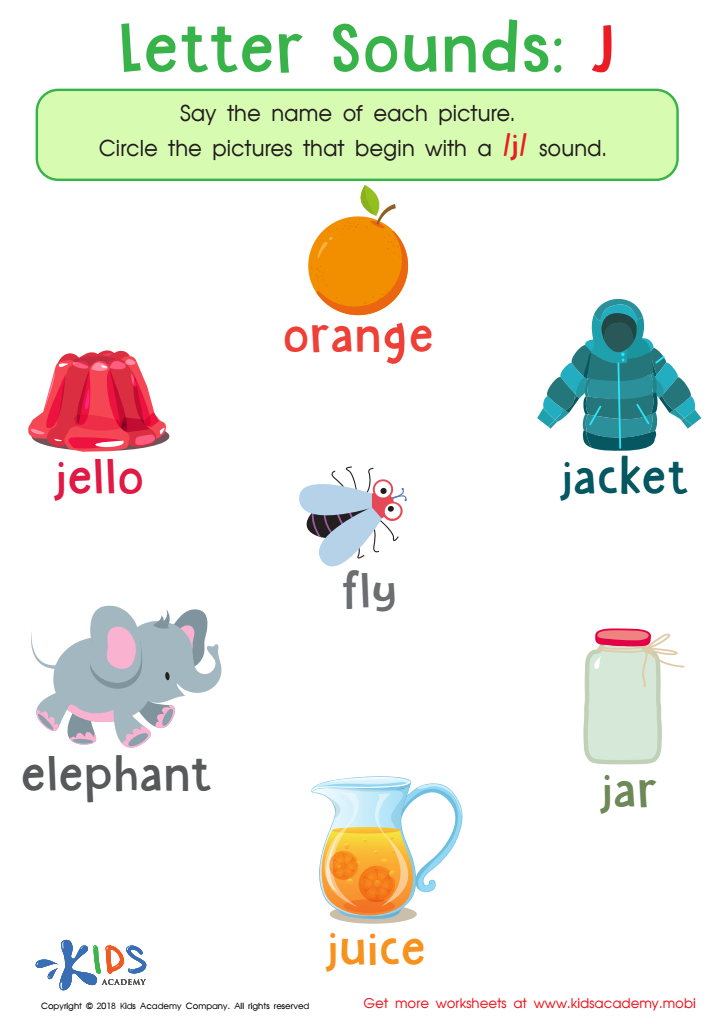
Letter Sounds: J Printable Worksheet
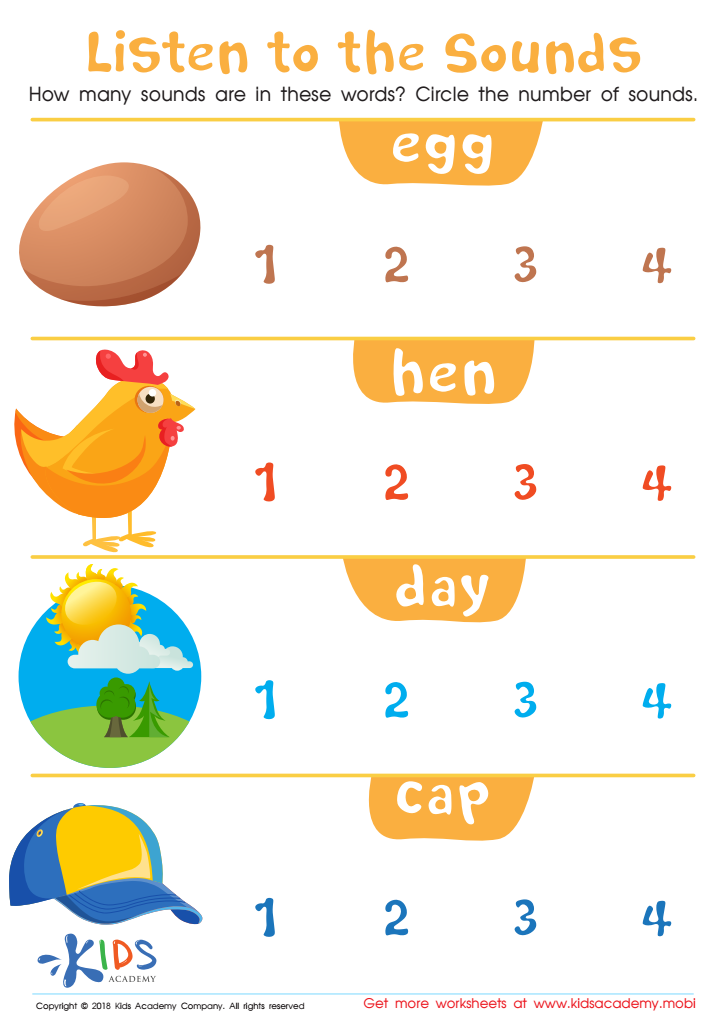
Listen to the Sounds Worksheet
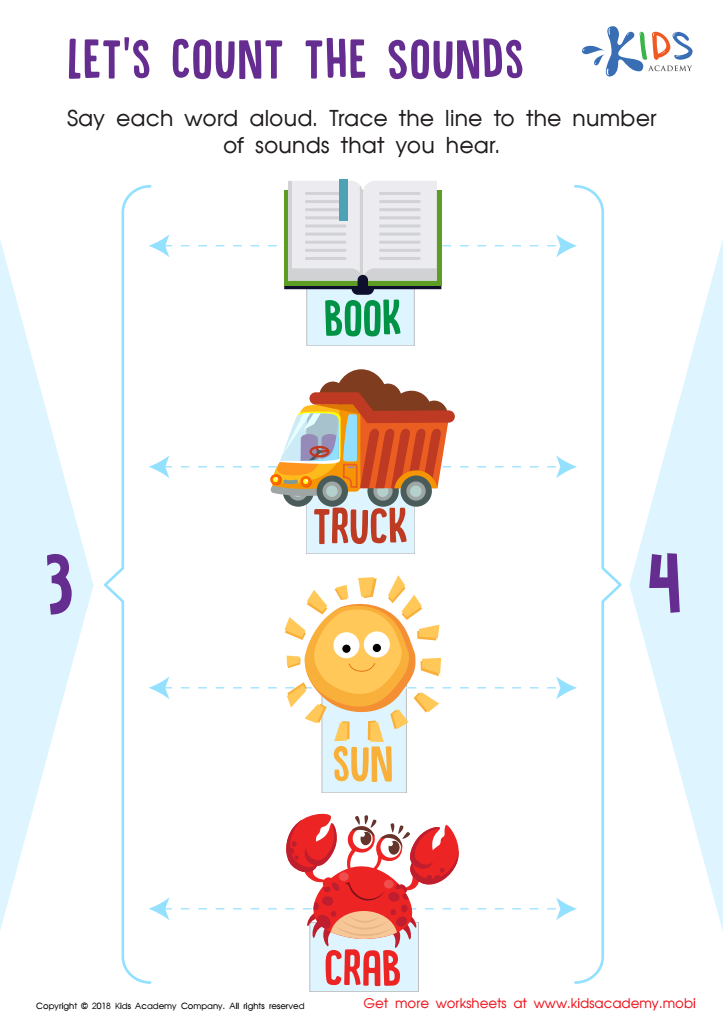
Let's Count the Sounds Worksheet
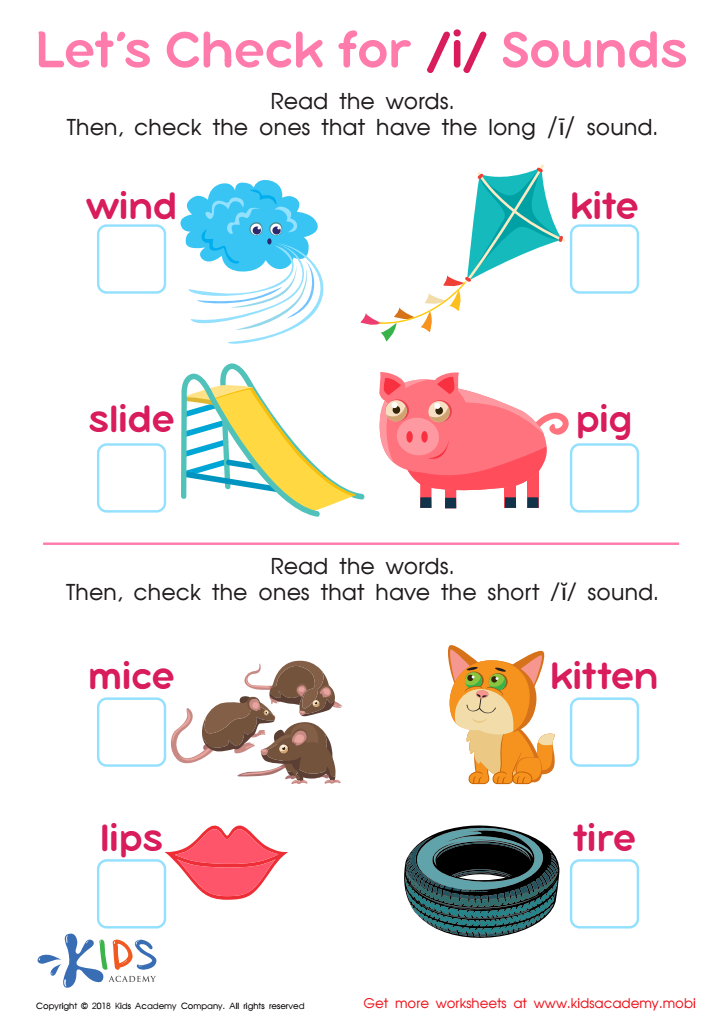
Let's Check for «i» Sounds Worksheet








Phonics recognition of normal letter sounds is crucial for children aged 4-8 as it lays the foundation for their reading and writing skills. During these formative years, children are developing their understanding of language and how letters are associated with sounds. Mastering phonics helps them decode words, which is essential for reading fluency and comprehension.
When parents and teachers emphasize phonics recognition, children benefit from enhanced confidence in their reading abilities. This early success can instill a love for reading, encouraging them to explore literature independently. Moreover, strong phonics skills aid in spelling, helping children to express themselves more effectively in writing.
Engaging with phonics at this stage also supports cognitive development, promoting brain connections associated with language skills. It fosters critical thinking and problem-solving abilities as children learn to manipulate sounds and recognize patterns in words.
By prioritizing phonics, parents and teachers can create rich literacy environments, setting students up for long-term academic success. Ultimately, supporting phonics recognition from an early age equips children with essential literacy skills that are vital for their ongoing education and lifelong learning.






