Reading skills improvement Normal Letter Sounds Worksheets for Ages 4-8
3 filtered results
-
From - To
Enhance your child's reading skills with our engaging Normal Letter Sounds Worksheets, designed specifically for kids aged 4-8. These worksheets are perfect for young learners to master the foundational sounds of the alphabet, critical for effective reading comprehension. Each engaging activity combines fun and education, promoting phonemic awareness and letter-sound correspondence. Through colorful illustrations and relatable examples, children will confirm their learning while gaining confidence in their reading abilities. Our user-friendly format makes it simple for parents and educators to support the development of essential literacy skills. Foster a love for reading in your child with these effective worksheets today!
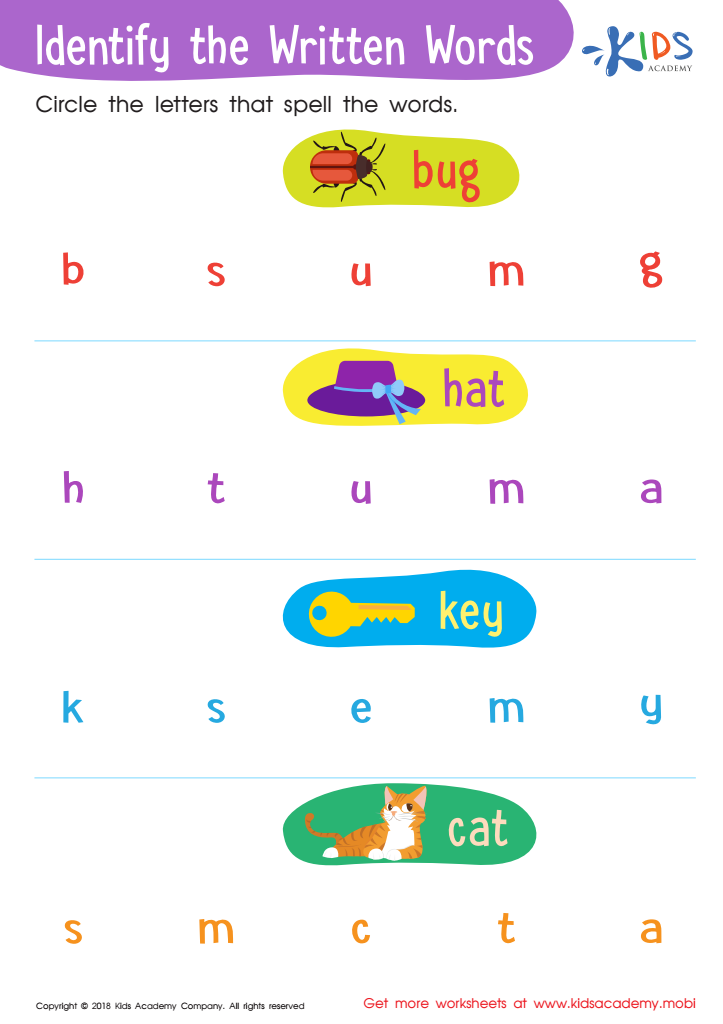
Identify the Written Words Worksheet
 Assign to My Students
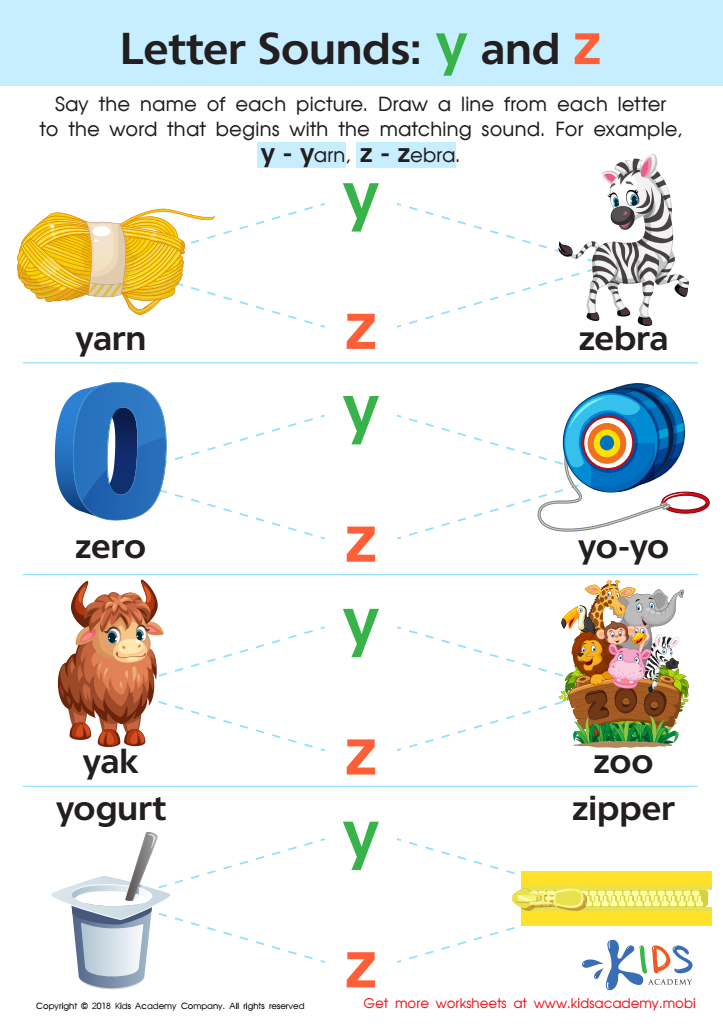
Letter Y and Z Sounds Worksheet
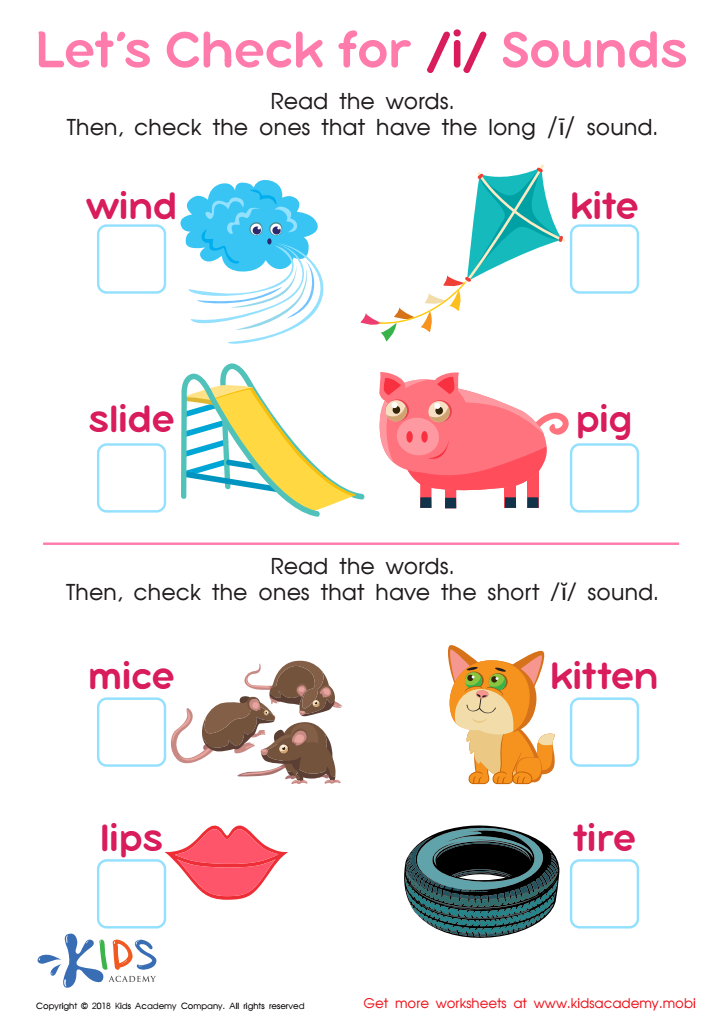
Let's Check for «i» Sounds Worksheet








Reading skills development, particularly the mastery of normal letter sounds, is crucial for children aged 4 to 8 as it forms the foundation of literacy. This stage of early education is vital in helping children learn to decode words and understand language, which significantly impacts their overall academic journey.
Understanding letter sounds enables children to blend and segment words, making reading more accessible and enjoyable. It enhances their ability to express themselves, boosts their vocabulary, and fosters comprehension skills. When children can read proficiently, they gain confidence in their abilities, which encourages a lifelong love for reading.
Moreover, strong reading skills correlate with better performance in all subjects, as literacy is integral to learning across the curriculum. For parents and teachers, supporting reading skills becomes essential not just for literacy development but also for creating engaged, informed future citizens. Additionally, early intervention and consistent practice can prevent future struggles, ensuring that children fully benefit from educational opportunities.
In summary, caring about normal letter sounds greatly influences children's academic success and personal growth, setting them on a positive trajectory for their future. By prioritizing these skills, parents and teachers can empower children to flourish both in and outside of the classroom.






