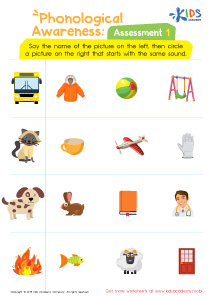
Vocabulary expansion Normal Rhyming Worksheets for Ages 4-8
3 filtered results
Difficulty Level
Grade
Age
-
From - To
Subject
Activity
Standards
Explore our "Vocabulary Expansion Normal Rhyming Worksheets" designed specifically for children ages 4-8! These engaging worksheets encourage young learners to enhance their vocabulary while enjoying the rhythm and fun of rhyming. Each worksheet is crafted to facilitate language development, improve pronunciation, and boost recognition of word patterns. With vibrant illustrations and playful activities, these resources capture children's attention and make learning enjoyable. Perfect for classrooms or home study, our worksheets help strengthen listening skills and foster creativity in storytelling. Start your child’s journey toward literacy and linguistic confidence today with our carefully designed rhyming worksheets!
Favorites
With answer key
Interactive
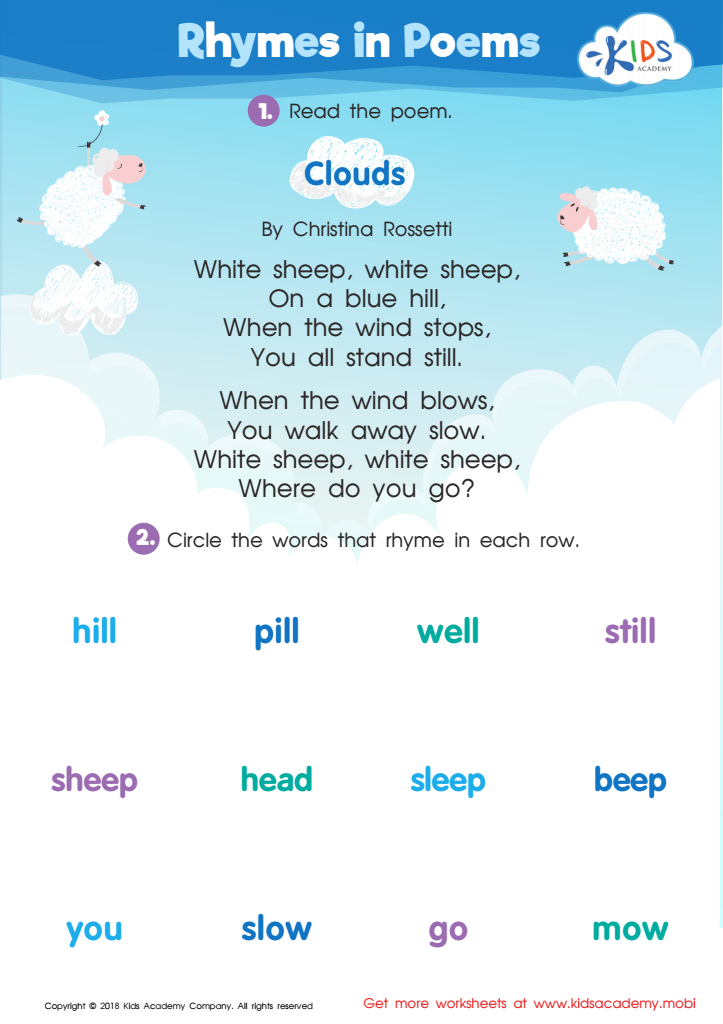
Rhymes in Poems Worksheet
Poems are lovely works of literature; some with rhymes, and some without. This poem for kids is full of rhymes and tells the tale of a sheep. Read it aloud to your kids, then help them circle the rhyming words.
 Assign to My Students
Rhymes in Poems Worksheet
Worksheet
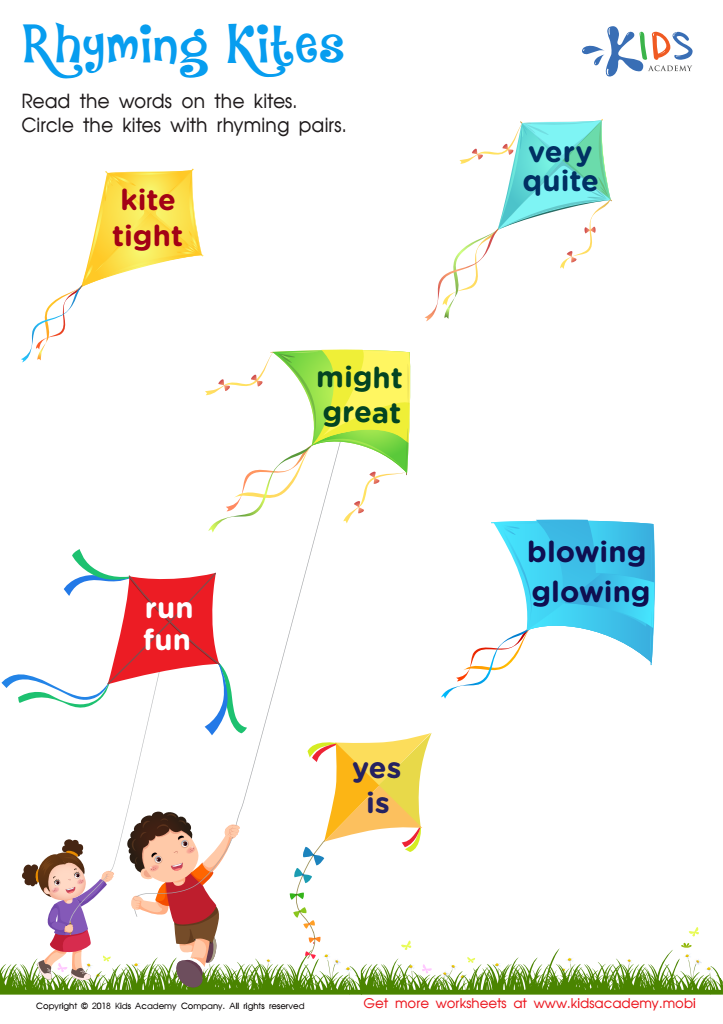
Rhyming Kites Worksheet
On a spring day, fly a kite! Kids Academy has a rhyming worksheet to boost your child's skills. Read the pairs of words aloud. Circle the kites if they rhyme, leave them blank if they don't. Listen carefully and find all the rhyming word pairs to complete this sheet!
Rhyming Kites Worksheet
Worksheet
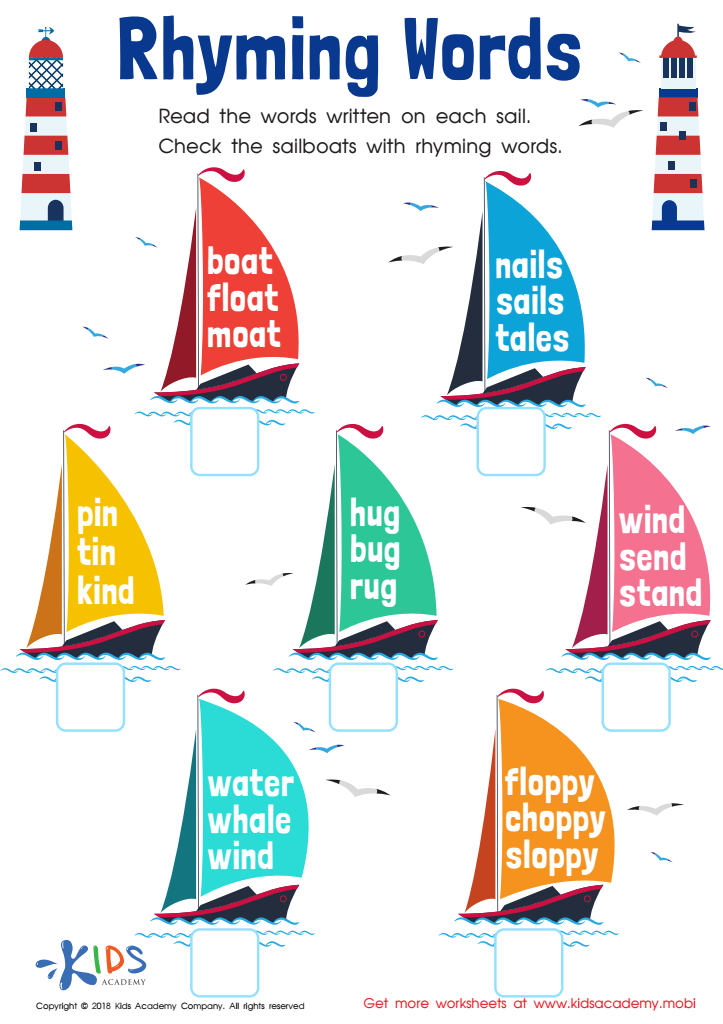
Rhyming Words Worksheet
Does your child know about rhyming words? Get them interested in poetry and explain that these words have similar sounds when pronounced. Read the words on each sailboat to your child and ask them to identify the rhyming pairs. Guide them to check the sailboats.
Rhyming Words Worksheet
Worksheet
Join Kids Academy for Free
Who is primarily going to use this learning content?








Parents and teachers should care about vocabulary expansion through normal rhyming for children aged 4-8 because it plays a crucial role in language development and literacy skills. When children engage with rhymes, they enhance their phonemic awareness—the ability to hear, identify, and manipulate the sound structures of words. This skill is foundational for reading and writing.
Rhyming also makes learning fun and engaging. Children are naturally drawn to rhythm and melody, and incorporating rhymes into their daily activities promotes a love for language. This joyful interaction helps familiarize children with new words in a memorable context, enriching their vocabulary effortlessly.
Moreover, through rhyming, children learn about word families and how different words can relate to one another, deepening their understanding of language structure. These experiences strengthen cognitive abilities, boosting both comprehension and communication skills.
Ultimately, investing in vocabulary expansion via normal rhyming sets children on a solid path towards academic success. It equips them with the tools needed for effective expression, critical thinking, and emotional connection. As they grow, these foundational skills create a lifelong appreciation for language, literature, and learning.