Lowercase letter writing Normal Upper & Lowercase Letters Worksheets for Ages 4-8
3 filtered results
-
From - To
Boost your child's writing skills with our engaging Lowercase Letter Writing worksheets, designed specifically for ages 4-8. These interactive resources provide an enjoyable way for young learners to practice normal uppercase and lowercase letters. With colorful visuals and step-by-step guidance, children will improve their fine motor skills while building confidence in their writing abilities. Each worksheet focuses on letter formation and recognition, tailored to make learning fun and effective. Perfect for classroom or home use, our lowercase letter writing worksheets ensure that kids develop essential literacy skills that will benefit them for years to come. Start your child's writing journey today!
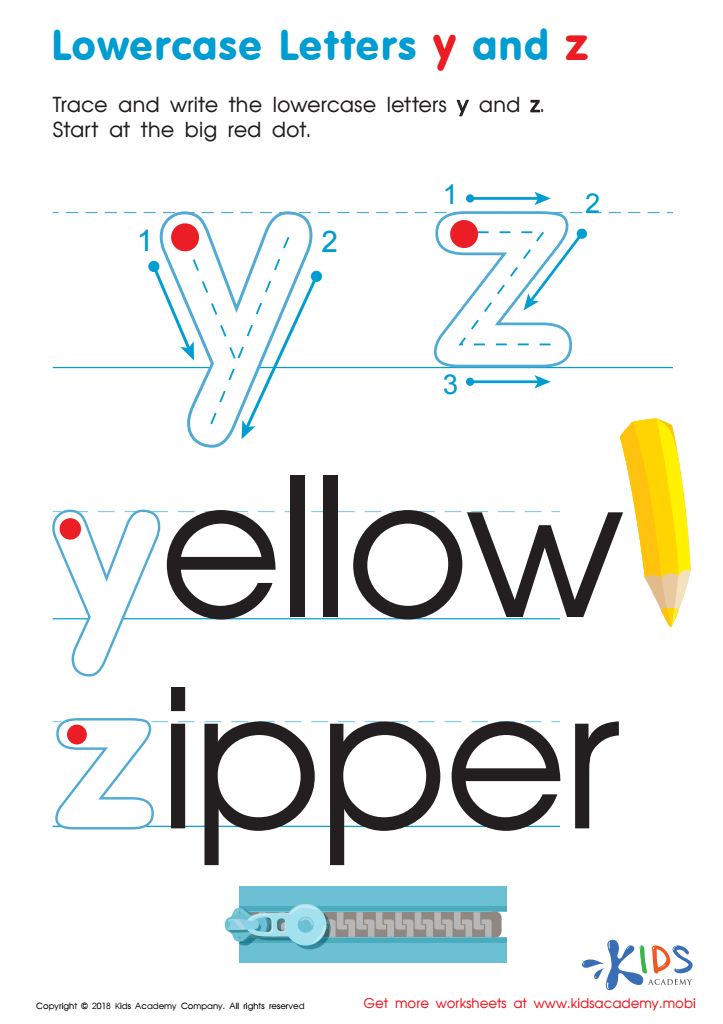
Lowercase Letters y z Worksheet
 Assign to My Students


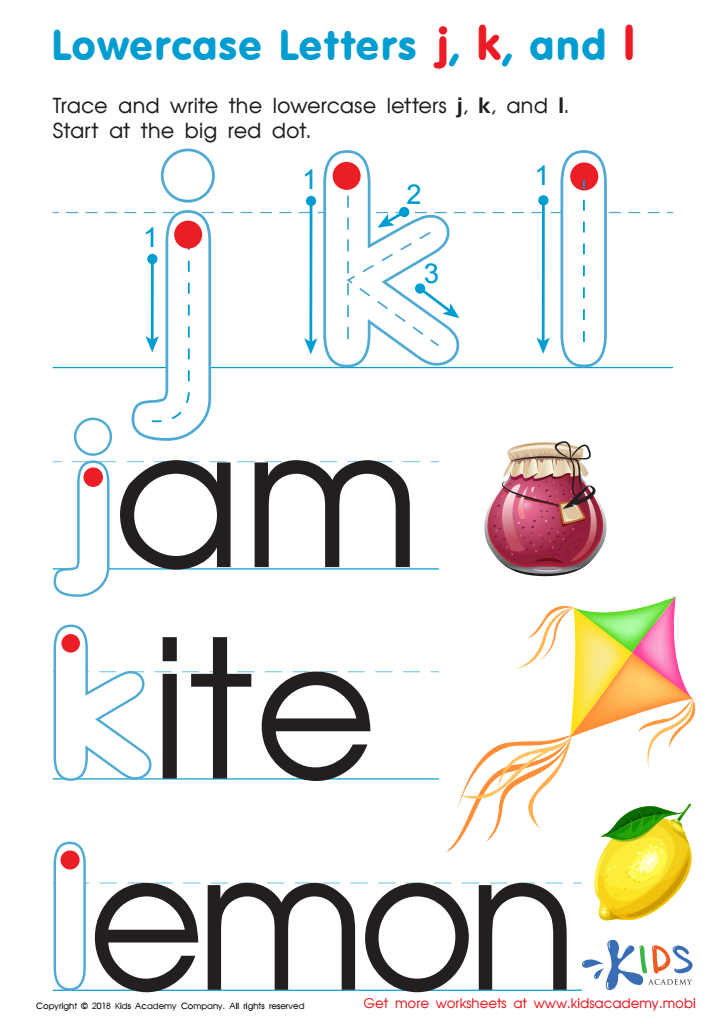
Lowercase Letters j k l Worksheet
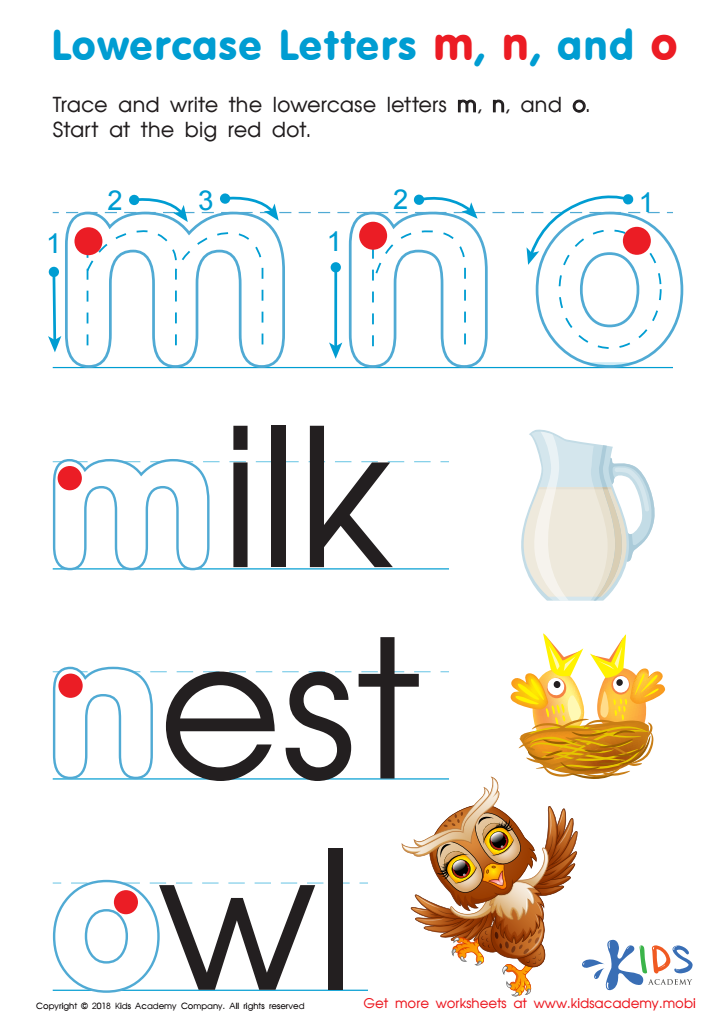
Lowercase Letters m n o Worksheet






Parents and teachers should care about lowercase letter writing for children aged 4-8 because it lays the foundation for effective communication and literacy skills. During these formative years, children are developing fine motor skills and cognitive abilities essential for writing. Mastering lowercase letters is crucial as they make up the bulk of written text, allowing children to read efficiently and contribute meaningfully to written discourse.
Encouraging proper formation of lowercase letters promotes confidence and encourages children to express their thoughts and feelings through writing. It also aids in developing spelling and reading skills, as many phonetic patterns occur with basic lowercase letters. Additionally, lowercase writing is often perceived as more relatable and approachable, influencing the way students communicate in a more informal or personal context.
Establishing strong handwriting skills at this stage diminishes the likelihood of future writing challenges or low self-esteem related to written expression. Therefore, by emphasizing lowercase letter practices, parents and teachers foster enhanced literacy, boost self-confidence, and prepare children for continuous engagement in learning and communication. This early literacy support ultimately plays a crucial role in academic success and lifelong learning.







