Visual discrimination Normal Upper & Lowercase Letters Worksheets for Ages 4-8
4 filtered results
-
From - To
Enhance your child's literacy skills with our engaging Visual Discrimination Worksheets for Upper and Lowercase Letters, designed specifically for ages 4-8. These meticulously crafted activities encourage young learners to differentiate between similar-looking letters, building their recognition and foundational reading skills. Each worksheet features a playful layout that captivates kids' attention while fostering essential visual perception abilities. Perfect for home or classroom use, our worksheets ensure that learning remains fun and effective. Help your children gain confidence in their alphabet skills and prepare them for future academic success. Download and print our worksheets today for a creative and educational experience!
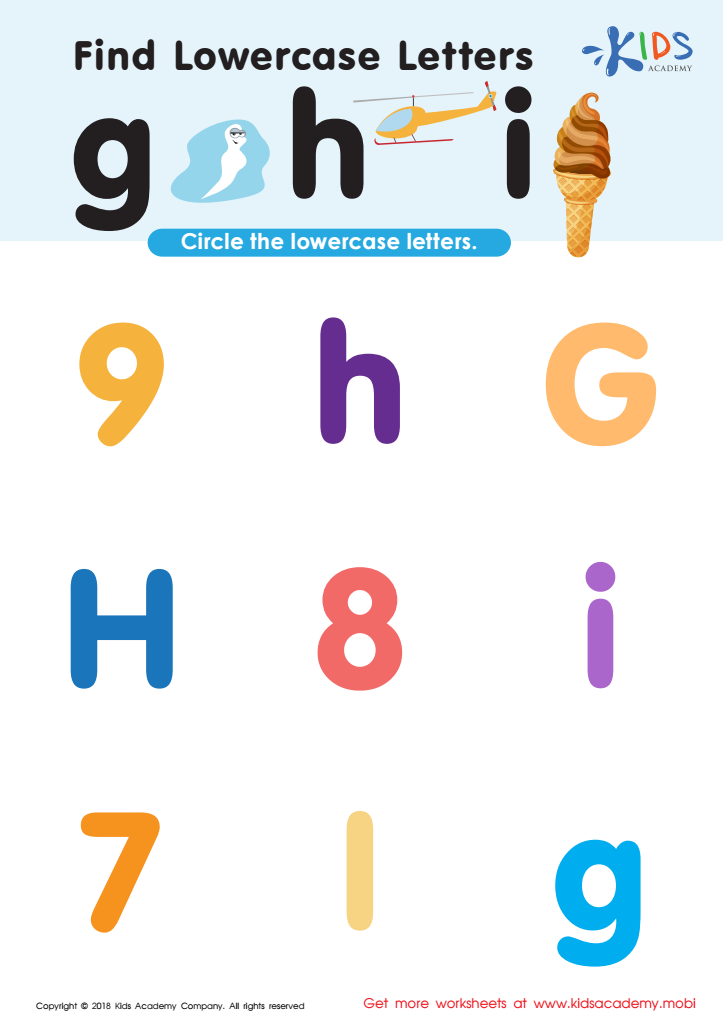
Find Lowercase Letters g h i Worksheet
 Assign to My Students







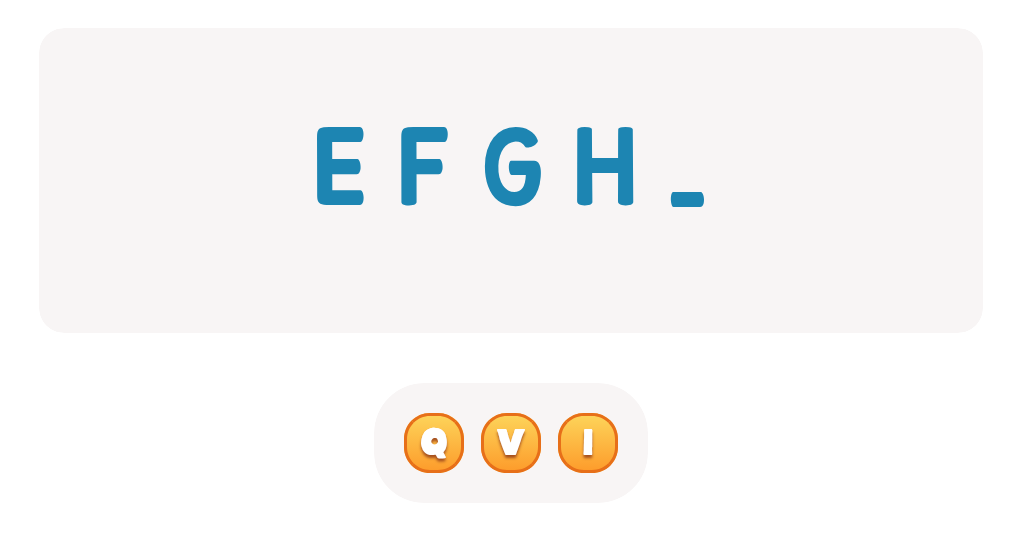
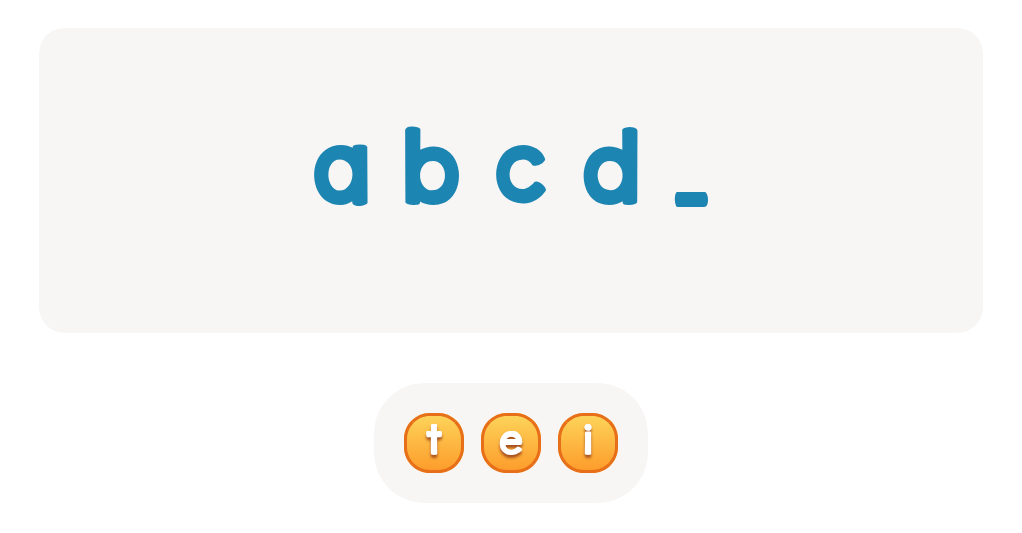

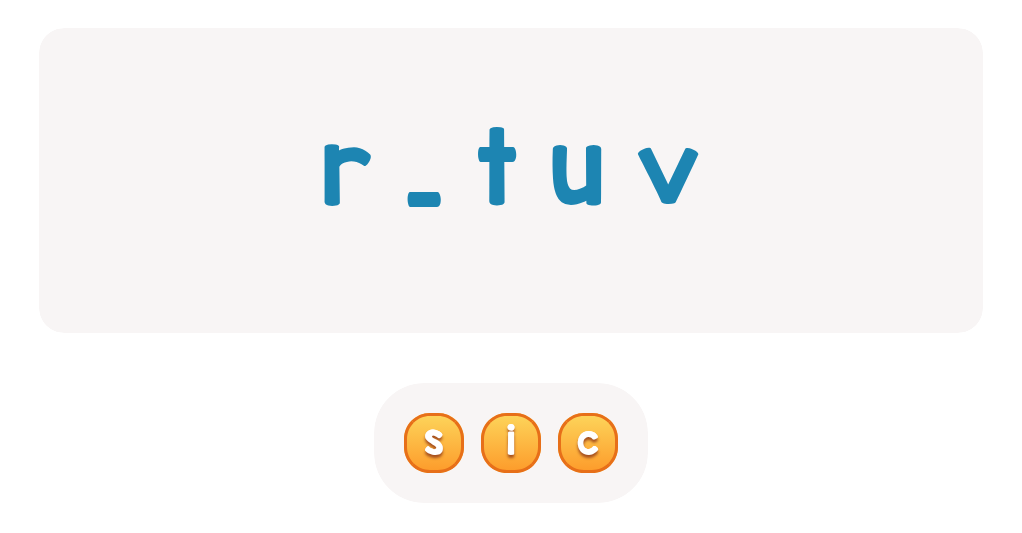
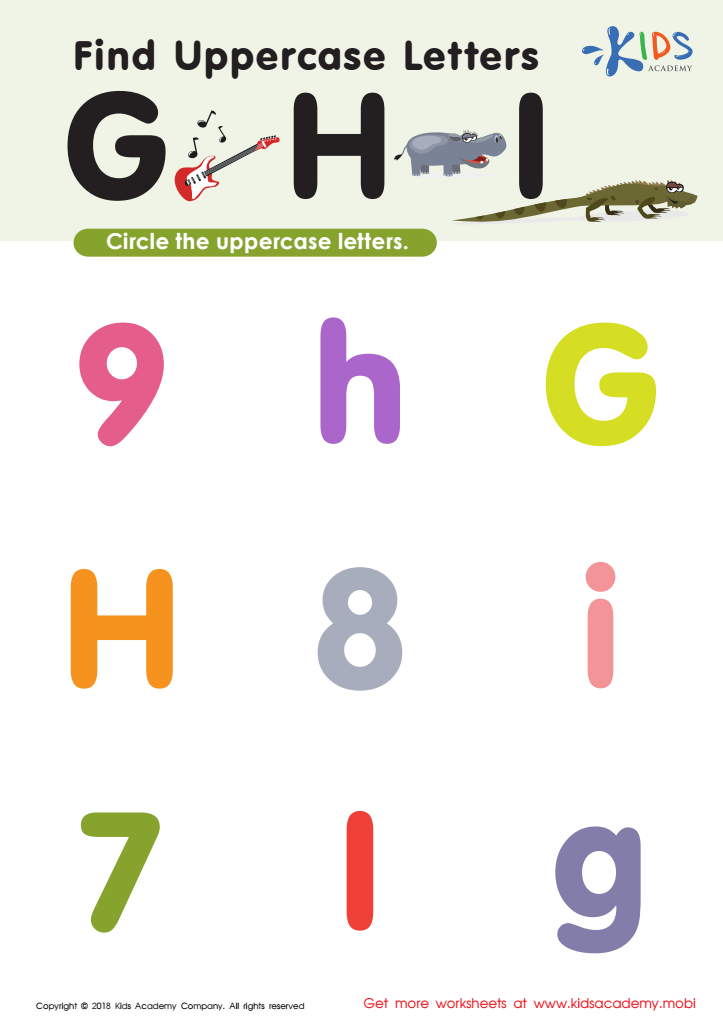
Find Uppercase Letters G, H, and I Worksheet
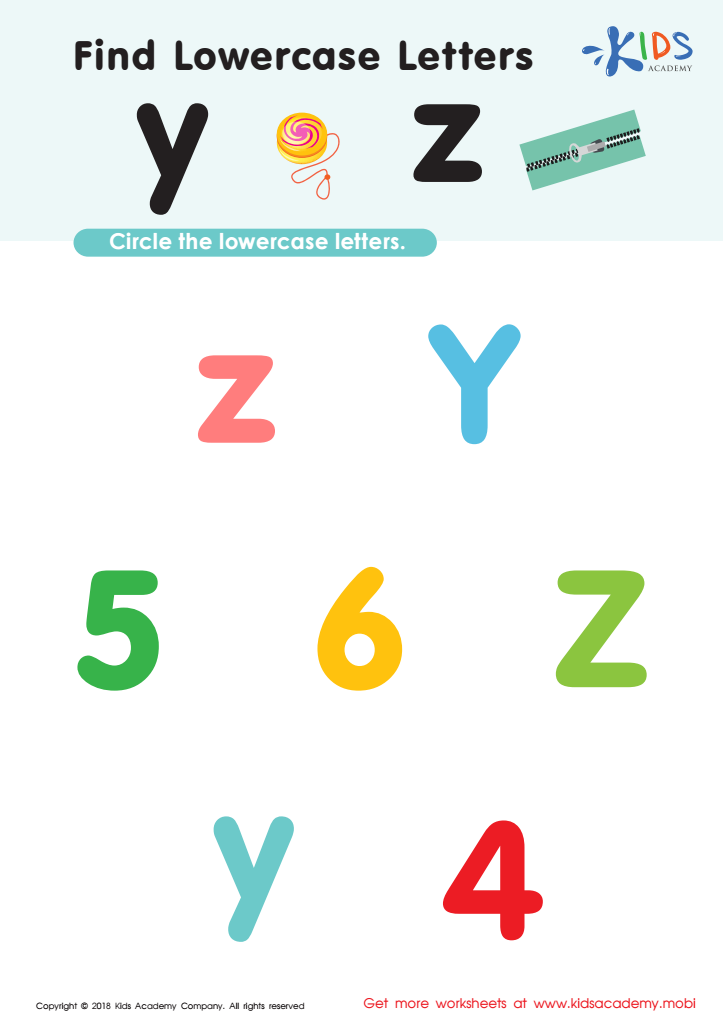
Find Lowercase Letters y z Worksheet
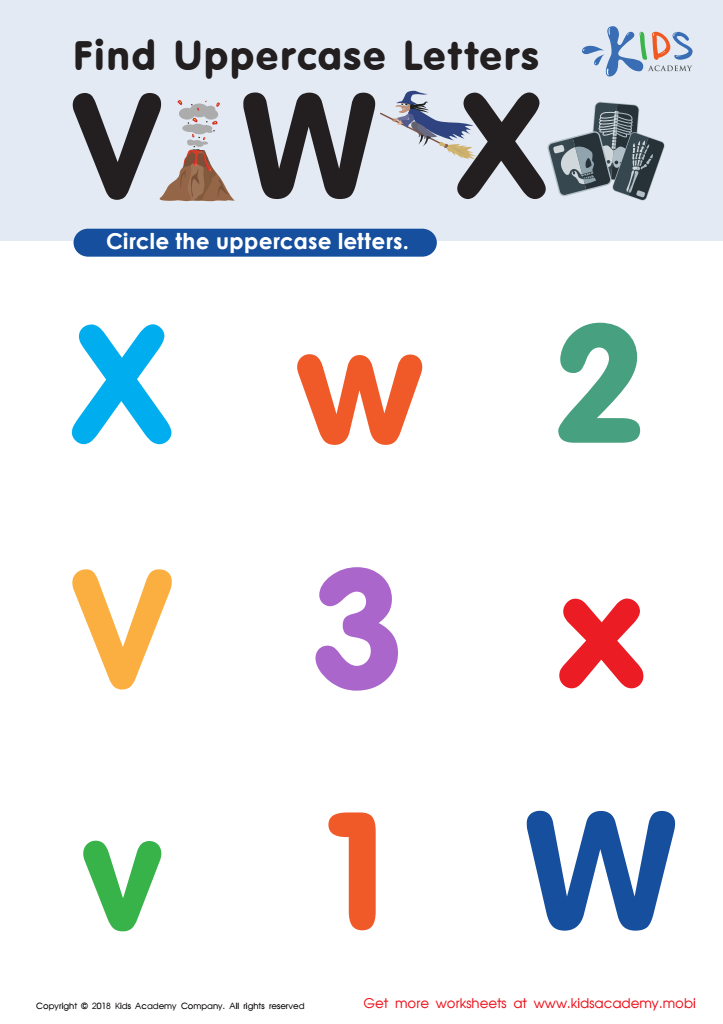
Find Uppercase Letters V, W, X Worksheet






Visual discrimination refers to the ability to recognize differences and similarities in visual elements. For children ages 4-8, mastering visual discrimination of normal upper and lowercase letters is crucial for their literacy development. Here are several reasons why parents and teachers should prioritize this skill.
Firstly, visual discrimination helps children distinguish between letters that look similar, such as "b" and "d" or "p" and "q." By becoming proficient in recognizing these differences, children can improve their reading skills and reduce confusion while decoding words.
Secondly, this skill is essential as children begin to write. Proper letter formation and recognizing when they are using upper or lowercase letters incorrectly greatly impacts their ability to communicate effectively. When children can visually discriminate letters, they are better equipped to follow uppercase and lowercase letter conventions.
Moreover, strong visual discrimination boosts overall academic performance. It enhances attention to detail, which is valuable across various subjects beyond language arts.
Lastly, early mastery of visual discrimination promotes confident reading and writing, leading to a positive attitude toward learning. Thus, investing in activities that support this skill can significantly influence a child's educational journey.







