Mathematical reasoning Normal Rounding Worksheets for Ages 4-8
3 filtered results
-
From - To
Discover our engaging Mathematical Reasoning Normal Rounding Worksheets designed specifically for children aged 4-8. These worksheets provide a fun and interactive way for young learners to grasp the concept of rounding numbers. Our thoughtfully crafted activities encourage children to practice rounding to the nearest ten or hundred through colorful visuals and relatable examples. With a focus on developing critical thinking and problem-solving skills, these worksheets promote mathematical reasoning in an enjoyable manner. Ideal for classroom use or at-home practice, our resources make learning rounding a rewarding experience. Start your child’s journey towards mathematical confidence today!
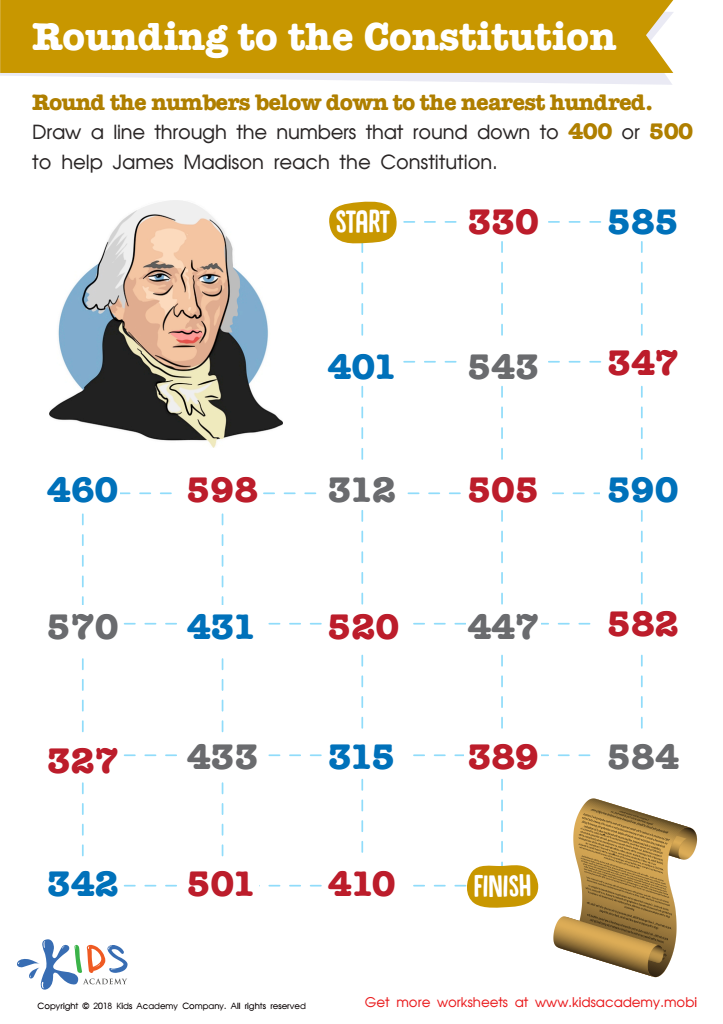
Rounding to the Constitution Worksheet
 Assign to My Students
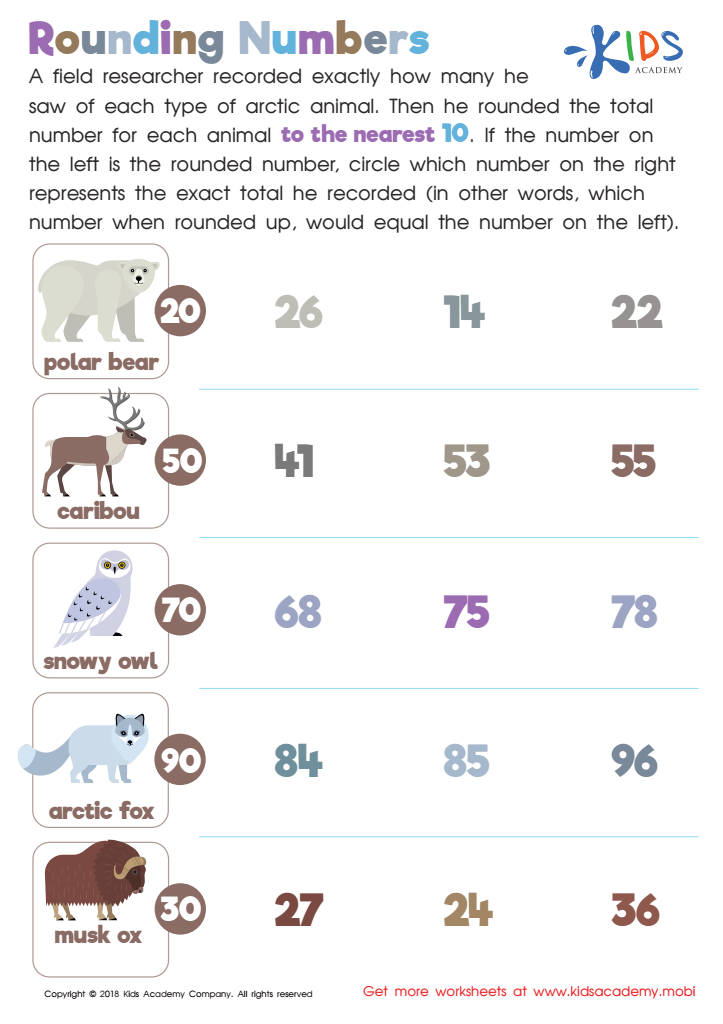
Rounding Numbers Worksheet
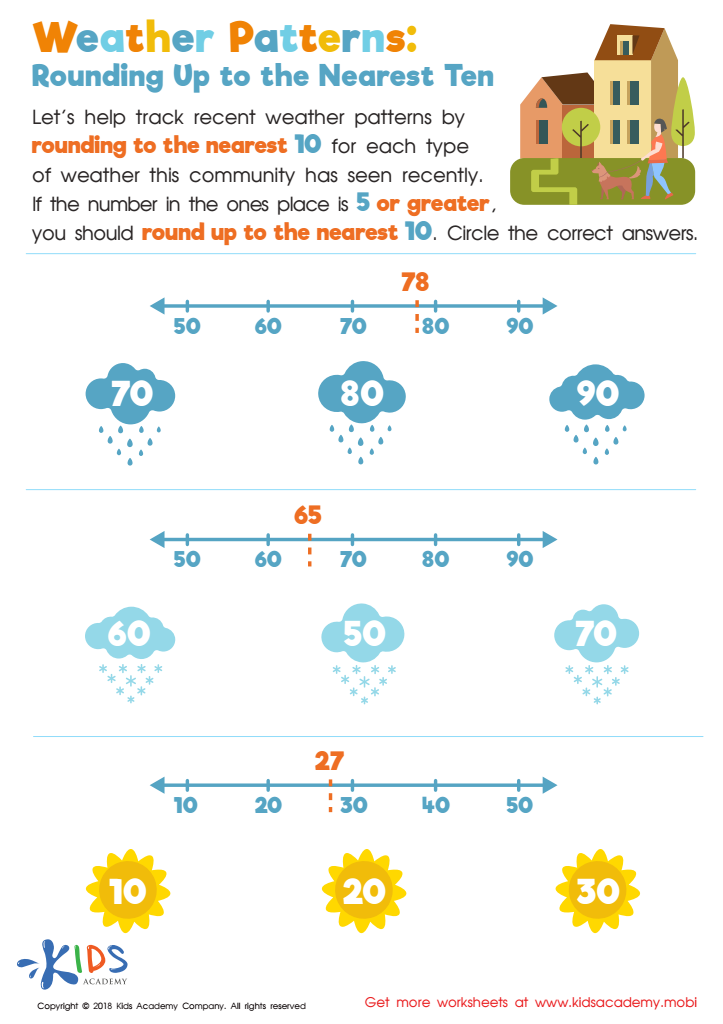
Weather Patterns Worksheet






Mathematical reasoning, particularly in the context of normal rounding, is an essential skill for children aged 4-8. Parents and teachers should care about this concept because it lays the foundation for critical thinking and problem-solving abilities. At this age, children are forming their understanding of numbers and how they interact in various contexts. Normal rounding helps them grasp the idea of estimation—a skill that fosters numerical flexibility and confidence in their mathematical abilities.
Understanding rounding enables young learners to simplify numbers, making them more manageable when engaging in addition, subtraction, and even basic multiplication. This reasoning goes beyond math; it cultivates logic and reasoning skills necessary for daily decision-making. For example, if a child learns to round the number of candies they have, they can make quick and accurate assessment of how many friends they can share them with.
Furthermore, with a solid grasp of rounding and mathematical reasoning, children will be better prepared for more complex mathematical concepts in later years. This foundational skill is essential for overall academic success and promotes a positive attitude toward mathematics, which can help reduce math anxiety and encourage a lifelong love for the subject. Thus, nurturing this understanding at an early age is crucial.