Reading Improvement Normal Building Vocabulary Worksheets for Ages 4-8
5 filtered results
-
From - To
Enhance your child's reading abilities with our engaging vocabulary-building worksheets, designed specifically for ages 4-8! Our collection supports reading improvement by providing fun, interactive activities that help expand their vocabulary. Each worksheet aims to develop essential language skills through playful learning exercises, addressing various themes and contexts that resonate with young learners. Tailored to meet educational standards, these worksheets promote comprehension and retention, making reading both enjoyable and effective. Perfect for parents and educators alike, these resources will nurture a love for reading while equipping kids with the necessary tools to excel. Join us in fostering your child’s growing literacy journey today!
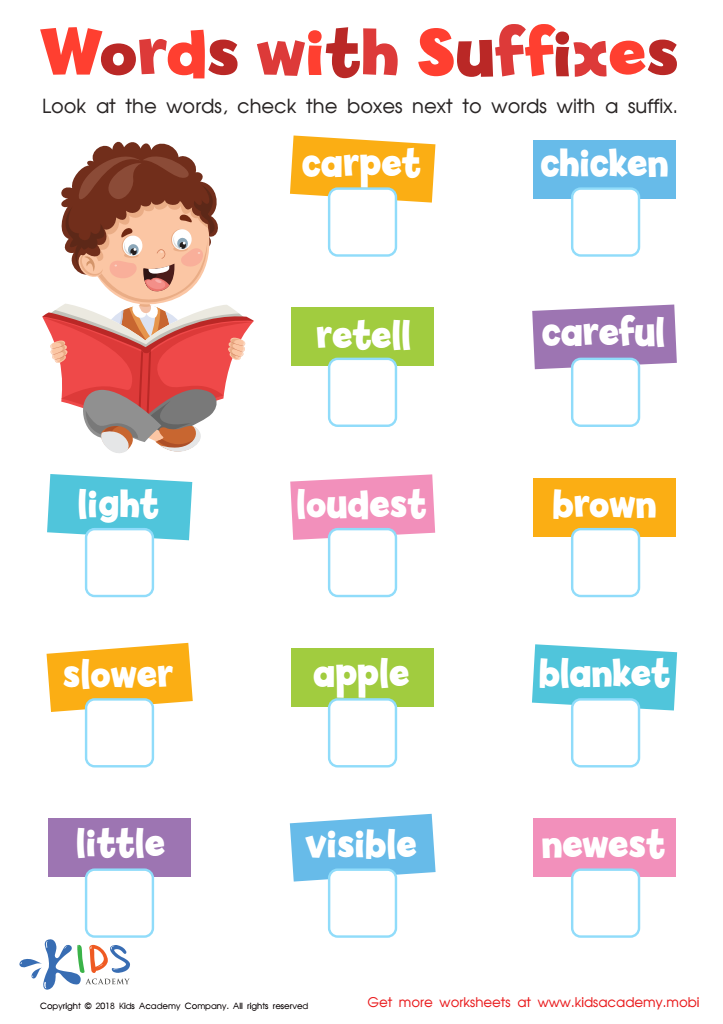
Reading: Words With Suffixes Worksheet
 Assign to My Students











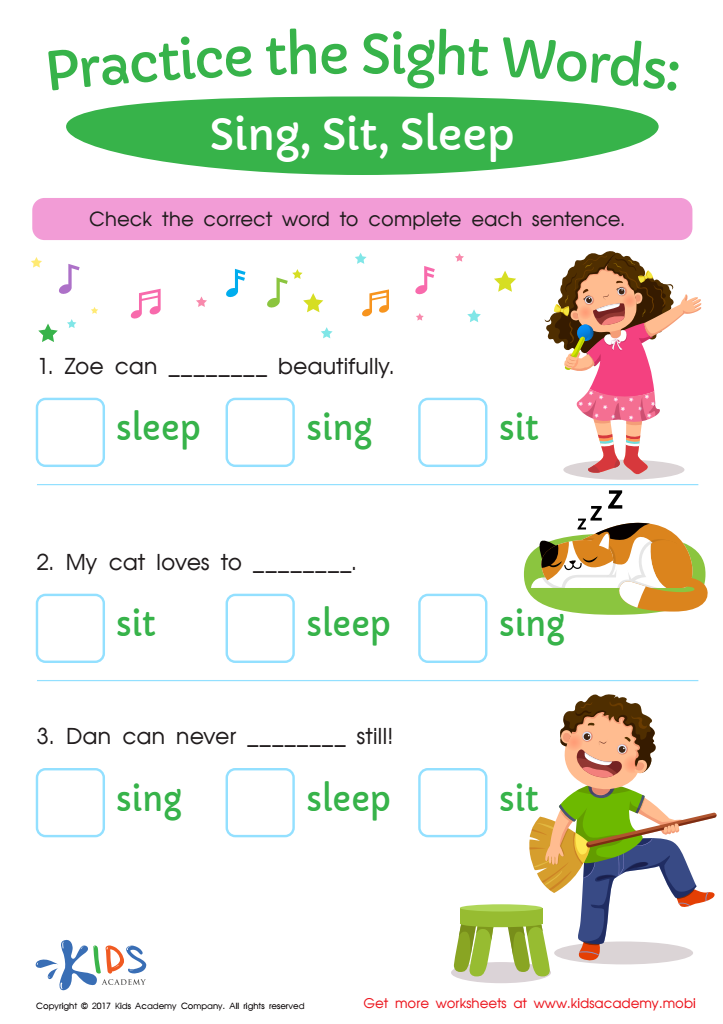
Sing, Sit, Sleep Sight Words Worksheet
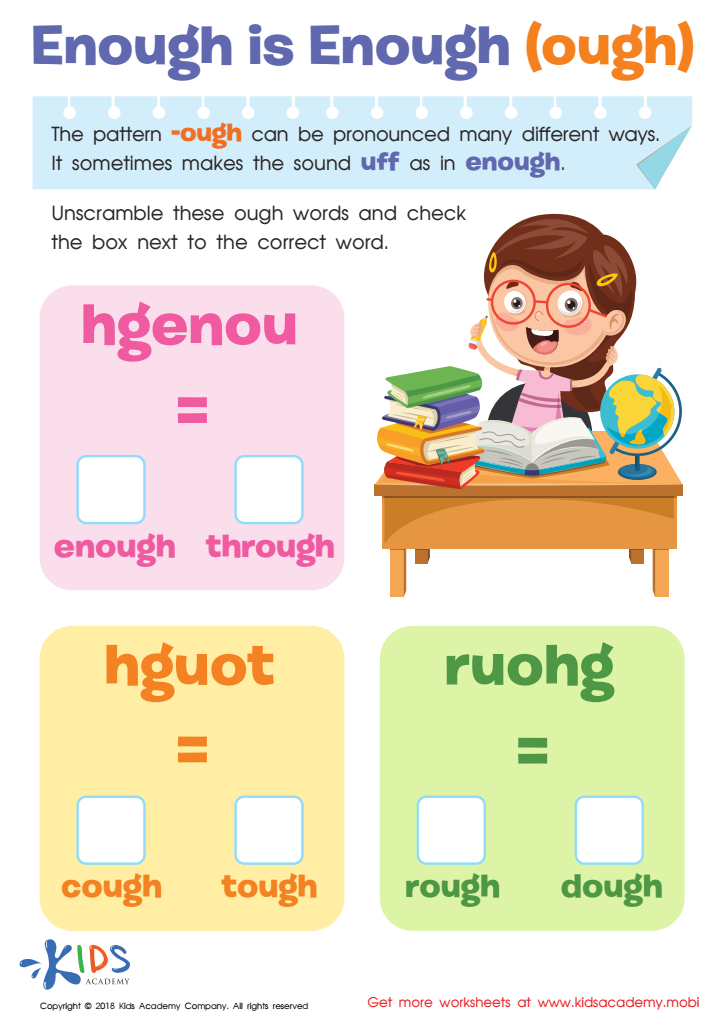
Enough Is Enough (ough) Worksheet
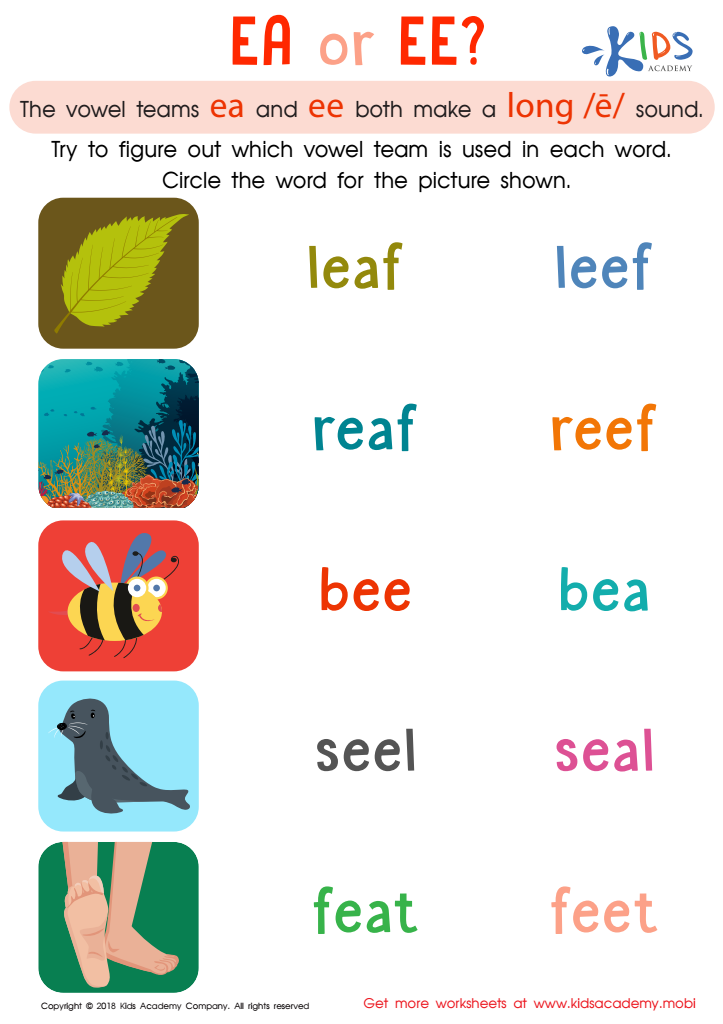
Reading: EA and EE Worksheet
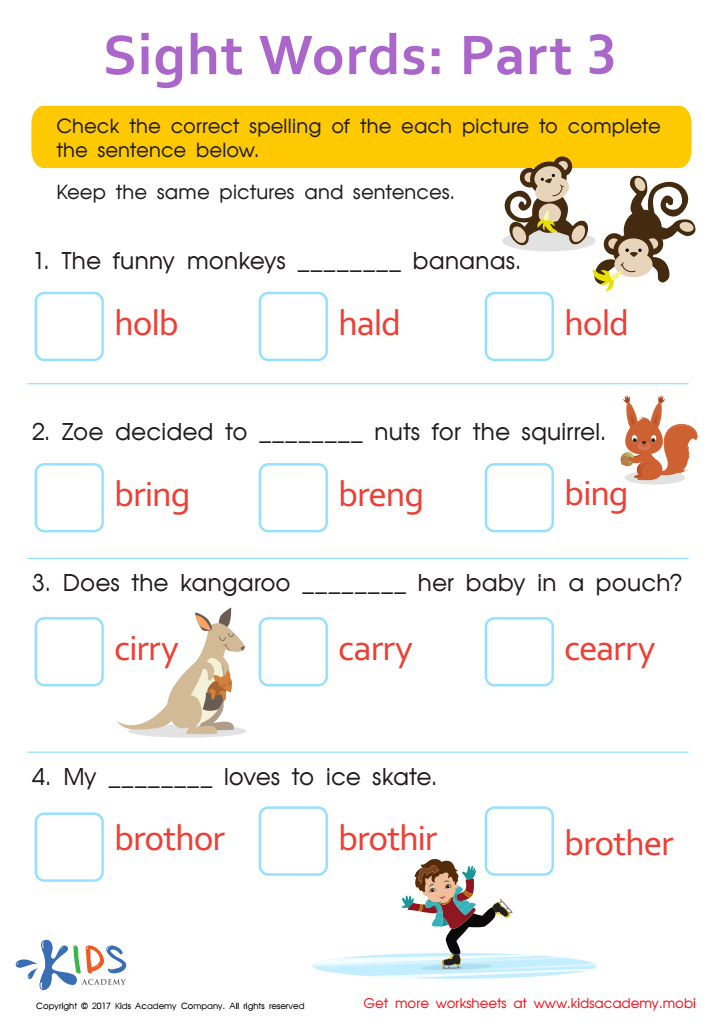
Hold, Bring, Carry, Brother Sight Words Worksheet







Parents and teachers should prioritize reading improvement and vocabulary building for children aged 4-8 because these skills are foundational for future academic success and lifelong learning. During these critical early years, children are developing essential language and cognitive skills that will shape their comprehension and communication abilities as they progress through school.
A strong vocabulary enhances a child’s ability to understand and express thoughts clearly. When children learn new words, they gain better comprehension, which improves reading fluency and makes learning more enjoyable and effective. Early exposure to a rich language environment can significantly impact their literacy skills and academic performance.
Furthermore, strong reading skills correlate with self-confidence. Children who struggle with reading often face challenges in other subjects, affecting their overall motivation and enthusiasm for learning. By focusing on reading improvement and vocabulary development, parents and teachers can support children in building resilience and a love for reading.
Engaging activities, such as storytelling, reading aloud, and educational games, can make vocabulary building fun and effective, fostering a positive learning atmosphere. In turn, these practices contribute to well-rounded, inquisitive learners equipped with the skills necessary to thrive in school and beyond.








