Detail identification Normal Reading Worksheets for Ages 4-8
3 filtered results
-
From - To
Enhance your child’s reading skills with our Detail Identification Normal Reading Worksheets, designed specifically for ages 4-8. These worksheets help young learners practice identifying key details in texts, boosting their comprehension and attention to detail. Each activity is engaging and tailored to captivate young minds, fostering a love for reading while strengthening critical thinking skills. Perfect for early readers, these worksheets align with educational standards and are an excellent resource for both classroom and home learning. Empower your children to become confident readers with our expertly crafted and entertaining collection of detailed identification exercises.
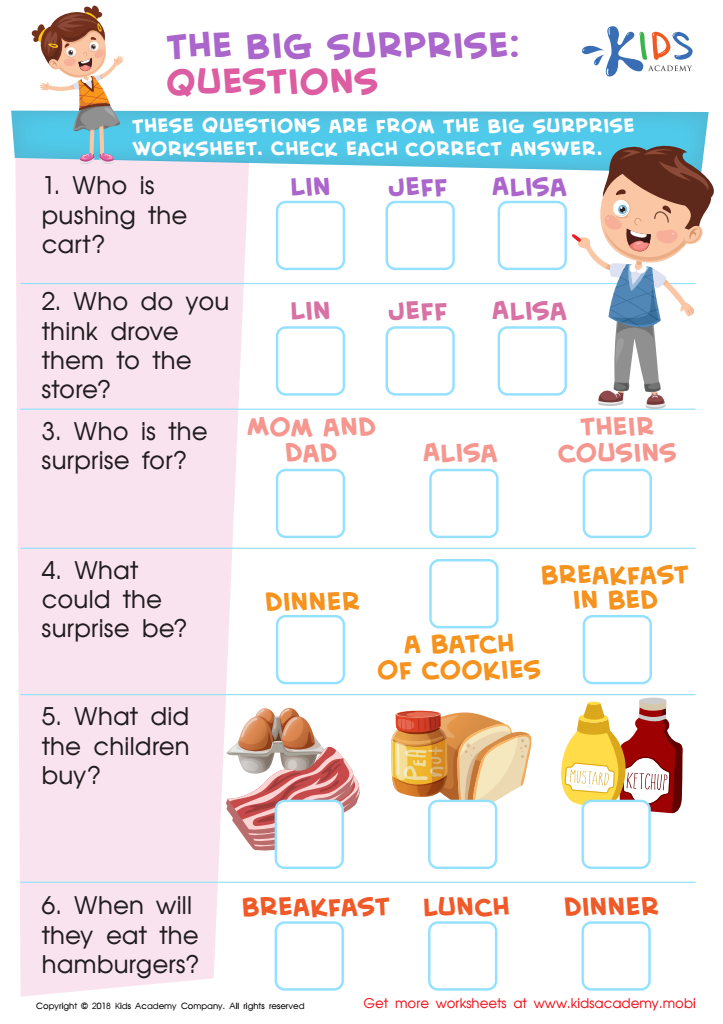
The Big Surprise: Questions Worksheet
 Assign to My Students
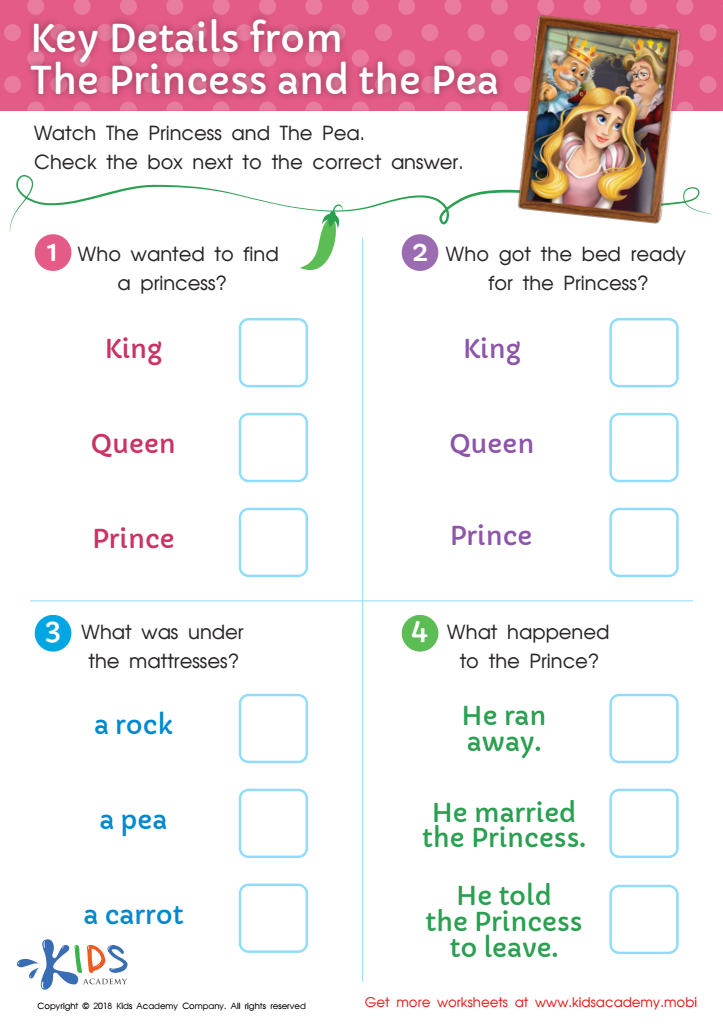
Key Details from the Princess and the Pea Worksheet
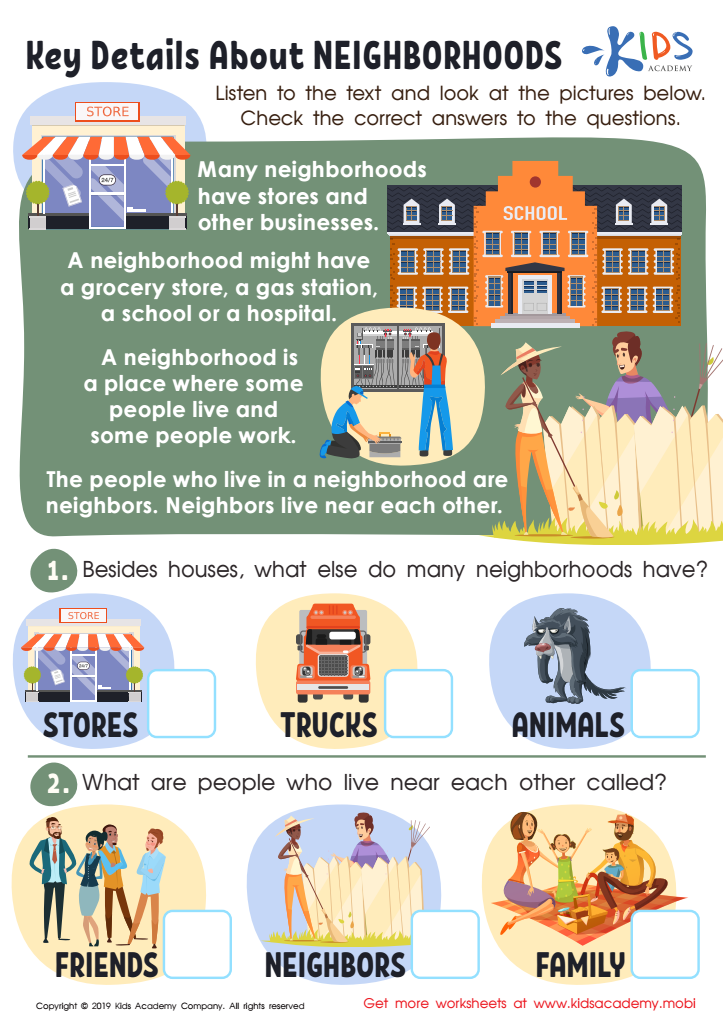
Key Details Neighborhoods Worksheet








Detail identification in normal reading is critical for young children aged 4-8 because it lays the foundation for future reading comprehension and academic success. Young learners at this age are developing key cognitive and language skills that will support their literacy journey. Identifying details within texts helps children focus on specific information, enriches their understanding of stories, and improves their ability to recall and retell events accurately.
For parents and teachers, encouraging detail identification strengthens a child's ability to notice and remember important elements of a story, such as characters, settings, and plot points. This practice enhances critical thinking and analytic skills because children learn to differentiate between main and supporting details. It further supports vocabulary growth as they encounter and discuss new words in context.
Moreover, attention to detail aids in developing attentive listening and observational skills, which are valuable across all learning areas. When children confidently pinpoint and discuss details, they also cultivate a sense of confidence and engagement with texts, fostering a lifelong love for reading.
The ability to identify and articulate details also contributes to improved verbal and written communication skills. These fundamental skills are pivotal during early education stages, making it crucial for parents and teachers to focus on detail identification as part of a child’s comprehensive literacy education.








