
Geography knowledge Normal Reading Worksheets for Ages 4-8
3 filtered results
Difficulty Level
Grade
Age
-
From - To
Subject
Activity
Standards
Enhance your child's understanding of geography with our engaging normal reading worksheets designed for ages 4-8! Our interactive resources feature captivating content that introduces young learners to essential concepts such as continents, countries, landmarks, and climates. These worksheets promote critical thinking and vocabulary development while making geography fun and accessible. Ideal for early literacy development, each activity encourages children to explore the world around them through colorful illustrations and relatable examples. Perfect for classrooms or at-home learning, our geography knowledge reading worksheets will spark curiosity and nurture a lifelong passion for exploration. Download today and embark on an exciting journey of discovery!
Favorites
With answer key
Interactive
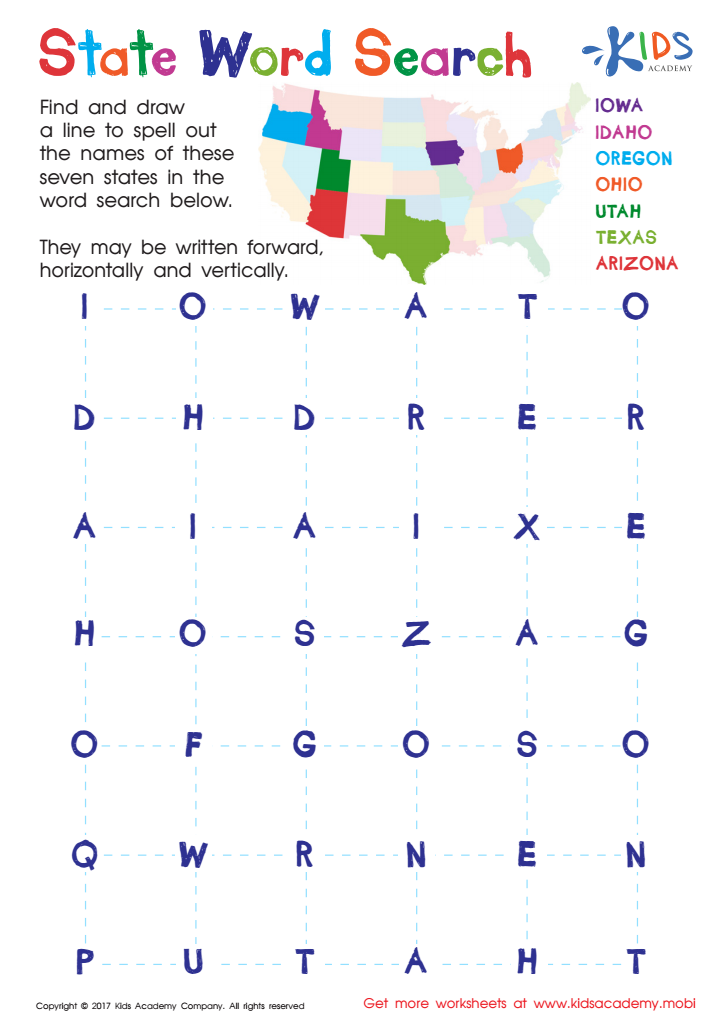
State Word Search Worksheet
Take a road trip across the US with this word search to help your child learn how to identify states. This engaging puzzle makes it easy to remember the 50 states. Get your kids to have fun and learn at the same time!
 Assign to My Students
State Word Search Worksheet
Worksheet
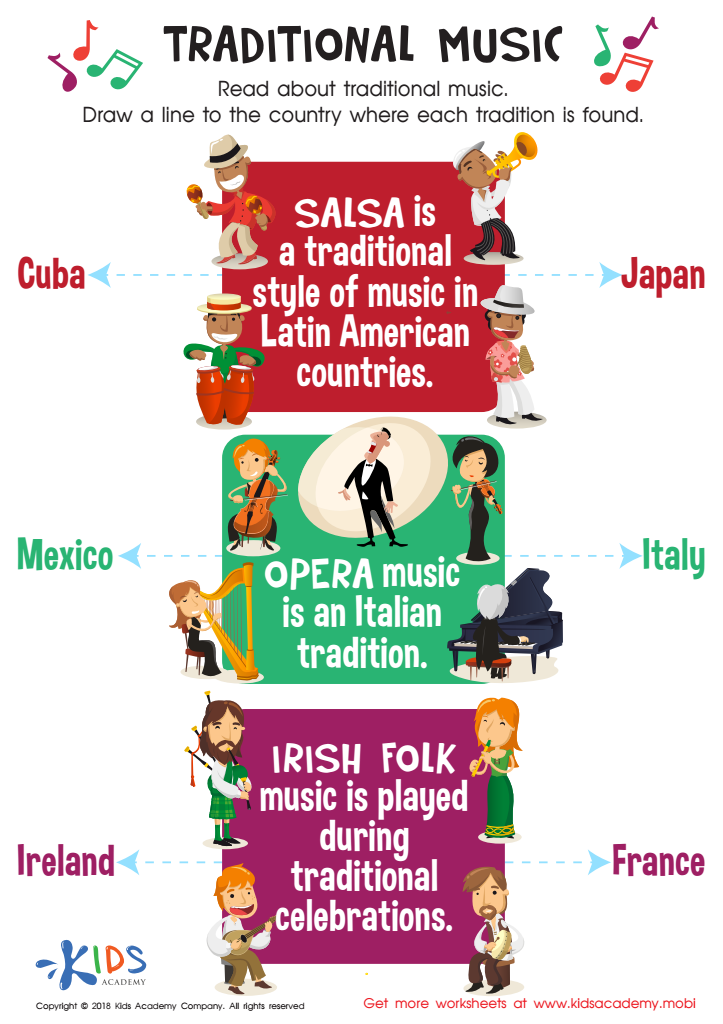
Traditional Music Worksheet
Exploring different countries' music is a great way for global learners to appreciate their place in the world. This worksheet helps them match music - like Salsa and Irish Folk - to various geographic regions with colorful visuals. It boosts reading comprehension while supporting their cultural understanding.
Traditional Music Worksheet
Worksheet

Towns Worksheet
Towns are generally quiet and safe, making them attractive for young families. Cities have more people, businesses and tall buildings. Roads are busy, and there is often plenty to do and see. Help your kids check which pictures in this worksheet show towns.
Towns Worksheet
Worksheet
Join Kids Academy for Free
Who is primarily going to use this learning content?



Geography knowledge is essential for children aged 4-8 as it helps them understand their world and fosters curiosity about diverse cultures and environments. Learning geography aids in developing spatial awareness and critical thinking skills, allowing children to comprehend where they fit into the larger global community.
Teachers and parents should care about geography because it lays the foundation for civic responsibility and global citizenship. By introducing children to maps, continents, and basic geographic concepts, they cultivate an early appreciation for diversity and environmental stewardship. This knowledge helps kids identify their local community's characteristics and recognize the connections that exist with different parts of the world.
Moreover, engaging with geography encourages children to ask questions about their surroundings, sparking a lifelong love for learning. Activities such as exploring local landmarks or discussing different countries’ traditions can create meaningful conversations at home and in the classroom, enriching children's understanding of human experiences.
In an increasingly interconnected world, possessing geographic knowledge is vital for children to navigate challenges such as climate change and cultural differences. Ultimately, fostering this knowledge in early education promotes well-rounded, informed individuals who are prepared to tackle global issues in the future.








