Moral lesson understanding Normal Reading Worksheets for Ages 4-8
5 filtered results
-
From - To
Enhance your child's character and reading skills with our "Moral Lesson Understanding Normal Reading Worksheets" designed for ages 4-8. Offering engaging stories paired with thought-provoking questions, these worksheets help young learners grasp essential moral values such as honesty, kindness, and responsibility. Through interactive reading exercises, children will develop critical thinking skills while simultaneously improving comprehension and vocabulary. Perfect for both classroom and at-home learning, our worksheets provide a well-rounded approach to character education. Start cultivating integrity and empathy in your little ones today! Visit Kids Academy to download our enriching reading resources and watch them grow morally and academically.
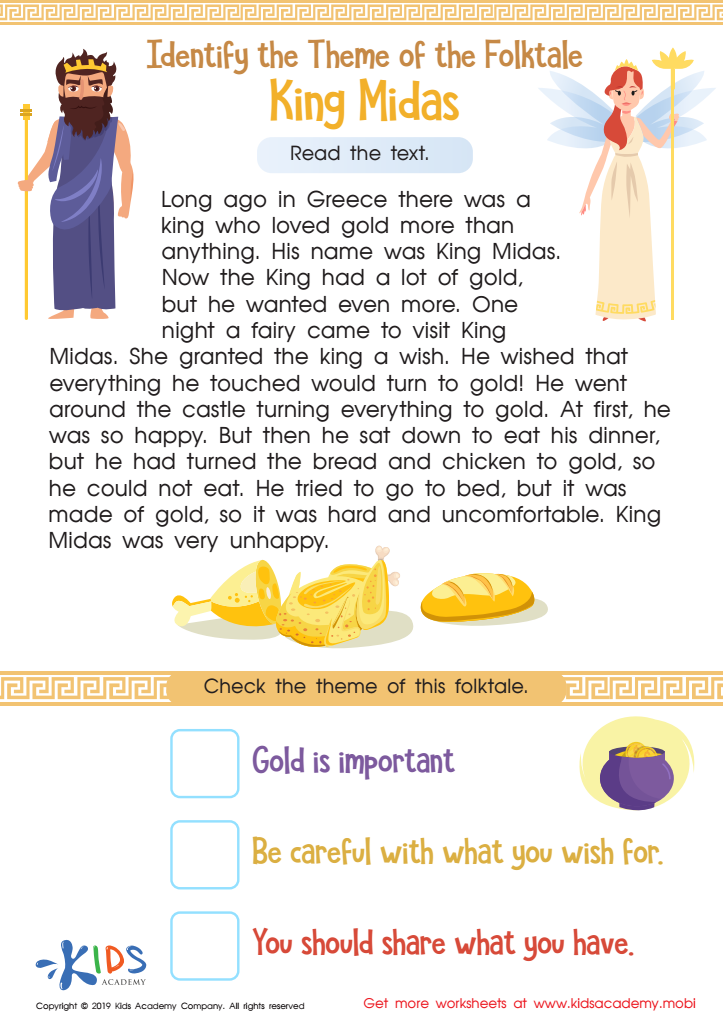
King Midas Worksheet
 Assign to My Students
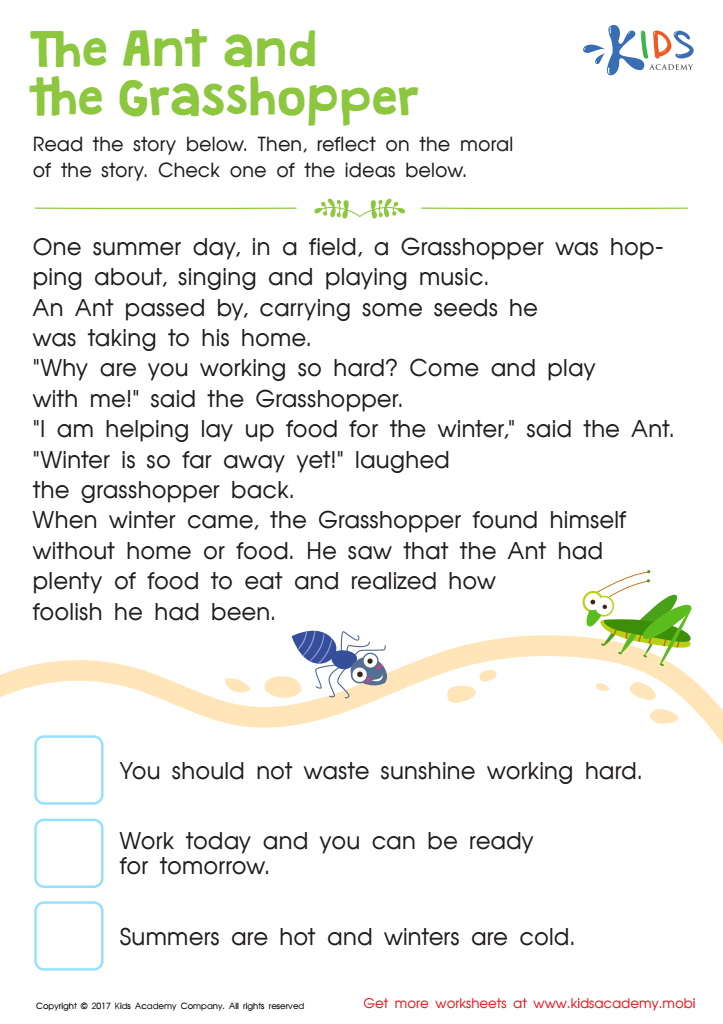
The Ant and The Grasshopper Printable
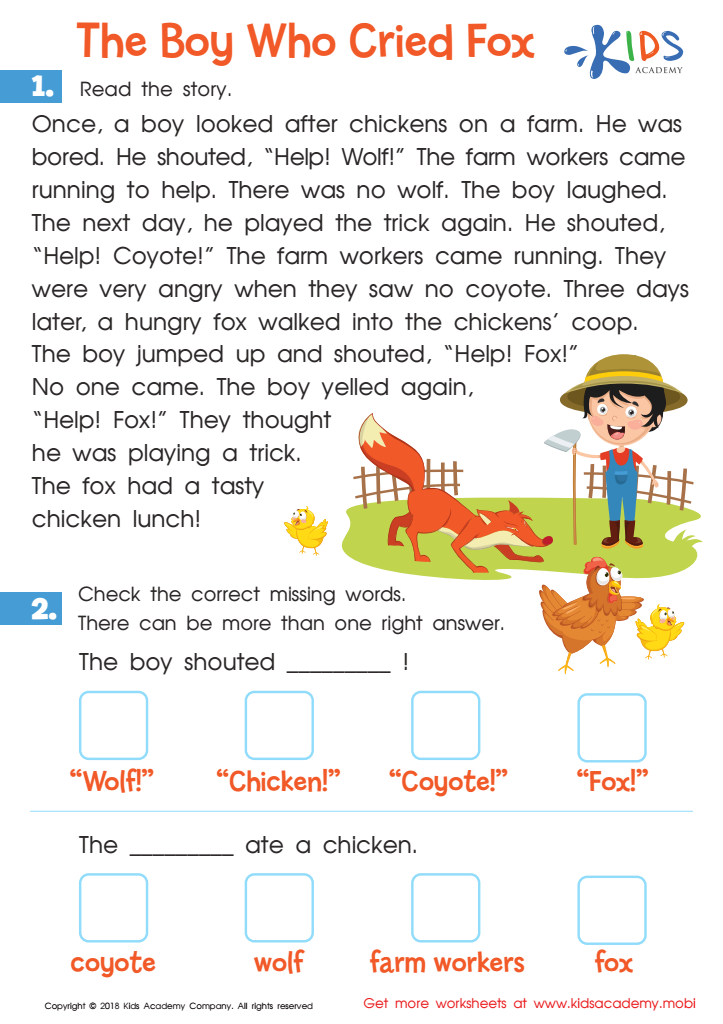
The Boy Who Cried Fox Worksheet
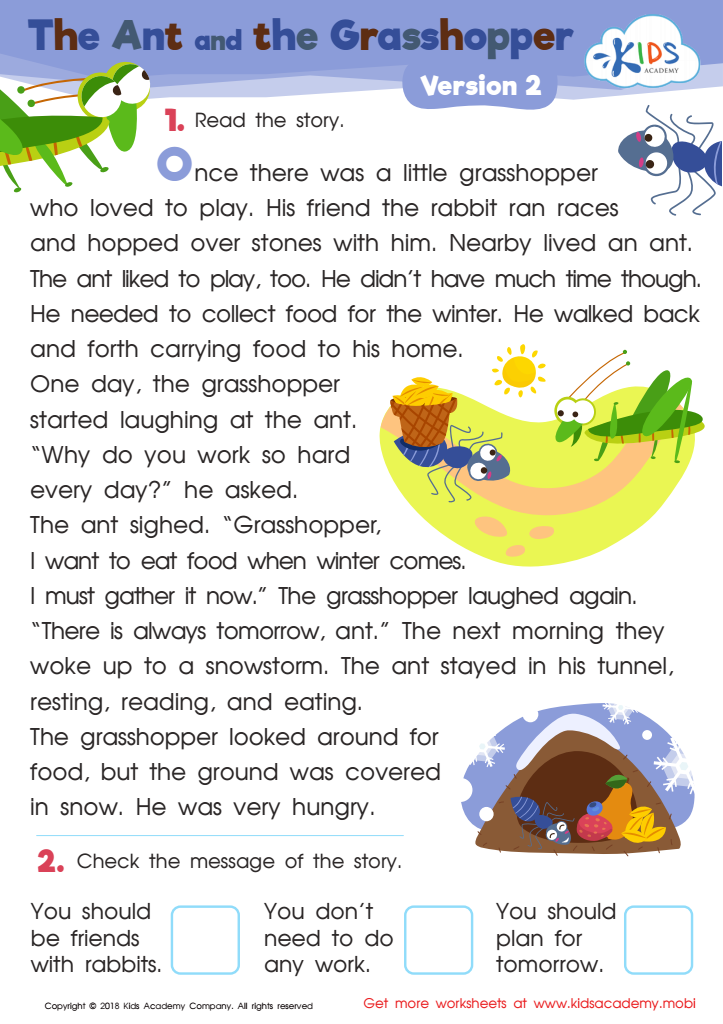
The Ant and The Grasshopper Version 2 Worksheet
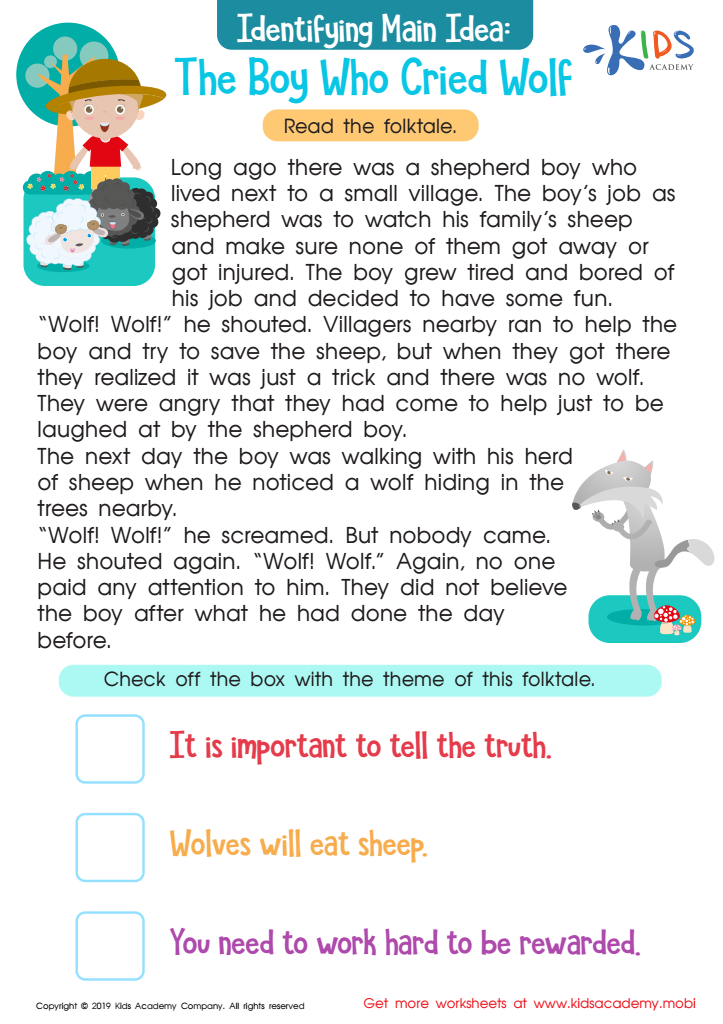
The Boy Who Cried Wolf Part 2 Worksheet






Understanding moral lessons and developing normal reading skills in children aged 4-8 are crucial for holistic development. During this formative period, children’s brains are highly receptive to new information and habits, making it an optimal time to instill foundational values and literacy skills.
Moral lessons help young children distinguish right from wrong, fostering empathy, respect, and social awareness. Stories with moral themes can shape their character, teaching them valuable life lessons such as honesty, kindness, and the importance of helping others. This moral groundwork can lead to better behavior patterns and improved social interactions, both critical for personal and academic success.
Simultaneously, normal reading skills are fundamental building blocks for learning. Early proficiency in reading enhances vocabulary, strengthens cognitive abilities, and supports academic achievement across subjects. When children engage with stories, they not only practice decoding words and sounds but also develop numerous literacies through listening comprehension and verbal interaction.
Integrating moral lessons into reading sessions not only promotes literacy but also embeds essential values into daily learning activities. Parents and teachers play a vital role by modeling positive behavior and facilitating guided reading experiences rich with moral content. This dual focus nurtures responsible, thoughtful, and literate citizens who are prepared for the complexities of future academic and social environments.








