Understanding suffixes Normal Reading Worksheets for Ages 4-8
3 filtered results
-
From - To
"Understanding Suffixes: Normal Reading Worksheets for Ages 4-8" is your child's gateway to mastering essential reading skills. Designed for young learners, these engaging worksheets make learning suffixes fun and interactive. Each activity helps kids recognize and understand how suffixes change word meanings. Through a variety of exercises, children will expand their vocabulary and improve reading comprehension. These worksheets are perfect for supplementing classroom learning or homeschooling, providing a solid foundation in language arts. Foster your child's reading ability with our expertly crafted resources, tailored specifically for kids aged 4-8. Prepare your little reader for academic success today!
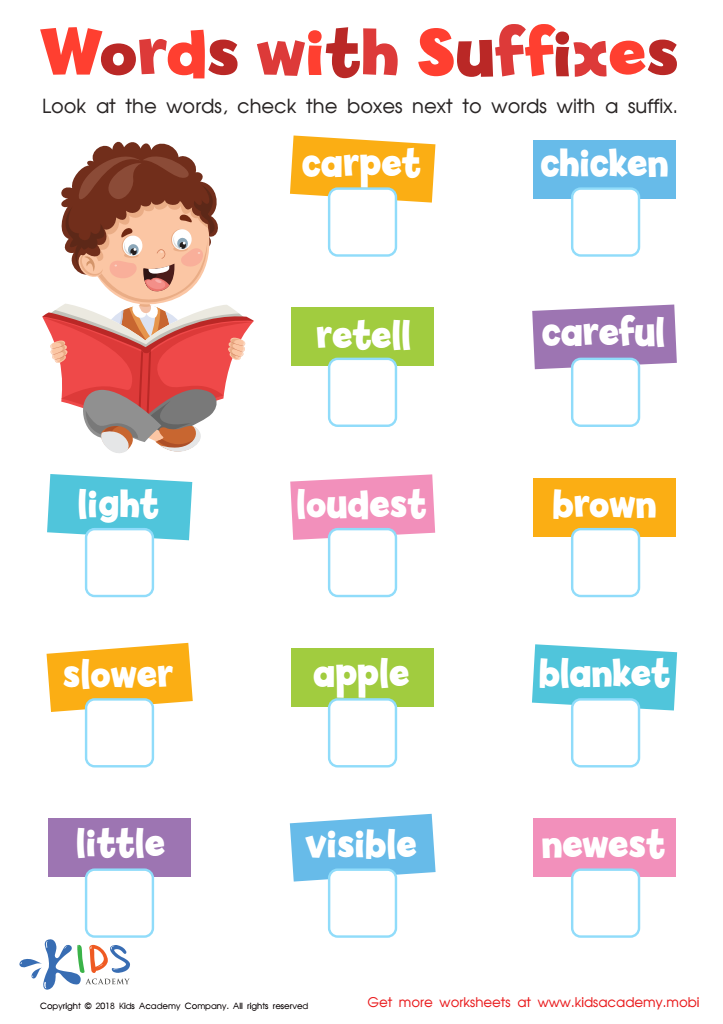
Reading: Words With Suffixes Worksheet
 Assign to My Students
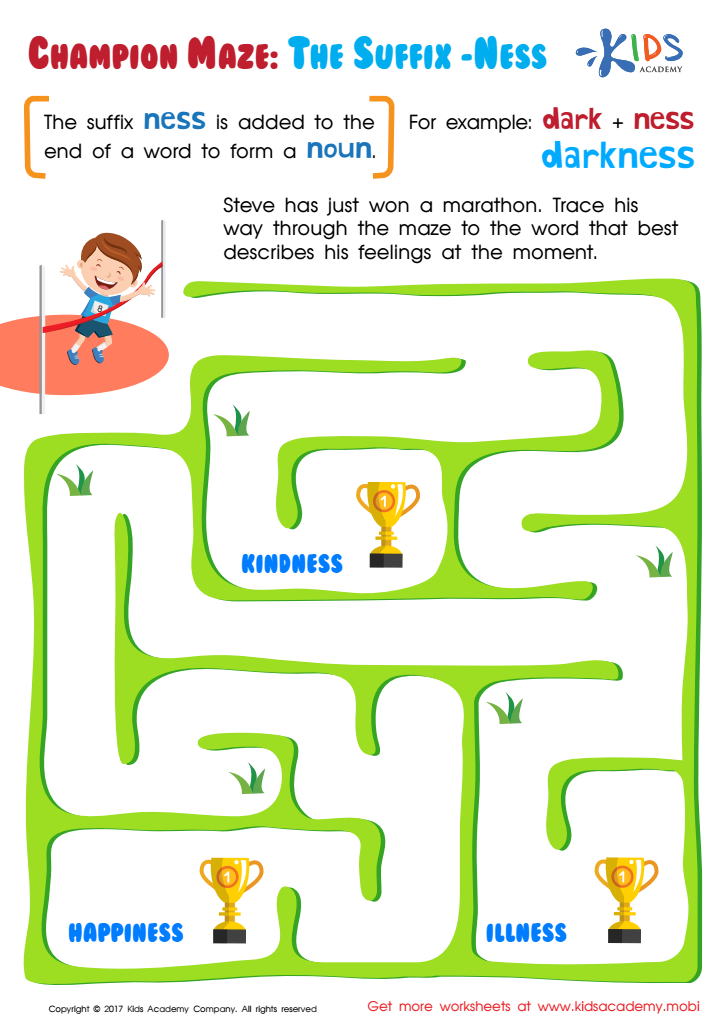
Suffix Ness Worksheet
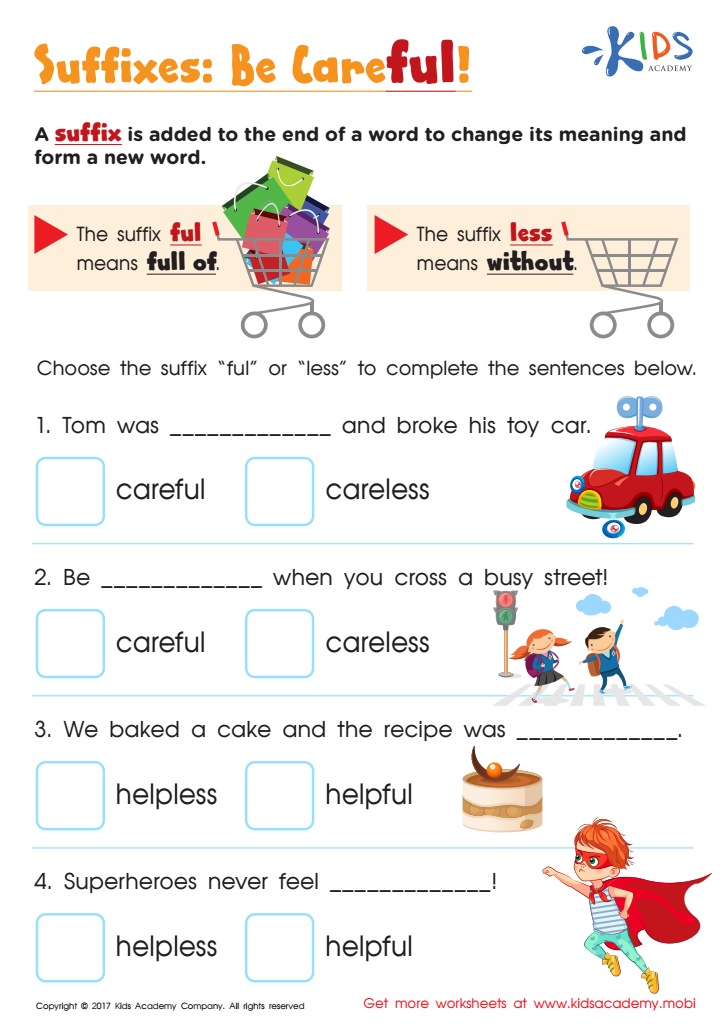
Suffixes Ful and Less Worksheet







Understanding suffixes is fundamental for young readers aged 4-8 as it contributes significantly to their literacy development. Suffixes are word parts that are added to the end of root words to adjust their meaning or function, such as "-s" for plurals or "-ed" for past tense. By learning suffixes, children enhance their vocabulary, reading fluency, and spelling skills.
When children grasp the concept of suffixes, they can decode new words by breaking them into manageable parts, making reading less daunting and more enjoyable. This skill is especially important for early readers who are expanding their word recognition and decoding repertoires. Additionally, suffixes help children understand grammar and sentence structure, enhancing their overall language comprehension.
For parents and teachers, fostering this understanding means providing the tools for young learners to become more confident and independent readers. Engaging activities, such as games, flashcards, and reading aloud sessions that focus on suffixes, can make learning fun and effective. By emphasizing suffixes in early education, we lay a solid foundation for advanced literacy skills, academic success, and a lifelong love of reading.
Therefore, integrating the study of suffixes in early reading curricula supports children's intellectual growth and sets them on a successful educational journey.








