Understanding Sequences Normal Reading Comprehension Worksheets for Ages 4-8
3 filtered results
-
From - To
Our "Understanding Sequences" reading comprehension worksheets for ages 4-8 are designed to boost early literacy skills by teaching young learners to recognize and interpret the order of events. These engaging, easy-to-understand printable worksheets help children grasp the concept of sequencing, crucial for reading comprehension. Each worksheet features age-appropriate stories, followed by a series of questions and activities that reinforce understanding. Ideal for home or classroom use, the exercises promote logical thinking and enhance reading fluency. Empower your child to become a confident reader with our expertly crafted resources tailored to develop foundational reading skills.
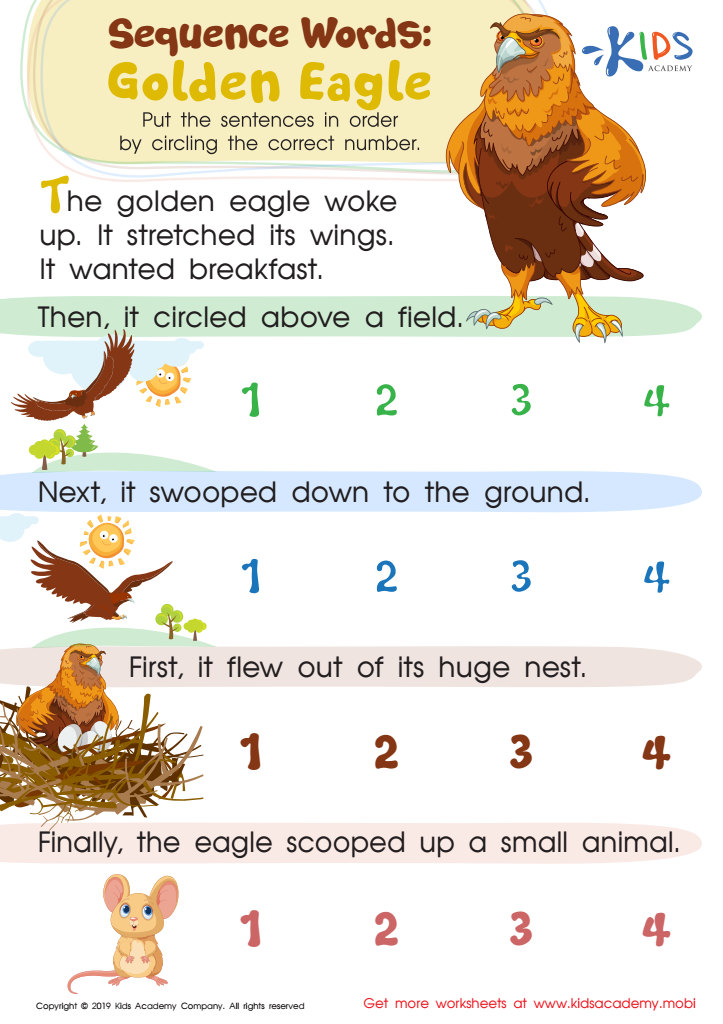
Sequence Word Eagle Worksheet
 Assign to My Students
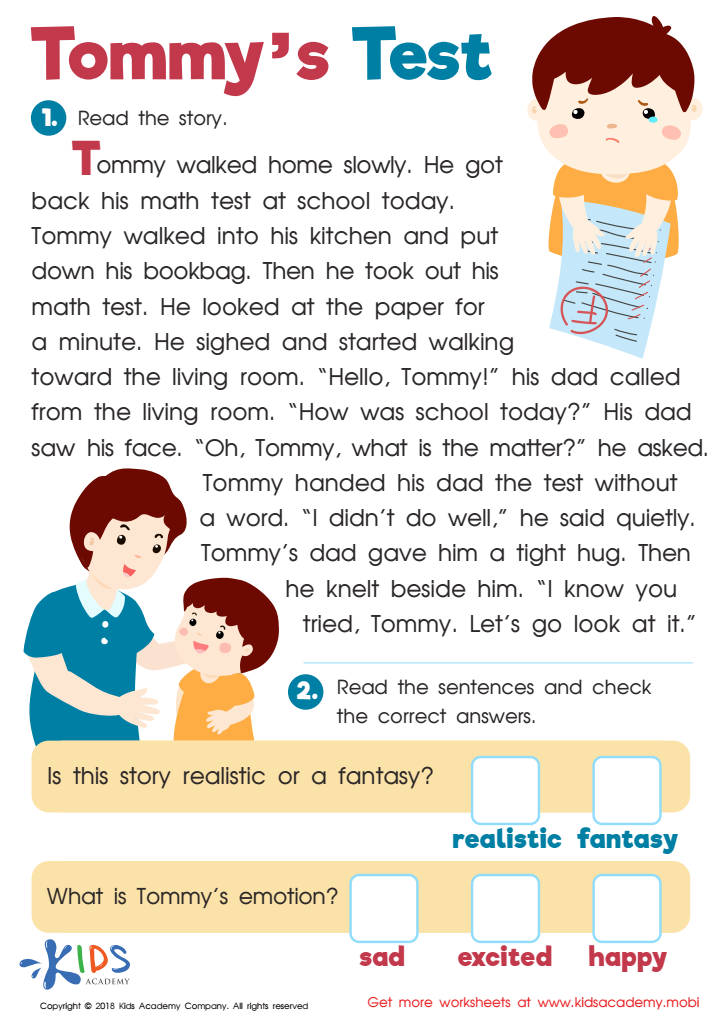
Tommys Test Worksheet
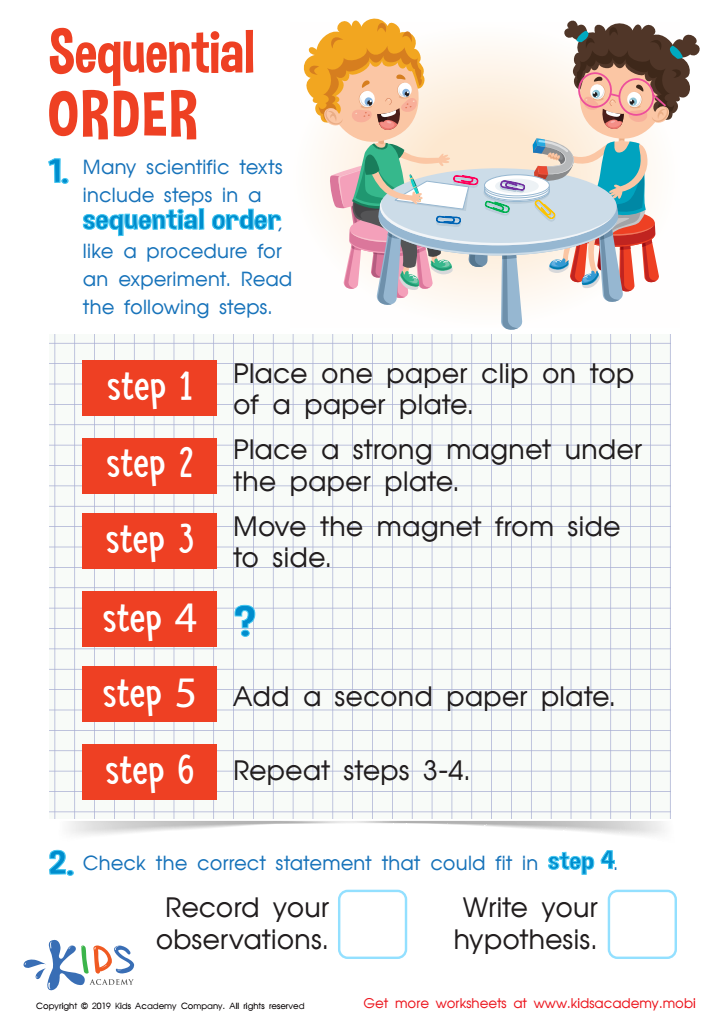
Sequencential Order Worksheet








Understanding sequences is essential for the development of reading comprehension in children ages 4-8. When children grasp the concept of sequences, they are better able to comprehend the order of events, something that is pivotal in understanding and retelling stories. This skill allows them to follow plot developments, identify cause-and-effect relationships, and make predictions, thereby enhancing overall literacy.
For parents and teachers, prioritizing this aspect of reading can help instill fundamental cognitive skills early on. It aids in pattern recognition which is not only pertinent in reading but also mathematics and problem-solving. Sequencing activities, like arranging picture cards to tell a story, engage young learners and provide them with a sense of structure and logical flow.
In addition, well-developed sequencing skills can lead to improved critical thinking and the ability to convey ideas clearly. This is crucial for personal, academic, and future professional success. By actively engaging in the development of sequencing abilities through reading, discussions, and activities, parents and teachers can provide children with a strong foundation that supports not just comprehension but a lifelong love for learning. Investing time in these skills pays off significantly as it leads to more confident and proficient young readers.








