Spatial awareness Normal Physical Science Worksheets for Ages 4-8
3 filtered results
-
From - To
Boost your child's spatial understanding with our engaging Spatial Awareness Physical Science Worksheets designed for ages 4-8. These printable activities help young learners grasp key scientific concepts through fun puzzles, matching games, and hands-on tasks. Each worksheet aims to develop their ability to recognize shapes, distances, and relationships in space, fostering critical thinking and problem-solving skills. Perfect for both classroom and home use, these thoughtfully crafted worksheets nurture kids' curiosity about the physical world, setting a solid foundation for future STEM learning. Ignite a passion for science with age-appropriate challenges and interactive exercises.
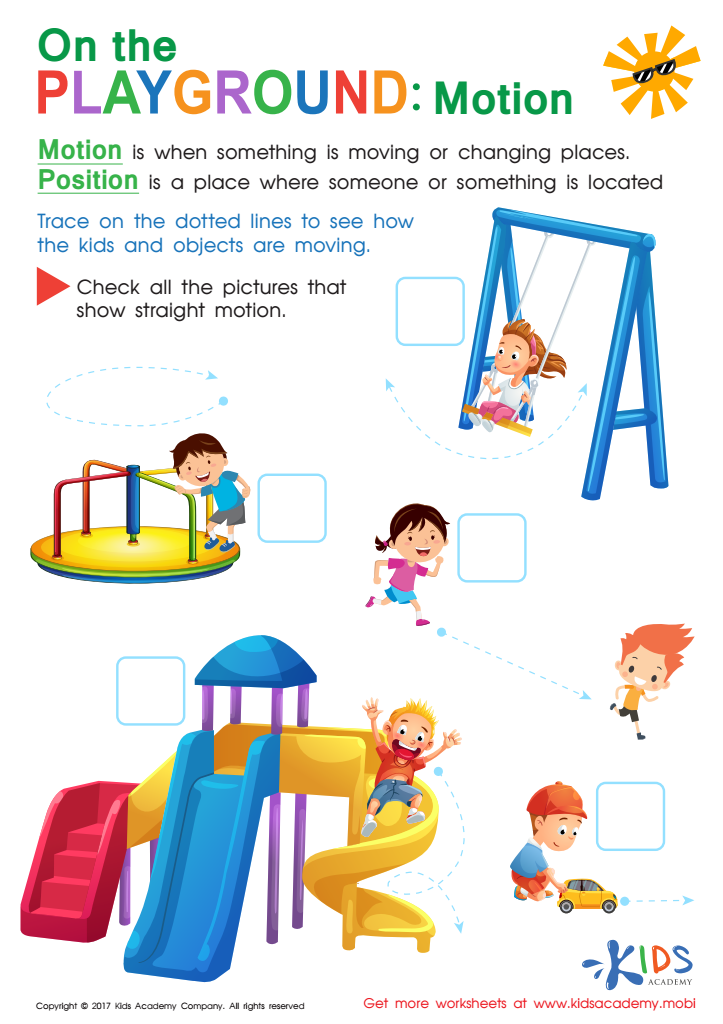
Position and Motion Worksheet
 Assign to My Students
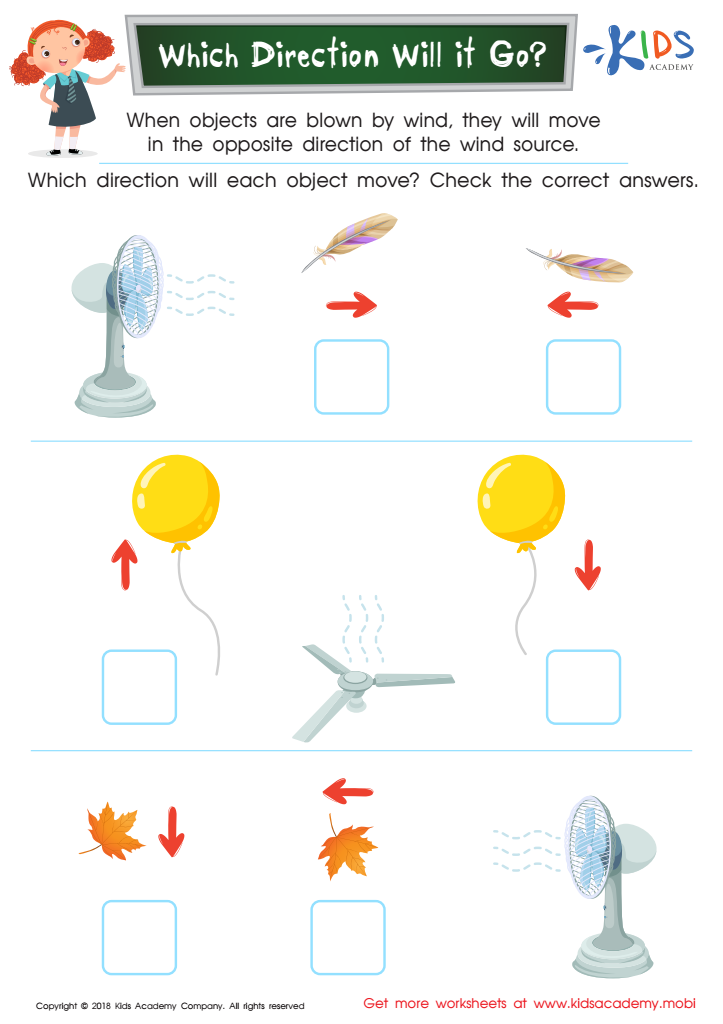
Which Direction Will it Go? Worksheet
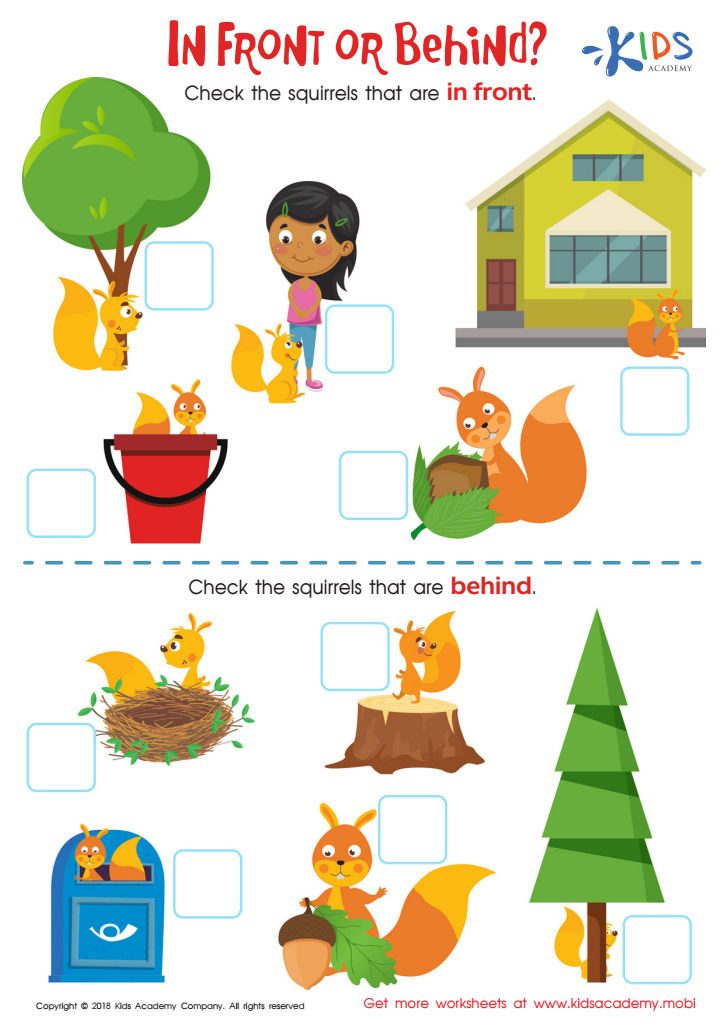
In Front or Behind: Part 2 Worksheet








Spatial awareness and an understanding of basic physical science are crucial components of early childhood development. Between the ages of 4 and 8, children are particularly receptive to learning skills that will serve as the foundation for more complex concepts later in life. Spatial awareness helps children understand their physical relationship to objects within their environment. This cognitive skill is essential for daily tasks such as navigating through a classroom, safely playing, or figuring out how to assemble a puzzle. These activities foster cognitive development by enhancing problem-solving skills, encouraging effective communication, and nurturing creativity.
Understanding basic physical science concepts, such as gravity, magnetism, and the states of matter, further complements spatial awareness. As children explore these principles through play, experiments, and observations, they develop a sense of curiosity and an analytical mindset. For instance, building with blocks can teach gravity and balance, while experimenting with magnets can introduce attraction and repulsion.
Integrating these concepts into early learning curriculums helps children build a solid foundation for future STEM (Science, Technology, Engineering, Math) education. Crucially, such experiences also make learning enjoyable and foster a lifelong love for discovery. Marginalizing these areas of development in early childhood could hinder a child's ability to tackle more complex cognitive and physical tasks in the future.







