Vocabulary expansion Normal Beginning Sounds Worksheets for Ages 4-9
5 filtered results
-
From - To
Explore our engaging "Vocabulary Expansion Normal Beginning Sounds Worksheets" designed for children ages 4-9. These worksheets focus on enhancing phonemic awareness by emphasizing the beginning sounds of words, helping young learners identify and articulate sounds effectively. With fun activities and vibrant illustrations, kids will develop their vocabulary while enjoying the learning process. Perfect for parents and teachers alike, these resources encourage interactive learning and reinforce phonics skills. By using these worksheets, children gain confidence in their reading abilities and improve their language skills, setting the foundation for future academic success. Download now to transform language learning into an enjoyable adventure!
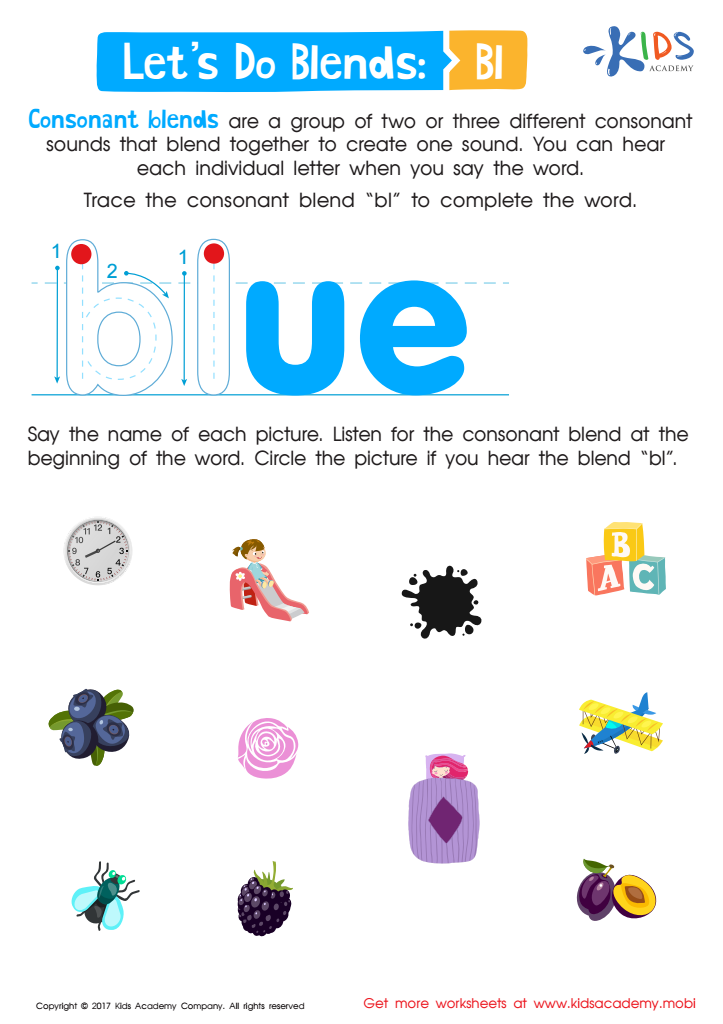
Beginning Blends: "Bl" Words Worksheet
 Assign to My Students
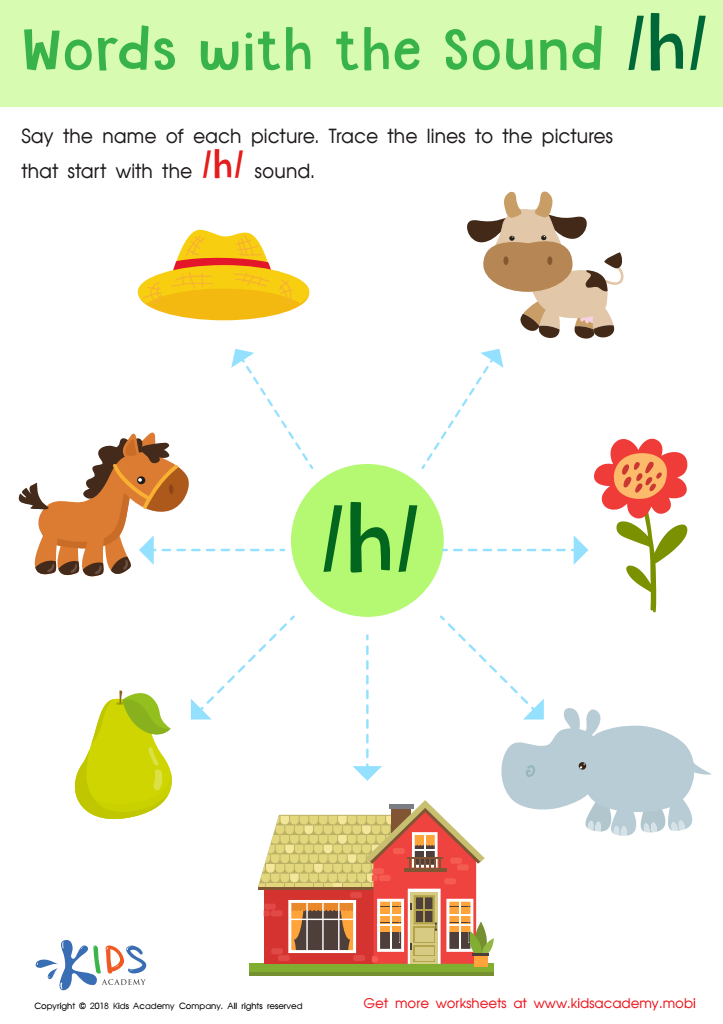
Words with sound h Reading Worksheet
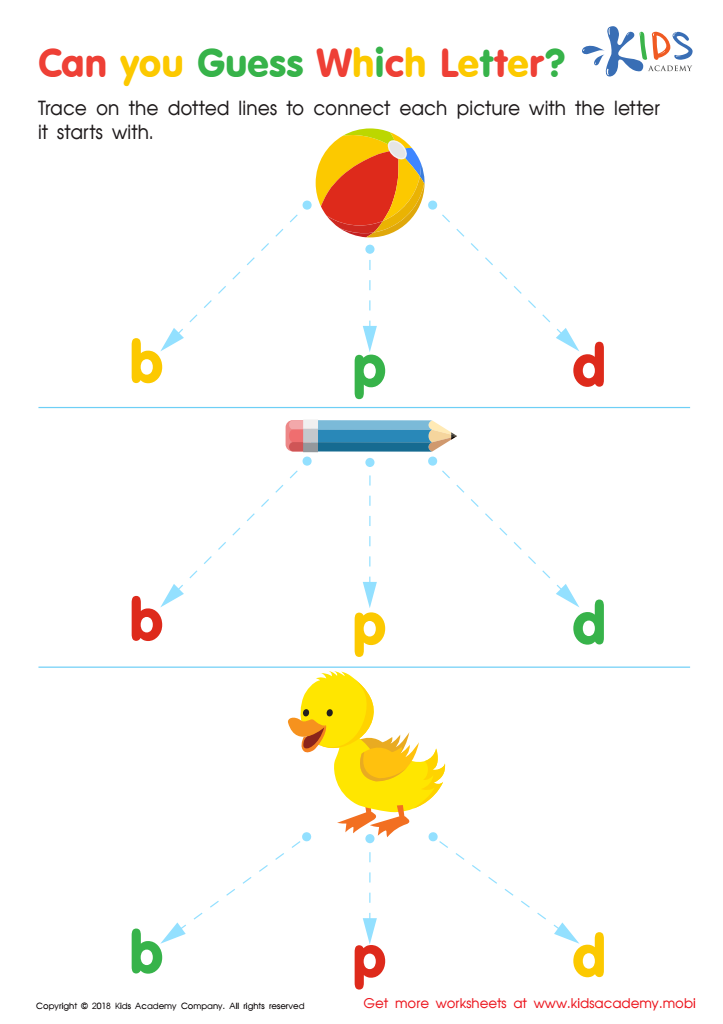
Can you Guess Which Letter? Worksheet
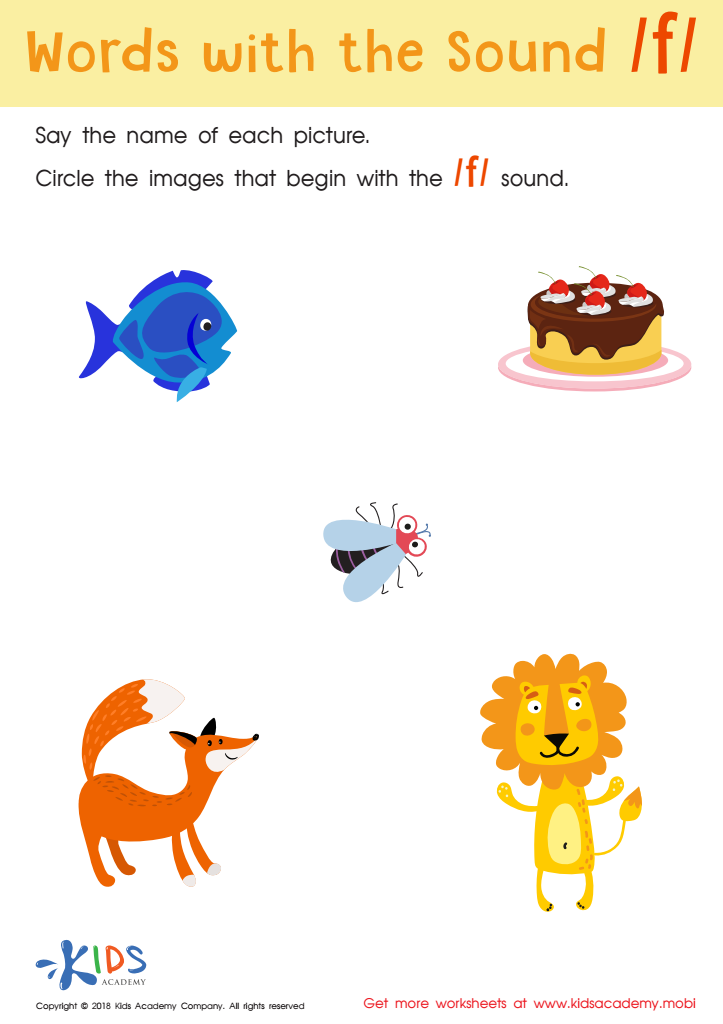
Words with sound f Reading Worksheet
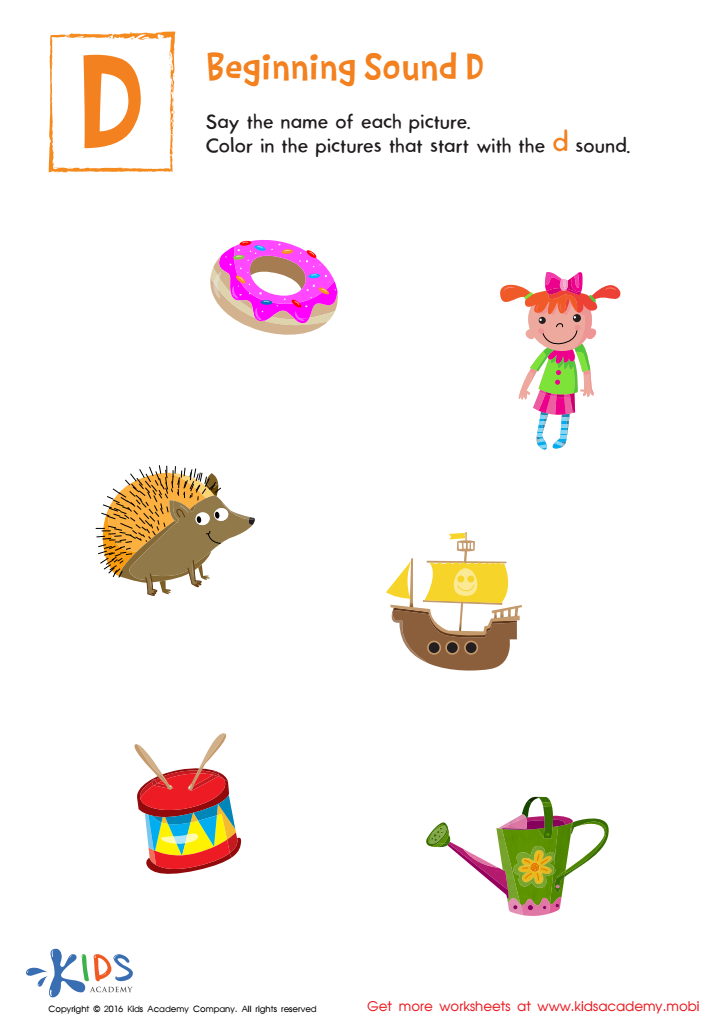
Beginning Sound D Worksheet








Vocabulary expansion, particularly focusing on normal beginning sounds, is vital for children ages 4-9. As they develop language skills during these formative years, understanding phonetics and linguistic patterns lays the foundation for proficient reading and writing abilities. Early mastery of beginning sounds enhances children’s phonemic awareness, which is crucial for decoding unfamiliar words and fosters confidence in their language use.
By focusing on normal beginning sounds, educators and parents can guide children in recognizing similarities among words, aiding them in making connections that draw on their expanding vocabulary. This exploration helps enhance their oral language skills and improves comprehension when they encounter new material.
Moreover, vocabulary expansion boosts cognitive development, encouraging critical thinking and effective communication skills. Engaging parents and teachers in this process cultivates a supportive learning environment, where children feel empowered to express themselves.
When parents reinforce vocabulary learning at home and teachers integrate these concepts into classroom activities, it ensures consistent exposure, leading to quicker mastery. Ultimately, investing in vocabulary expansion from an early age develops learners’ language competence, enabling them to succeed academically and socially as they progress through their education. Such skills will follow them throughout their lifetime, influencing their opportunities and experiences.







