
Handwriting improvement Normal Alphabet Worksheets for Ages 4-9
6 filtered results
Difficulty Level
Grade
Age
-
From - To
Subject
Activity
Standards
Enhance your child's handwriting skills with our Handwriting Improvement Normal Alphabet Worksheets, designed for children aged 4-9. These engaging worksheets offer a fun and interactive way to practice letter formation, helping young learners build confidence in their writing abilities. With a variety of exercises that focus on both uppercase and lowercase letters, kids will refine their motor skills while mastering essential handwriting techniques. Our resources cater to different learning speeds, ensuring that every child can progress at their own pace. Ideal for both home and classroom use, these worksheets make handwriting practice enjoyable and effective, setting the foundation for lifelong writing skills.
Favorites
With answer key
Interactive
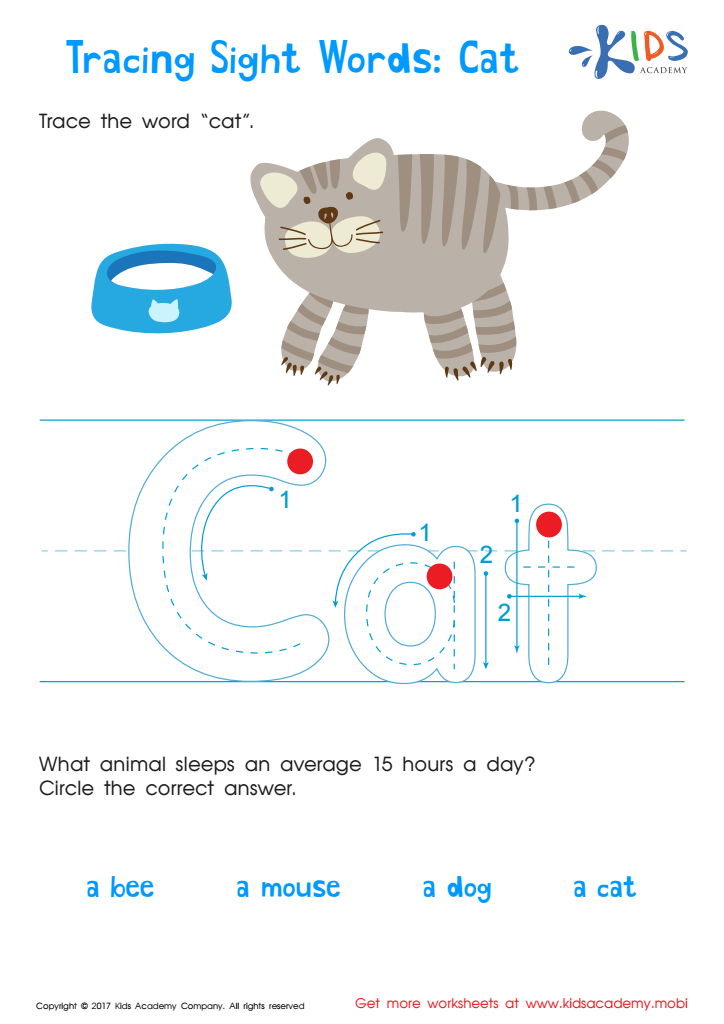
Cat Printable Sight Words Worksheet
Encourage your child's literacy with this fun sight words worksheet: cat PDF! It helps build a solid foundation for reading, featuring activities such as reading and tracing the word cat, and finding it amongst other sight words. With its cute cat, Kids Academy makes learning to read a delight!
 Assign to My Students
Cat Printable Sight Words Worksheet
Worksheet
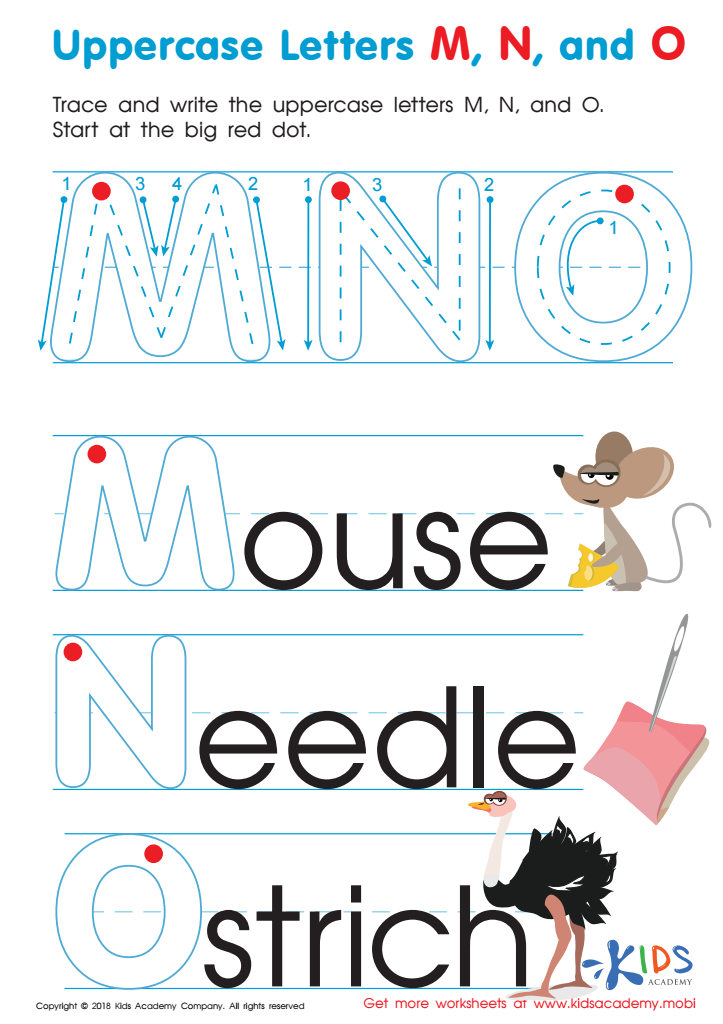
Uppercase Letters M, N, and O Worksheet
Download our easy-to-understand worksheet to help kids write M and N with ease! They'll trace dotted lines and follow arrows as they fill in the letters using a big red dot as a guide. The cute graphics will help them remember sounds too! Get your child writing quickly and confidently with this fun activity.
Uppercase Letters M, N, and O Worksheet
Worksheet
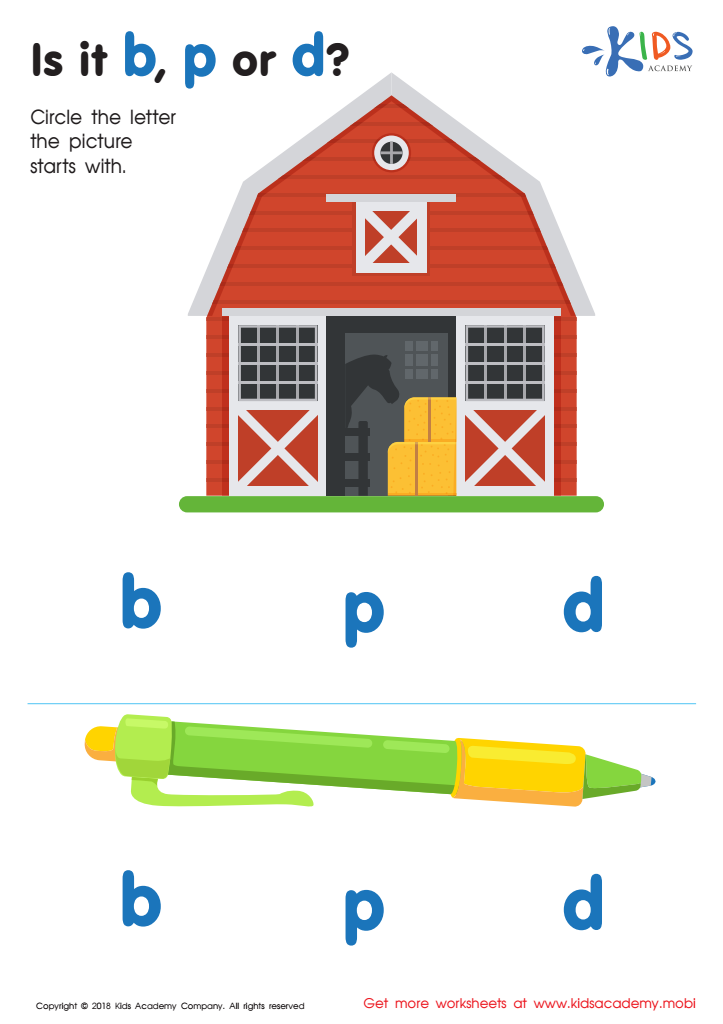
Is it b, p or d? Worksheet
Test your child's identification skills with this worksheet. They must identify the image and then circle the letter it begins with: 'b', 'p', or 'd' (e.g. an image of the sun would mean they circle 's').
Is it b, p or d? Worksheet
Worksheet
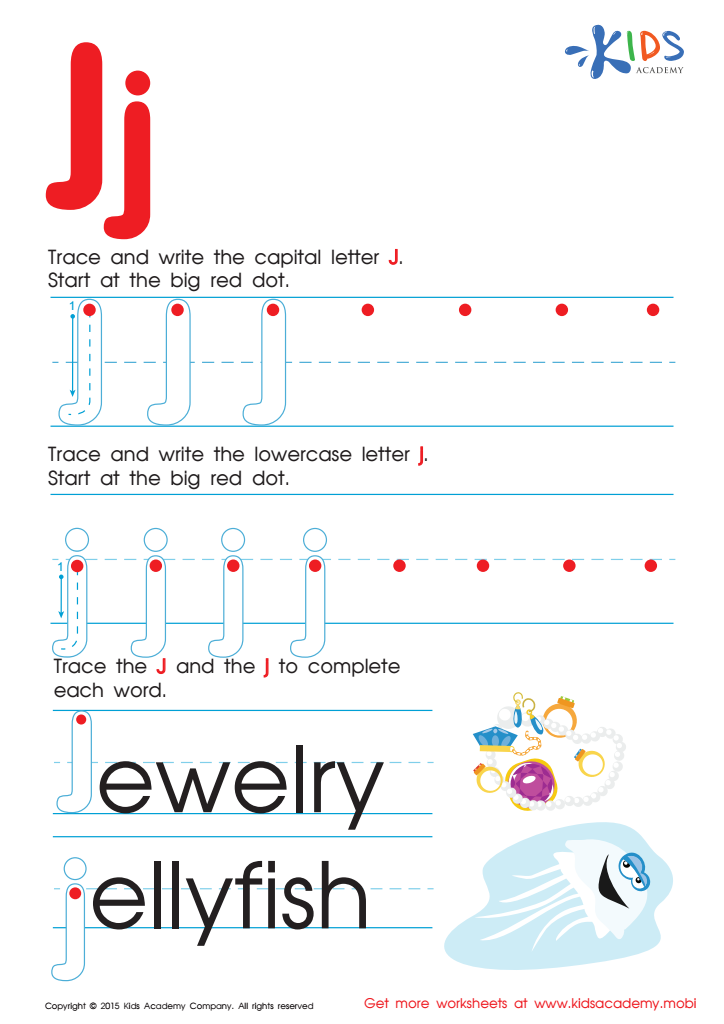
Letter J Tracing Page
Trace and write the letter "J" with our ABC worksheet - start at the big red dot! Have fun completing words like jewelry, jellyfish and more. Check out our kindergarten activities for more alphabet practice.
Letter J Tracing Page
Worksheet
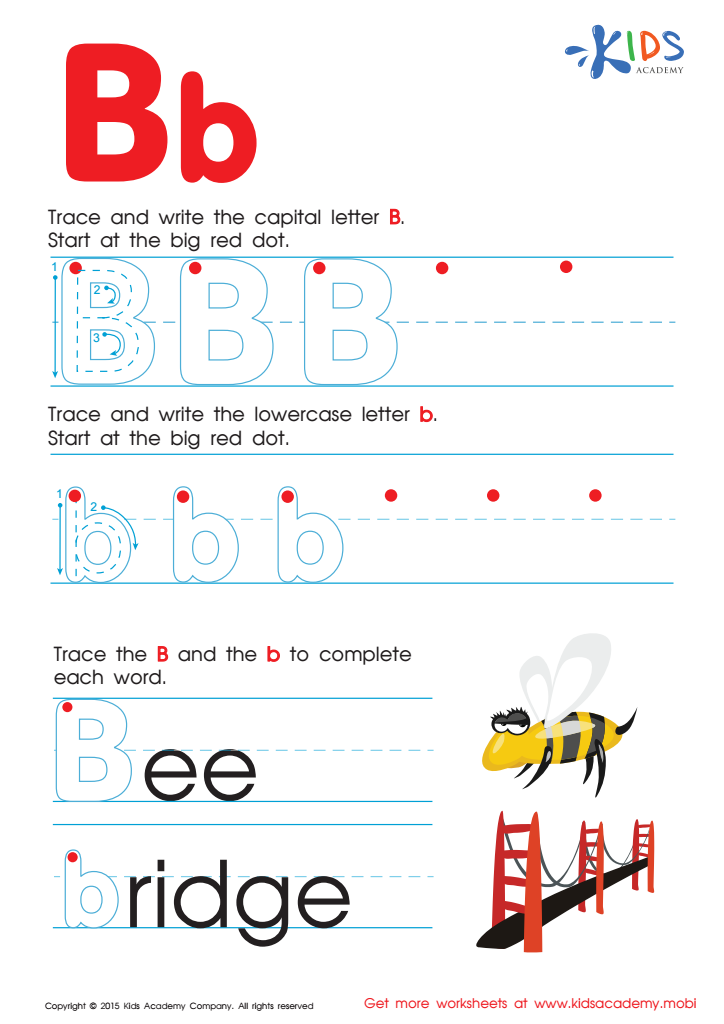
Letter B Tracing Page
Ready to learn the Alphabet? Put your pencil on the red dot and trace & write both capital & lowercase "B". Then have a look at the pictures. Catch the bee, cross the bridge & write the letters to complete the words. More ABC worksheets for kindergarten available!
Letter B Tracing Page
Worksheet
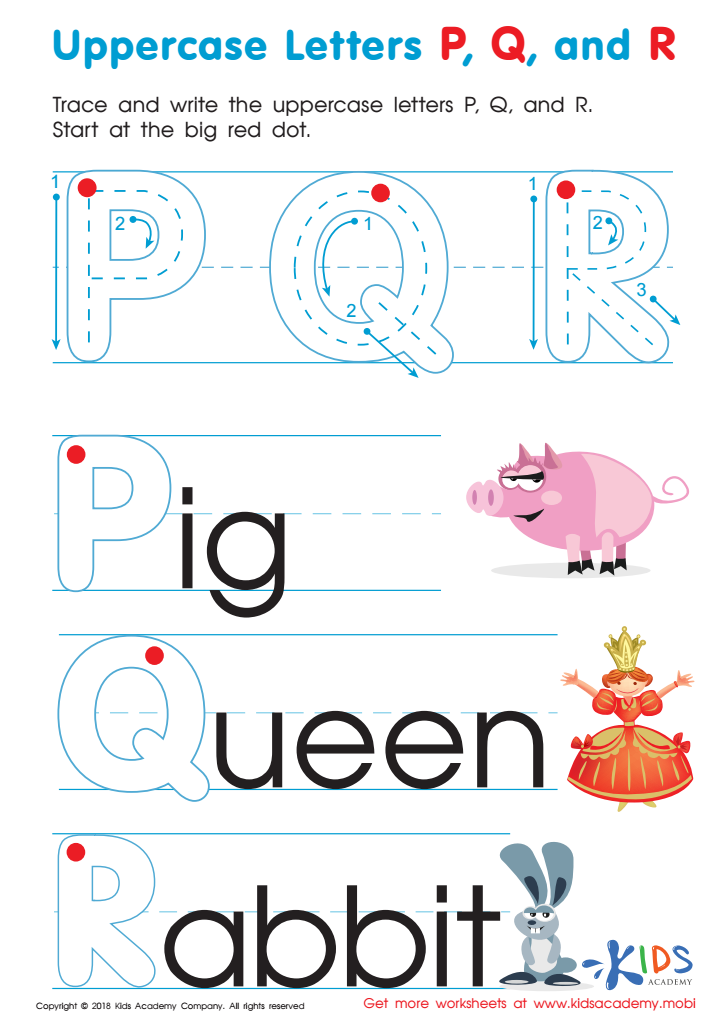
Uppercase Letters P, Q, and R Worksheet
Cute images of a pig, queen and rabbit make it fun to learn letter sounds. Follow the arrows to learn the strokes, then trace each letter from the big red dot. Perfect for kids to learn how to read and write P, Q, and R!
Uppercase Letters P, Q, and R Worksheet
Worksheet
Join Kids Academy for Free
Who is primarily going to use this learning content?







Handwriting improvement is crucial for children aged 4-9, as it lays the foundation for their academic success and overall development. At this age, children are developing fine motor skills and handwriting plays a key role in strengthening these muscles. Improved penmanship enhances coordination, control, and precision, which are essential in various activities beyond writing, such as drawing and crafting.
Furthermore, legible handwriting helps children communicate effectively. As they progress in their education, clear writing fosters understanding and encourages positive feedback from peers and teachers. This is particularly significant in a classroom setting where clarity can impact grades and self-esteem.
Additionally, handwriting improvement supports cognitive development and memory retention. Studies have shown that the physical act of writing by hand can enhance learning, as it requires children to process information actively. This is particularly valuable when children are learning to read and spell, as writing reinforces letter recognition and phonetic skills.
Lastly, instilling good handwriting habits encourages a sense of pride and accomplishment. Parents and teachers should prioritize handwriting improvement as it contributes holistically to a child’s educational experience, emotional well-being, and future success in an increasingly text-centric world.







