Fine motor skills development Normal Letter Recognition Worksheets for Ages 4-9
3 filtered results
-
From - To
Help your child build essential fine motor skills with our Normal Letter Recognition Worksheets, designed for ages 4-9. These engaging worksheets offer a fun and educational way to enhance hand-eye coordination while reinforcing letter recognition. Ideal for early learners, each activity is carefully crafted to improve dexterity, handwriting, and cognitive development. Whether at home or in the classroom, our printable materials support a solid foundation in early literacy. Visit our site for a variety of high-quality resources that make learning interactive and enjoyable, paving the way for academic success.
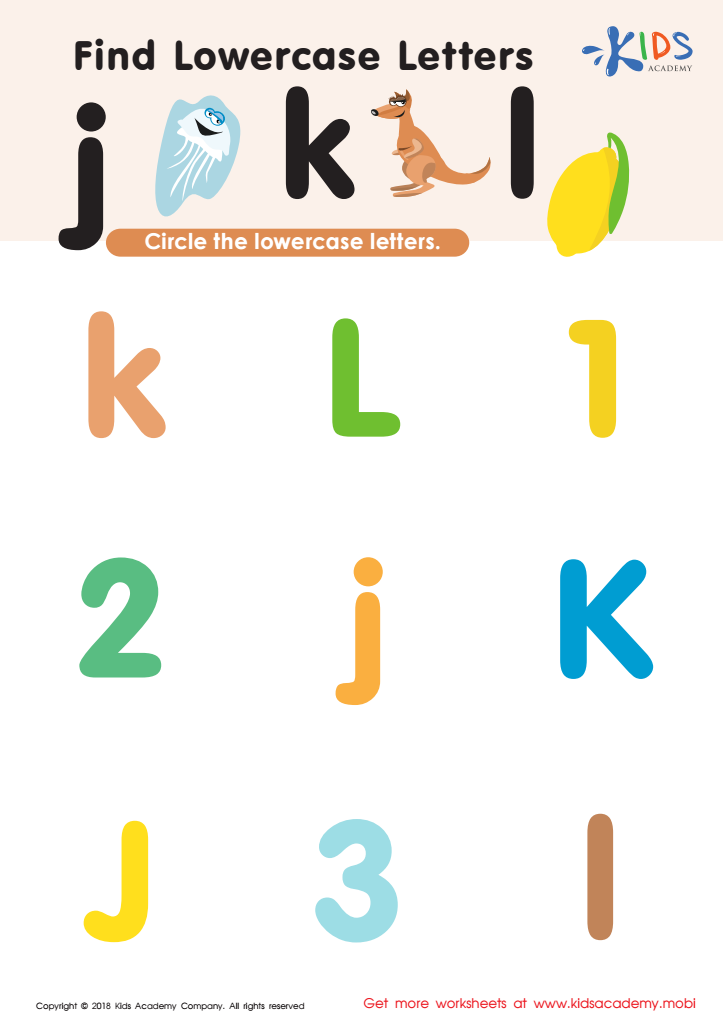
Find Lowercase Letters j k l Worksheet
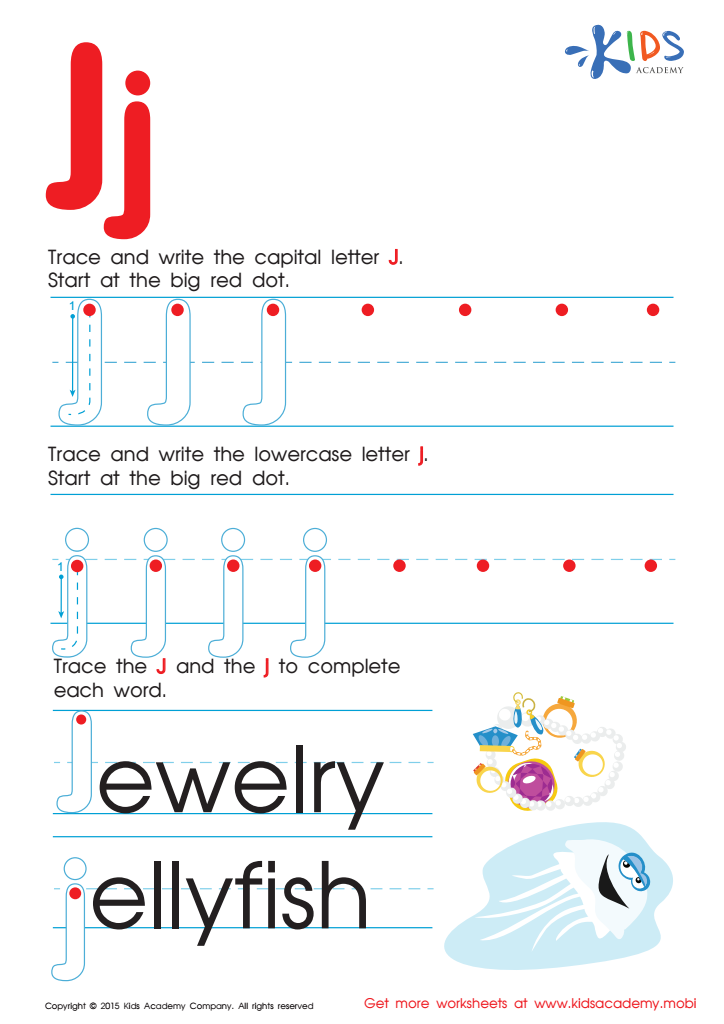
Letter J Tracing Page
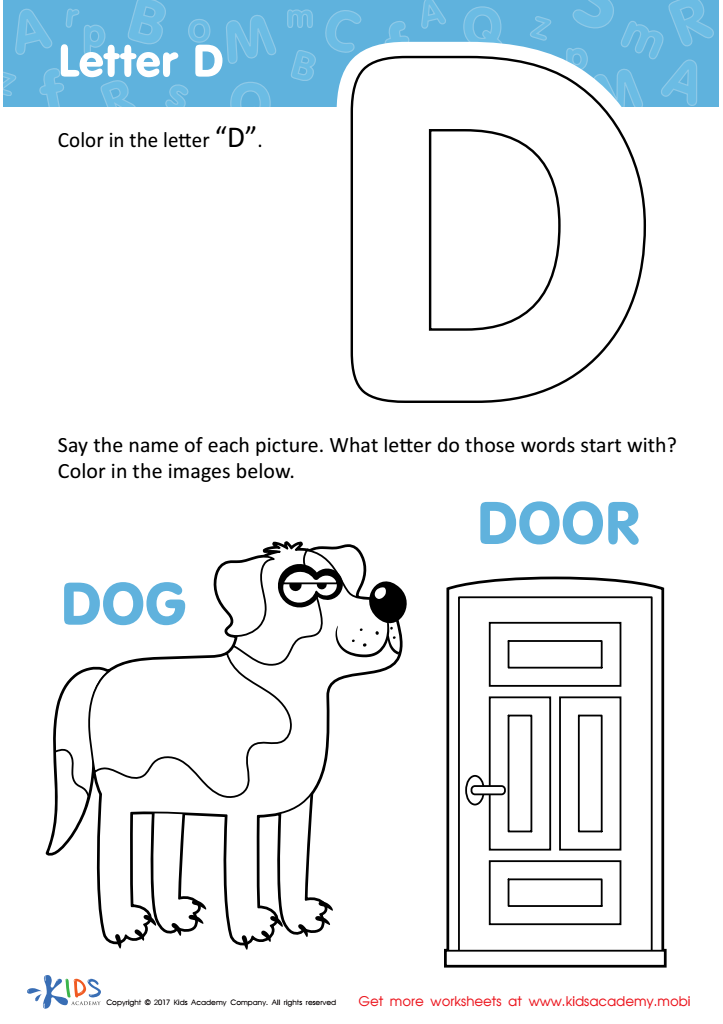
Letter D Coloring Sheet
 Assign to My Students








Fine motor skills development and normal letter recognition are fundamental for children aged 4-9 as they form the foundation for many critical aspects of learning and daily life. Fine motor skills involve the coordination of small muscles in the hands and fingers, enabling children to perform essential tasks like writing, cutting with scissors, buttoning clothes, and tying shoelaces. Strong fine motor skills are directly linked to better academic performance, as children who can deftly handle pencils and control their hand movements can produce clearer, more legible handwriting and engage more comfortably in creative activities such as drawing and crafting.
Normal letter recognition is equally crucial as it underpins a child's ability to read and write effectively. It allows children to decode and understand written language, fostering essential reading skills and enabling them to follow verbal and written instructions. Mastering letter recognition leads to improved literacy rates, which are vital for academic success across all subjects. Without a solid grasp of letter recognition, children may face difficulties with reading comprehension and written communication, which can hinder their educational progress.
Parents and teachers should thus prioritize enhancing these skills through targeted activities and supportive environments. Cultivating fine motor skills and ensuring proper letter recognition during these formative years sets children up for a lifetime of confident, effective learning and personal independence.








