
Hand-eye Coordination Normal Letter Recognition Worksheets for Ages 4-9
7 filtered results
Difficulty Level
Grade
Age
-
From - To
Subject
Activity
Standards
Enhance your child's learning experience with our Hand-eye Coordination Normal Letter Recognition Worksheets designed for ages 4 to 9. These interactive worksheets seamlessly integrate fun activities that help children recognize letters while developing essential hand-eye coordination skills. Tailored for early learners, each sheet offers engaging exercises, from tracing letters to identifying them in various contexts, ensuring that your child grasps the basics of the alphabet effectively. Ideal for parents and educators, these worksheets not only promote letter recognition but also support fine motor skills, making learning both enjoyable and educational. Explore our collection today to foster your child's love for letters!
Favorites
With answer key
Interactive
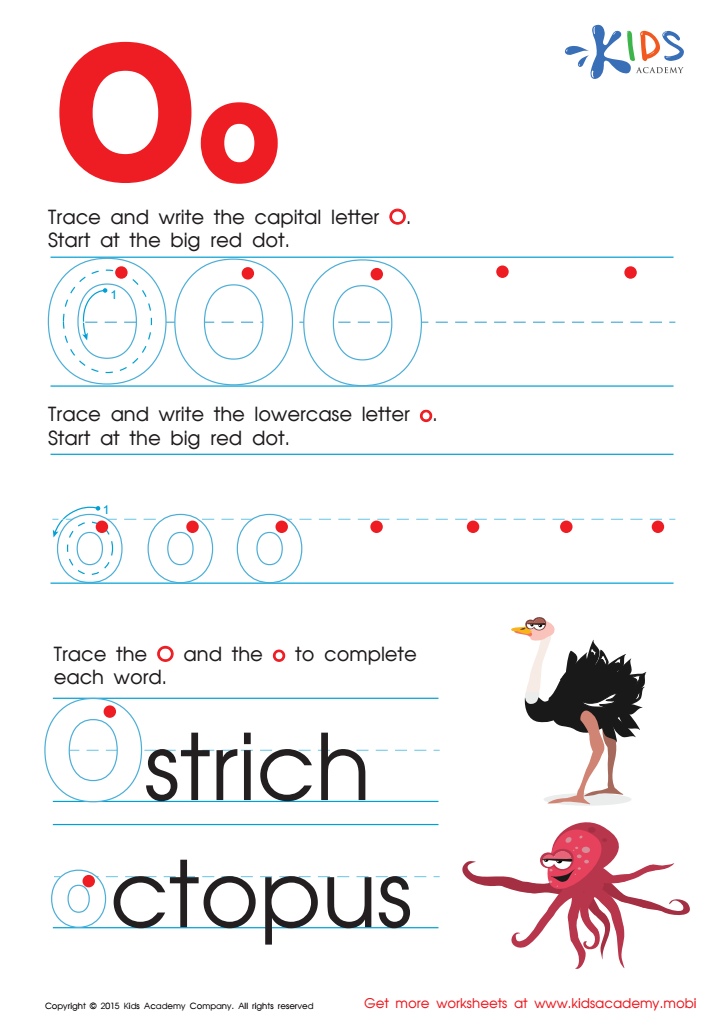
Letter O Tracing Page
Practice writing the letter "O" with our new worksheet. Trace and write the letter several times, starting at the red dot. First do the uppercase letter, then the lowercase. Use the pictures to complete the words "Ostrich" and "octopus". Kids Academy offers more fun alphabet worksheets.
 Assign to My Students
Letter O Tracing Page
Worksheet
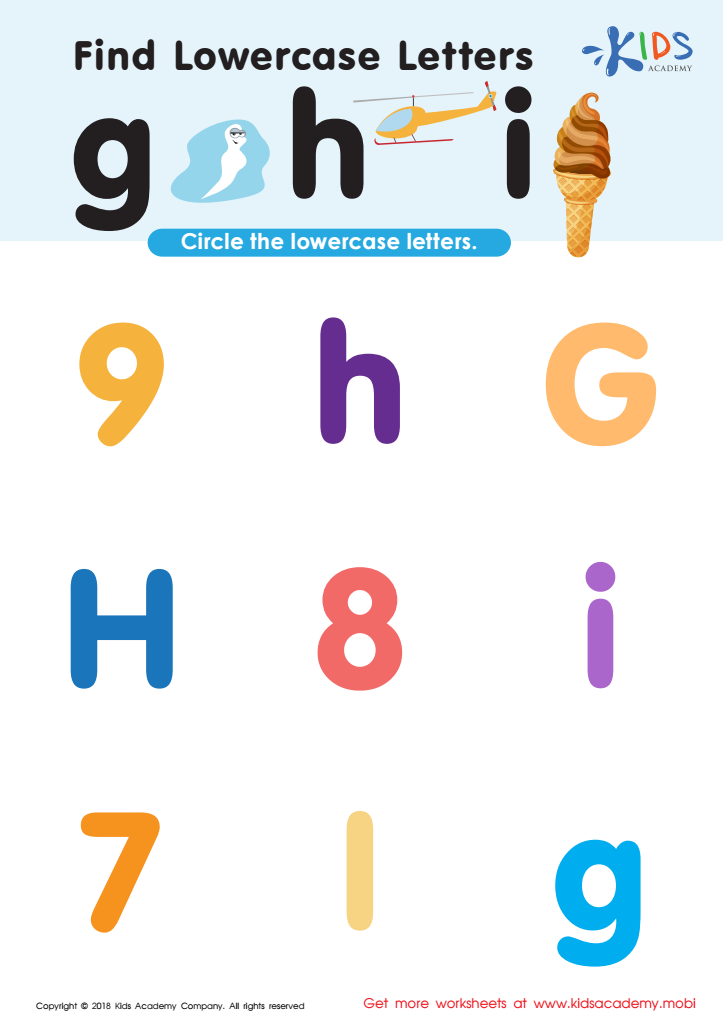
Find Lowercase Letters g h i Worksheet
Turn learning into a fun journey with your child! Use this free worksheet to find and circle the lowercase letters hidden amongst uppercase letters and numbers. Your child will understand what you're teaching them as they enjoy the search.
Find Lowercase Letters g h i Worksheet
Worksheet

Letter P Tracing Page
Trace the lines from the red dot to learn to write "P"! Then practice this letter with the fun activities: complete the word "Pig" and "Pumpkin". Check out Kids Academy to get more free ABC worksheets.
Letter P Tracing Page
Worksheet

Letter H Tracing Page
Trace the letter "H", then practice writing its lowercase form. Finally, choose your favorite form of transport and ride away! Get our worksheets to make learning fun and easy.
Letter H Tracing Page
Worksheet
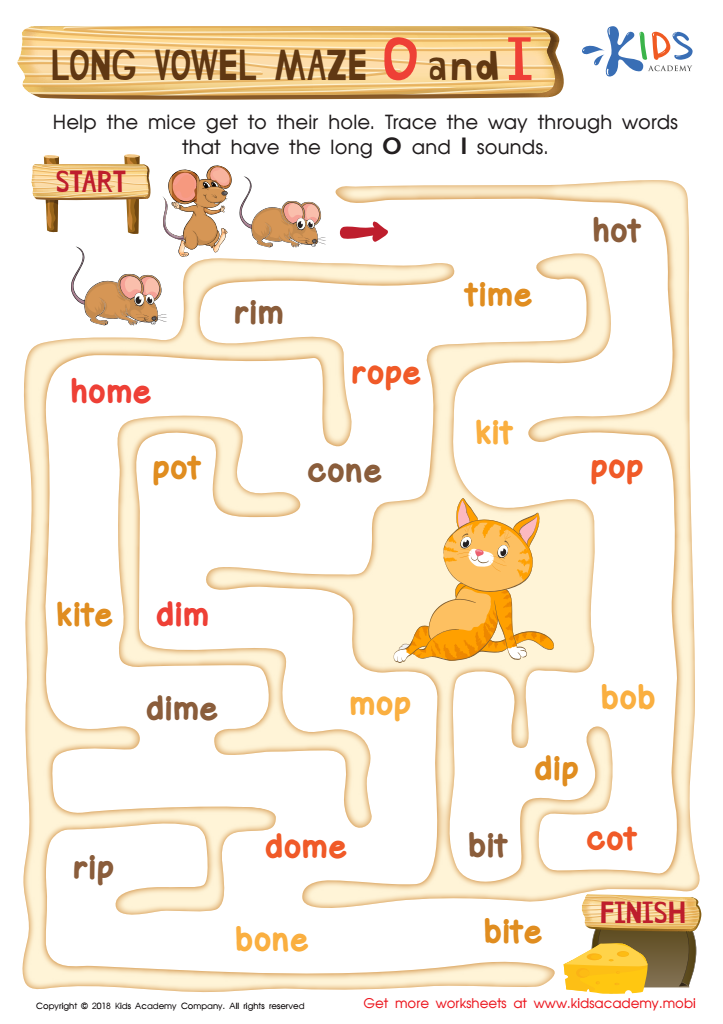
Long Vowel Maze /o/ and /i/ Worksheet
Help your new readers have fun and build their sight word vocabulary! Guide the mice to their prize cheese by having them trace the route on the worksheet, using words with the long o and long i sounds. But watch out for the kitty!
Long Vowel Maze /o/ and /i/ Worksheet
Worksheet
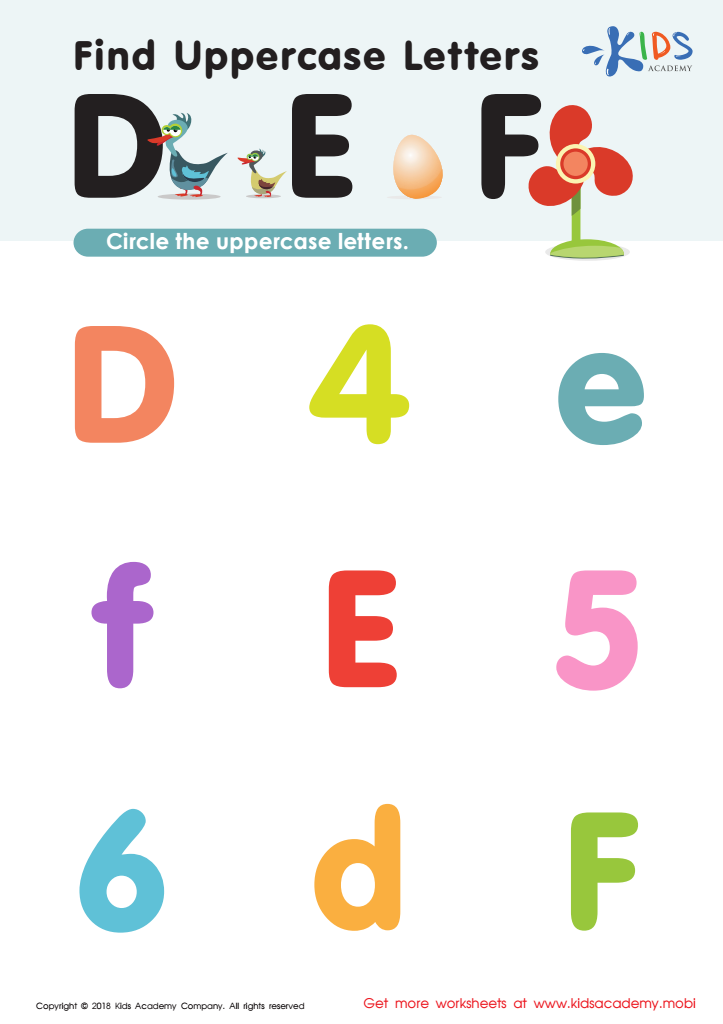
Find Uppercase Letters D, E, and F Worksheet
Follow the duckling and mom to find the capital letters D, E and F on this fun alphabet worksheet! Kids learn to read and recognize letters, while differentiating them from numbers. For extra challenge, don't let the numbers fool them. The pictures above remind them of each letter's sound. Have fun and get letter-savvy!
Find Uppercase Letters D, E, and F Worksheet
Worksheet

Letter D Tracing Page
Trace and write capital and lowercase letter "D" with our free printable alphabet worksheet! Be careful not to mix up "b" and "d" - just look at the ducks and write their first letter. The dolphin wants to join the fun too - do you like dolphins? Get more fun worksheets and activities at Kids Academy!
Letter D Tracing Page
Worksheet
Join Kids Academy for Free
Who is primarily going to use this learning content?








Hand-eye coordination and letter recognition are crucial skills for children aged 4-9, as they form the foundation for academic success and daily activities. Good hand-eye coordination enables young learners to engage with various tasks, from writing and drawing to more complex activities like sports. Improved coordination not only helps children in their physical development but also supports fine motor skills necessary for early literacy.
Normal letter recognition is equally important. It is the basis for reading and writing, key components of early education. Children who can recognize letters by age 5 or 6 have a significant advantage in learning phonetics, spelling, and vocabulary, leading to better comprehension skills. This capability promotes a love for reading and fosters critical thinking.
Parents and teachers should care about these skills because they directly impact a child's confidence and academic journey. Early interventions and support in reinforcing hand-eye coordination and letter recognition can greatly enhance a child's readiness for school and lifelong learning. Engaging activities like games, arts, and structured play can make learning enjoyable and effective, ensuring that children develop these vital skills while having fun. In supporting these areas, adults play a key role in shaping a child’s cognitive and physical development.








